Jaisalmer: Jewel of the Thar Desert

Surveying a Stop on the Fabled Grand Silk Route
IMG_0222

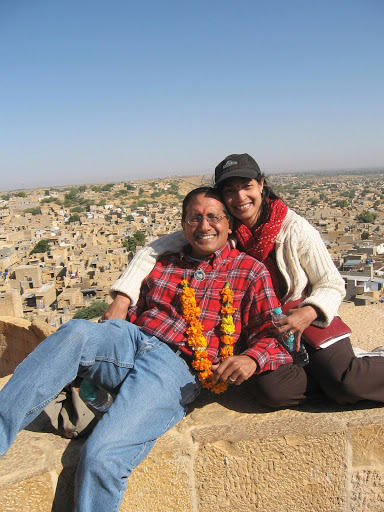
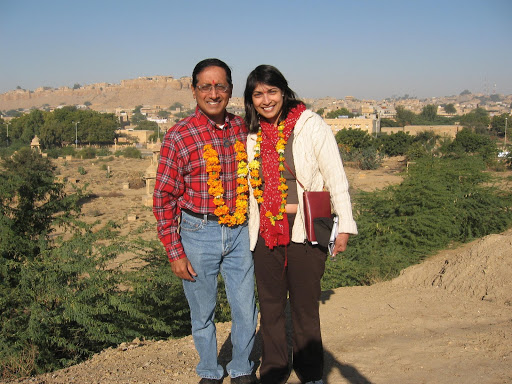
On the Ramparts of Jaisalmer Fort overlooking the town


In my early twenties, I had left a piece of my heart in Jaisalmer, for like the unknown carvers who, down the ages had etched lacey patterns on yellow sandstone havelis, so too the town had etched its lasting presence upon my consciousness. When I did arrive in Jaisalmer, after more than twenty years, I found that little had changed. Time hadn’t entirely stood still; but it had limped into the twenty-first century, still carrying vestiges of its medieval past in its wake.
IMG_0233

IMG_0203

Jaisalmer Fort (above right) seems to rise out of the golden sands of Rajasthan’s Thar Desert like a mirage—suddenly and quite inexplicably. Mile after endless mile of shrubby plains and near-desert ambience give way to a hulking fortress that overlooks a thriving town. The townsfolk still seem untouched by the magical pull of their city that sits on the ancient Silk Route from China and Mongolia to Mesopotamia and Persia. Indeed across the barren landscape of yellow sand dunes and undulating winds, caravanserais laden with the merchandise of past ages such as carpets and opium, spices and teas, crossed from one curve of the globe to the next. Marauding bandits helped themselves liberally to the spoils of such trade, swelling their coffers in the bargain and spending their ill-gotten wealth on the hiring of skilled craftsmen for the creation of exquisitely carved havelis or courtyard homes that stand today as silent symbols of a time when labor was cheap and plentiful and aesthetic sensibilities ran unleashed upon a bewitched prosperous people.
IMG_0230

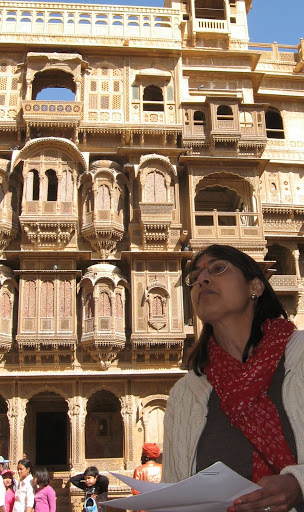
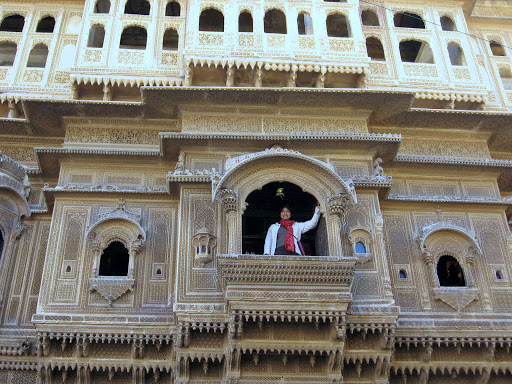
On the main balcony at Patwon Ki Haveli

Hidden Havelis, Crumbling Fortresses, Placid Lakes:

IMG_0204

To see the remnants of such artistry, one needs only to stroll through the narrow streets of the walled town to tour such stone concoctions as the Patwon Ki Haweli (above), home of a prominent merchant and Nathmal Ki Haweli where the ornmanetal jharokas or balconies display particularly fine carvings. Indeed, like all visitors, I gasped at the minute attention to detail that brought lace-like delicacy to stone columns and canopies, doorways and walls, screens and balconies. They seem to stand like the piped frosting on a tiered wedding cake, mirroring the delicacy and fragility of such fairy-tale confections. A few of them are open to the public and converted today into small commercial establishments to prevent them from falling under the hotelier’s control. Though I winced at the unabashed commercialism of these homes-turned-shops, I could not but admire the determination to preserve them as homes—the sort of zeal that has converted country estates in Great Britain into deluxe hotels and turned their gardens into upscale shops.
IMG_0214 IMG_0216

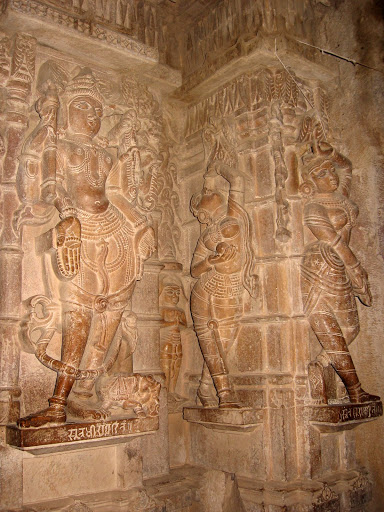
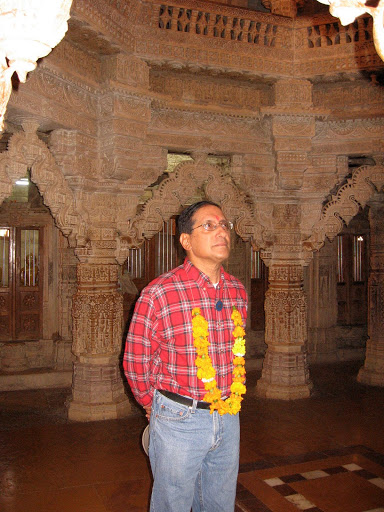
Once inside the vast complex of Jaisalmer Fort, it was the twin carved sandstone Jain Temples (ab0ve) that stunned me. Built in the 16th and 17th centuries by the town’s wealthy traders, the temples exert such an attraction that I found it impossible to tear myself away from the precincts of this sacred space that has remained unchanged in centuries.
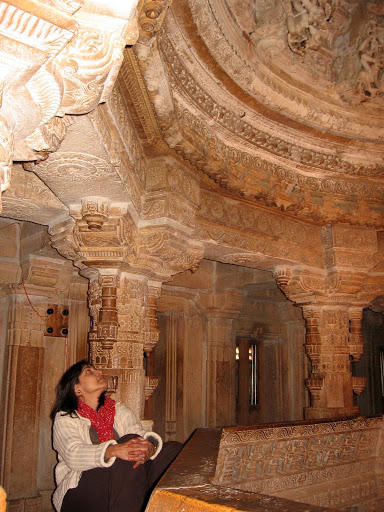
IMG_0218

Posing for pictures along the heights of the fort’s ramparts, we looked down upon the city of Jaisalmer, snoozing quietly in the pale sunshine. Shades of yellow as far as eye could see–tints of sunflowers and corncobs, hues of honey and buttercups–bedazzled as the famous ‘sonar patthar’ or golden stones of Jaisalmer gleamed beneath us.
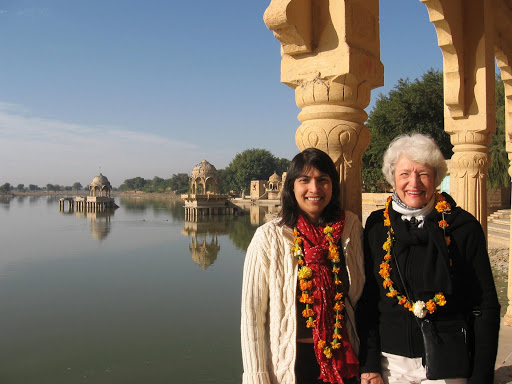
IMG_0201

I was grateful that the guide took us to Gadisagar Lake (left)  first thing in the morning when the cenotaphs of the many royal ladies who once bathed upon the ghats or steps that border the placid lake created a quiet sense of contemplation in that post-dawn light. Here, the spirit of Jaisalmer whispers quietly for it presents the quintessential vista—a combination of lake and umbrella-domed cenotaph, sandstone carvings upon shallow steps and the story of courtesan named Thelia who defied the powers-that-be by building a brazen gateway leading to the lake that later she converted into a temple by placing upon it the statue of her favorite god.

In Camel Saddles Toward the Sam Sand Dunes:
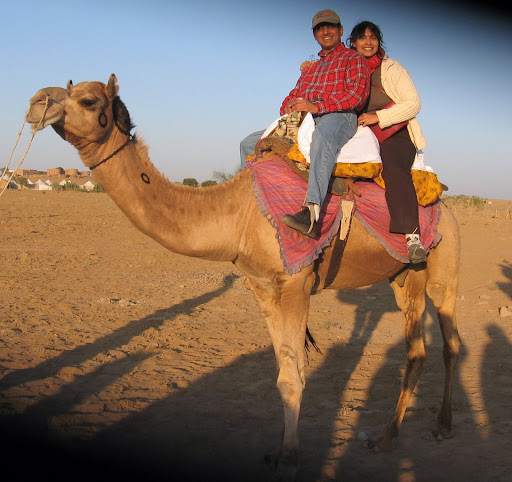
IMG_0255

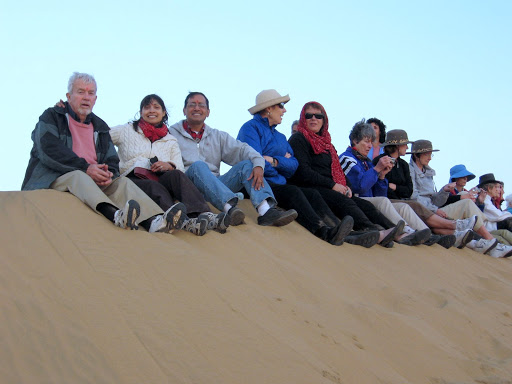
When the sun sank low on the horizon entering into the troubled reaches of next- door Pakistan, we made our way to the Sam Sand Dunes on camel back (left). To get to the dunes, we rode in a bus on a stark desert road punctuated only occasionally by low growing shrubbery. Camels waited patiently to take their impatient passengers on the half hour amble towards the crescent shaped dunes that lay faintly outlined against the pearl-streaked horizon. A thimble of tea and a couple of biscuits consumed in the midst of the Thar Desert seem almost an incongruity today, but we were treated to just such a cuppa surrounded by the flapping white tents that form part of the romance of the camel safaris offered by astute tour operators.
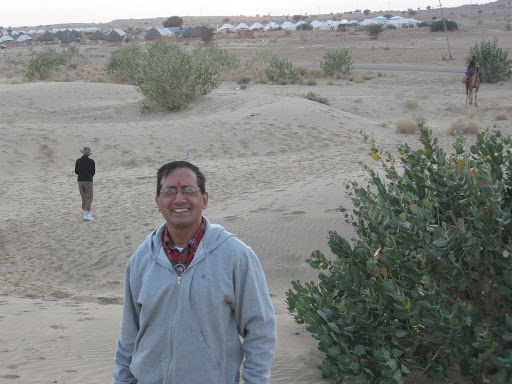
IMG_0273 IMG_0268

Before settling down on the sand dunes at Sam (left) to see the sun disappear over the salmon-tinged horizon, I did my good deed for the day, exchanging, as a favor for a local vendor, a dollar that he had received as payment from an American tourist and giving him forty handsome rupees instead. The sight of the smile that enlightened his face was worth its weight in gold—the poor lad had no idea just how many Indian rupees he ought to have received and the sheer trust with which he put the money in my hand and received Indian currency in exchange taught me a lesson or two about the refreshing lack of guile in our mostly corrupt world. It was little acts of kindness performed quite spontaneously, in this fashion, that remain engraved in my memory; for the pleasure I received in return from the gratitude that was writ large upon innocent faces warms, even today, the cockles of my heart. Now I know why I left my heart in Jaisalmer twenty years ago.
IMG_0282 IMG_0279

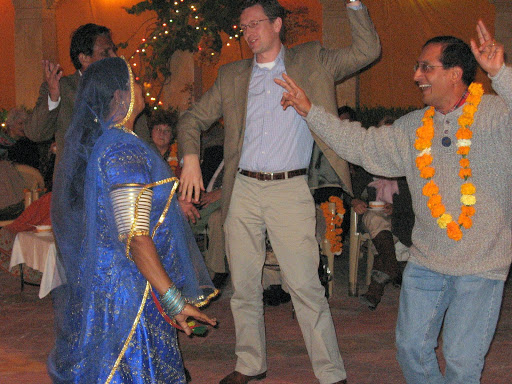
That evening, we were treated to a cultural fest (above) at Fort Rajwada, a new temple to commercialism situated in what seemed like the heart of the desert. There, under the stars, we danced with agile Rajasthani women who abandoned the strictures of purdah to give us a tutorial on the art of shaking one’s head without moving one’s neck while keeping time to rustic folk music produced by earthy drums and stringed instruments. We were invited to join the gyrating women in a circle that exploded with the sounds of clapping and foot stomping and drum beats as drinks were sipped and appetizers circulated. An hour later, we sat at long tables to enjoy a buffet dinner that included Rajasthani specialties.
It had been a long day but the combination of experiences—sights, sounds, tastes, smells—had made it flash by in a blur. Jaisalmer is being gradually discovered by the Western tourist and the town is gearing up to enjoy its new-found celebrity. Were Mick Jagger, whom I had met in Jaisalmer twenty years ago, a visitor in the town today, he might not find himself so easily able to blend in with the local turban-sporting populace.

(To continue to follow us on our journey with the Palace on Wheels, please click on the Jodhpur link).

Bon Voyage!
Jaipur: Savoring the Splendors of Rajput India

IMG_0146

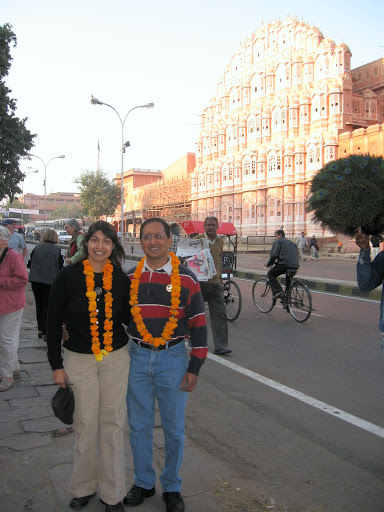
On the street outside the Hawa Mahal in the Pink City of Jaipur

When we awoke the next morning, we were in Jaipur, capital of Rajasthan, state of kings. Breakfast was served a la carte in our little saloon before we were whisked off in our own air-conditioned buses for a day of royal sight seeing. Upon arrival at each rail head, no matter now nondescript, Palace on Wheels passengers are treated to boisterous welcomes that include elephants, horses, camels and the like and those ubiquitous marigold garlands that, once the novelty had worn, began to feel like millstones around our necks.

Our first stop, past the well-planned streets of the Pink City of Jaipur whose walls blushed in the soft light of dawn, was the Hawa Mahal, an elaborately conceived lattice structure that allowed the ladies of the court to participate in the pomp and pageantry of festivals on the streets below while remaining concealed themselves, in accordance with the customs of purdah—a practice they borrowed from their Islamic counterparts in neighboring Delhi.

Ascending on Elephants to Amber:

IMG_0151

IMG_0156

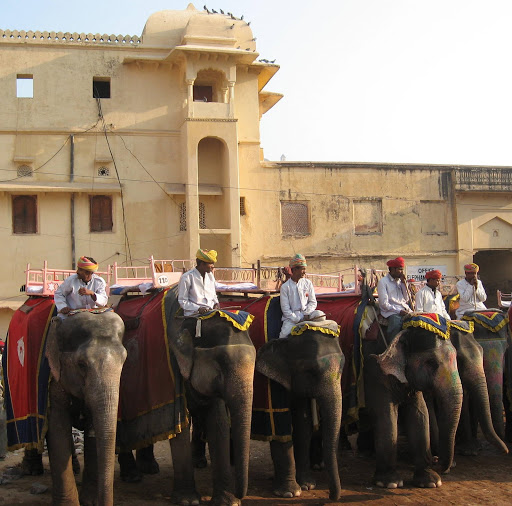
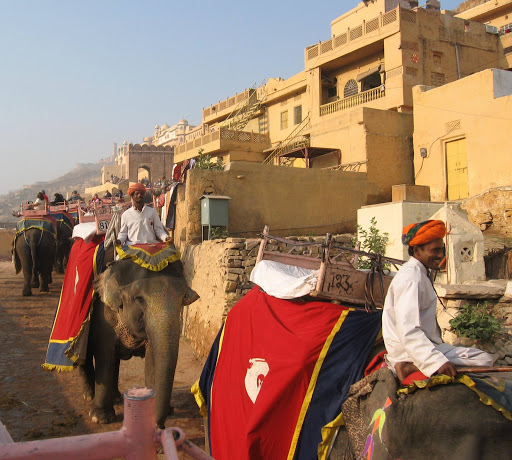
When we had taken pictures of the Hawa Mahal’s intriguing façade, we drove on towards the legendary fort of Amber that sits majestically atop a yellow mountain, its ramparts stretching expansively like a giant’s arms to embrace its length. The biggest attraction of this fort, one of many in a good state of preservation in Rajasthan, is the need to ascend to its central courtyards on elephant back. Gaily caparisoned in clothing of red and navy blue, the elephants line the path neatly towards the boarding stand where in howdahs–wooden seats that cushion riders–tourists sway precariously as the mahout–or driver–directs the pachyderm towards its lofty destination. I tried hard to ignore the frequent goading with a sharp spike that the poor creature had to endure frequently as he ambled ever higher. Acrobatic photographers find unbelievably crafty angles from which to click pictures of each passenger, assuring us of masterful celluloid results by the time we returned to our waiting vehicles.

Confluence of Islamic and Rajput Design:

IMG_0163

IMG_0164

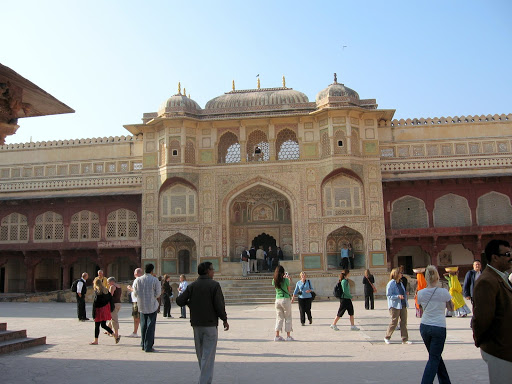
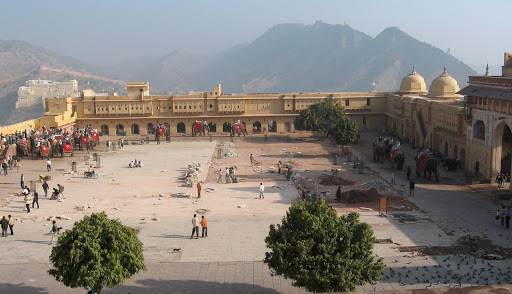
Amber Fort is reached through a massive courtyard (above right) where the elephant ‘taxis’ are herded. From here, one climbs a series of steep stairs and enters the main courtyard where the ornate Ganesh Pol (or Ganesh Gate, above left), minutely decorated with frescoes, stands at the entrance of an intricate complex of buildings.

IMG_0166

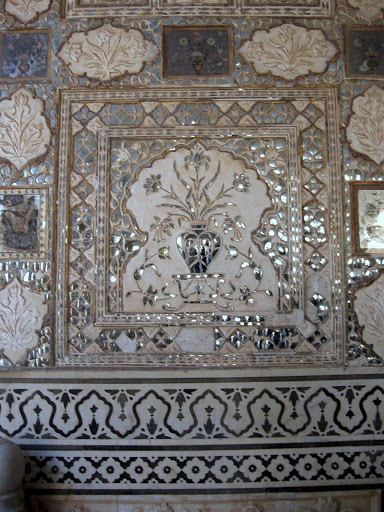
Inside, architectural interest centers around the Sheesh Mahal or Hall or Mirrors, a white stucco building whose walls and ceilings are covered by shards of mirrors and decorated with paintings of wine decanters. As in the case of the Moghul Diwan-E-Am (Hall of Public Audience) and Diwan-E-Khas (Hall for Special Visitors), here too, the elaboration of the buildings is solely dependant on their defined functions. The Rajput rulers derived a great deal of their customs of statesmanship from their far more powerful neighbors, the Moghul emperors, and traditions deriving from the Islamic courts are clearly evident in their own forms of protocol. As we found our way through the gardens, designed in Oriental style in imitation of Persian rugs, and inspected the ingenious techniques of sluicing water through channels cut expertly in the marble flooring to enable natural air-conditioning, we saw many similarities with the most famous monuments of Delhi and Agra.

Lunching in the Precincts of a Palace:
The ardent walker and shopper will find much to entice on the streets of Jaipur where colorful traditional clothing and jewelry designed from the semi-precious stones for which the area is so famous, abound, especially at Johari Bazaar.

IMG_0175


IMG_0178

IMG_0181

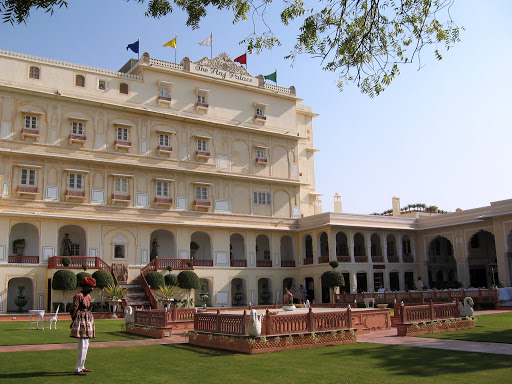
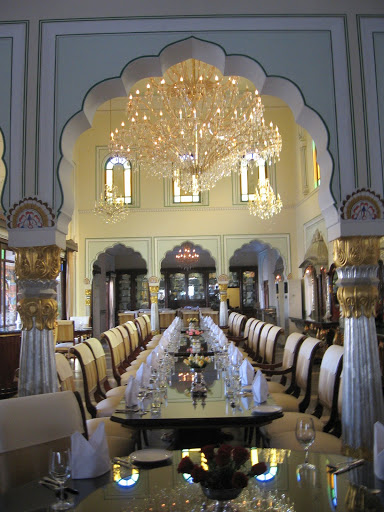
We were directed, however, to the Raj Palace Hotel, one of the many grand mansions that dot the resplendent Jaipur landscape. In manicured lawns overlooked by the white-washed walls of an unostentatious building, we settled down to sip drinks and nibble lunch. I made sure that my visit to this almost unknown palace did not exclude a ramble around its more significant rooms—and I was not disappointed. The spectacular Banquet Hall (right) was hung with humongous crystal chandeliers that were far more breathtaking than the ones in the City Palace that I saw later that same afternoon. Now converted into a deluxe hotel and serving a scrumptious lunch to Palace On Wheels passengers, Raj Palace’s glamor cannot, of course, eclipse that of its more famous cousins—the Rambagh Palace and the Jai Mahal Palace (now both hotels in the Taj chain), but it makes a neat substitute for those who lack the time to explore the more fanciful versions of royal Rajput lifestyle.

Palace on Wheels passengers are not informed about this but my trusty guide book revealed to me that this lovely gem of an 18th century palace occupies a special place in the history of Jaipur. It was built in 1739 for Sawai Jai Singh’s favorite queen Chandra Kumari Ranawatji and was used as a summer resort by the ladies of her court. In 1821, it became the official residence of the British Resident of Jaipur, the official posted in the court of every royal prince to keep a watchful eye over his activities and to ensure that the Prince toed the line in accordance with his status as a lesser minion. My guide book also informed me that it entered the most glamorous phase of its existence when Man Singh II and his gorgeous wife, the legendary Gayatri Devi, moved in from Rambagh Palace in 1956 and began entertaining the Who’s Who of the contemporary celebrity world including Prince Philip and Jackie Kennedy.
IMG_0180

Time permitting, you can do what I did on a previous visit to Jaipur, and make reservations for lunch or dinner at the Rambagh or the Jai Mahal Palace, then sit down to savor not just the food but the ambience of the monarchical corridors in which some of India’s richest and most famous once tiptoed.

Astronomical Genius of a Visionary and his Revered Abode:

IMG_0185

IMG_0184

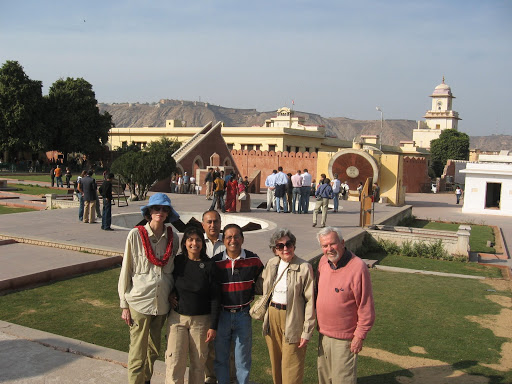
Later, that afternoon, we arrived at Jantar Mantar, Maharaja Jai Sing II’s hobby horse. A dedicated astronomer, he spent a large portion of his life in scientific pursuit, attempting to make sense of the secrets whispered to humankind by the confluence of the stars and the planets. His ingeniously designed contraptions, many embedded deep in the earth or towering upwards towards the skies, are not just architectural curiosities but fully functional. Well-informed guides can explain the objective of each one of the structures, but too little time is ever really spent on this site for visitors to understand the full impact of the genius of this far-sighted intellectual.
IMG_0188

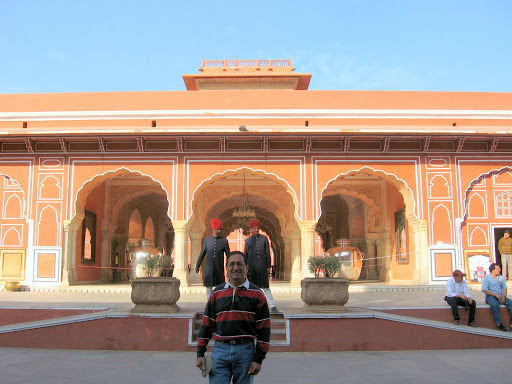
Jaipur’s wealth is more fully evident across the street in Jai Singh’s abode at the City Palace (above left) where the erstwhile royal family is still in residence. Visitors are welcomed into parts of the complex whose beautifully maintained grounds and buildings give only the merest glimpse into the fabled wealth of India’s royal families before the arrival of the British under the eagle eye of their pleasure-seeking Residents. In the museum upstairs are royal clothing, footwear, headgear and jewelry, arms and armor, gigantic crystal chandeliers that drip from the ceiling shedding pools of soft light on ancient Persian carpets underfoot, huge portraiture of forbidding rajas and lesser mortals and, my own favorite, loads of exquisite Rajasthani miniature paintings, some done with paintbrushes so fine that all they comprised were a single human hair!

IMG_0189

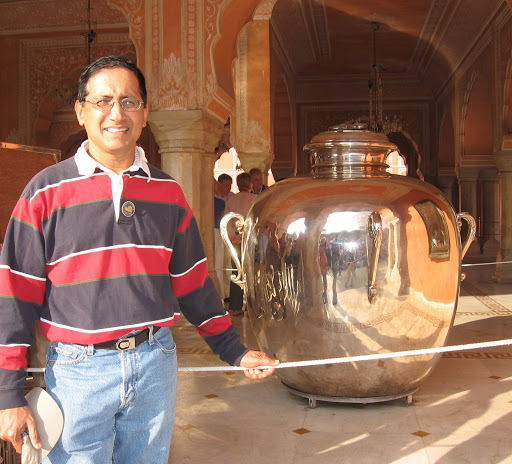
Of special interest in the grounds are the two enormous sterling silver water urns (left) that were specially designed by the erstwhile Maharaja Madho Singh II for the transportation of his personal supply of Ganges water while he voyaged to England and back. Since photographing them is such an obsession for most tourists, they are kept gleaming and well guarded by sentries whose post allows them to pocket a few rupees each time their visages are captured on celluloid.

There is much more to see and do in Jaipur and much will depend on the amount of time and the depths of your pocket. Suffice it to say that in this Mecca of tourist exploration, there is little to leave the ardent globetrotter disappointed. Whether it is history or culture you crave, trinkets or antiques you wish to acquire, tales of chivalry and grandeur to make you shiver or forts, temples and palaces to stir your imagination, you will find it here in Jaipur.

(To read more about our Palace on Wheels tour, please click on the Jaisalmer link).

Bon V0yage!

Goa: Timeless Relic of Portuguese Presence in India

IMG_0103

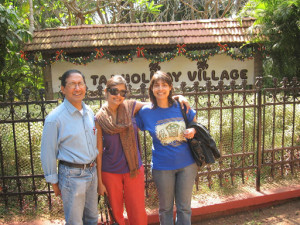
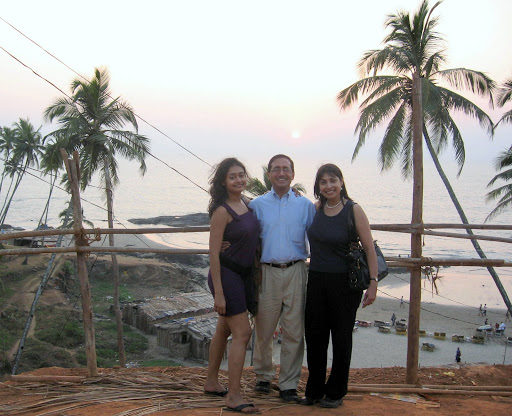
The Almeida Family at the Taj Holiday Village in Goa where we spent a few unforgettable days in January 2008

After three days in Bombay, our senses dizzy with the assault of impressions left upon it by the bustling metropolis, we badly needed a break and boarded a Kingfisher Airlines flight to idyllic Goa. Throughout the hour-long flight, as we floated above India’s western coast, pristine beaches were easily visible from out the window. When the plane did make its sharp descent into Goa’s green and verdant arms, I could have sworn I was alighting in Hawaii. Since Chriselle could join Llew and me on this leg of our Indian travels in January 2008, it meant the bonus of a short family holiday and we intended to extract every sweet ounce of our unexpected togetherness.

Creature Comforts in Five-Star Environs:

IMG_0066

IMG_0094

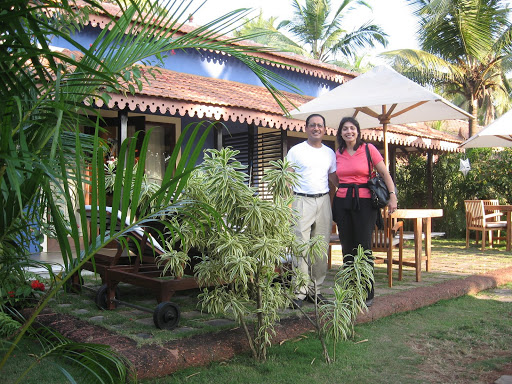
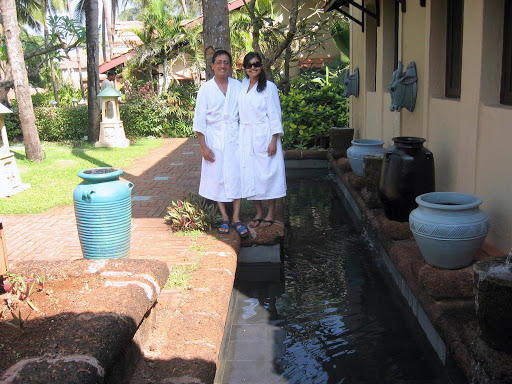
The long drive from Dabolim airport, across the Zuari River with its manganese-laden barges, and the Mandovi River with its twin bridges, brought us finally to Sinquerim Beach where we made our temporary home at the lovely Taj Holiday Village (above left and right), a beach resort that I have loved for years and to which I have frequently returned. Individual villas, many directly facing the sea, blanketed by lush tropical vegetation and riotously colored bougainvilla, are comfortably air-conditioned and equipped with thoughtful hammocks in private front gardens–the last word in personal pampering. I particularly loved the delectable chocolates and salted cashew nuts left in our room by caring personnel and the fragrant Lemon-Glycerine and Aloe-Neem soaps found in the bathroom—it is small touches like these that linger in my memory as visions of one hotel room blur into the next.

The kidney shaped pool, I discovered, was a better place in which to soak, despite that fact that the mighty Arabian Sea lay only steps from our front door. Indeed, I found the crashing waves overwhelming, even at low tide, and the drag from the undertow caused me painful knee abrasion on the gritty shoreline. However, we did enjoy the jacuzzi at the adjoining Fort Aguada Beach Resort where the luxurious spa is located. As for the restaurants, the Banyan Café that specializes in pan-Pacific cuisine, served us one of the best meals I have ever eaten in my entire life—a Thai feast that offered a sampler of the sweet, sour, salt, spicy combinations that are the most appealing aspects of this unique cuisine. For all these reasons, even had we never left the resort, we would have had the time of our lives in Goa.

Pausing amidst Passionate Jesuit Ardor:

IMG_0077

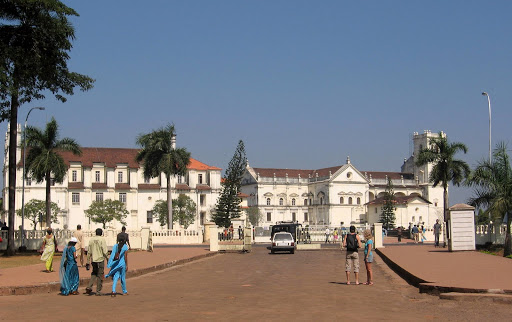
As it turned out, we did venture far beyond the reaches of Sinquerim Beach, taking a sight-seeing tour to Old Goa which is one of my favorite parts of the city. Old Goa, or ‘Velha’ was the religious base of the Portuguese while the state remained an imperialist colony and in the clutches of Jesuit proselytizers. Though Panjim was built, in imitation of Lisbon, as its administrative capital and still retains vestiges of its Mediterranean ambience, it is at Old Goa, in the environs of the colossal Se Cathedral (the largest in India–above left) and at the Basilica of Bom Jesu that the full zeal of Jesuit passion in South India is visible. In these gorgeous Baroque churches, crammed with ancient statuary, sterling silver caskets—one of which is similar to the concealed coffin that holds the mortal remains of St. Francis Xavier—and intricate artistry on towering altars, one can appreciate the vigor with which Christianity arrived and was established in India. What I most love about this area of Goa is the quiet serenity of the sprawling grounds in which the two mammoth churches are located and despite the crowds that mill around, the essential peacefulness of the area is never affected.

The Pleasures of Panjim and Rustic Routes:

IMG_0093

Panjim, equally, offers the pleasures of random rambles past double-storeyed wooden structures whose balconies are enclosed by wrought-iron railings. Ugly commercial activity on the lower floor had destroyed much of the gentle reminders of an age long past; but if one is looking to snatch some of the bucolic quality of life in Goa, one must reach out into unknown villages in the interior, far from the tourist buzz. Here, white-washed churches, constructed in the Portuguese style, pop from out of the midst of emerald-green rice fields (right) .

IMG_0105

Water buffalo wallow in algae-slick ponds, cashew and coconut groves whisper in the faint breezes that carry with them the fragrance of queen of the night. Cicadas can still be heard singing plaintively on quiet evenings and despite the construction frenzy that has engulfed Goa in its recent discovery as a winter resort by moneyed Europeans looking for second homes, the state still retains much of the charm and serenity that had always endeared it to me.

IMG_0080
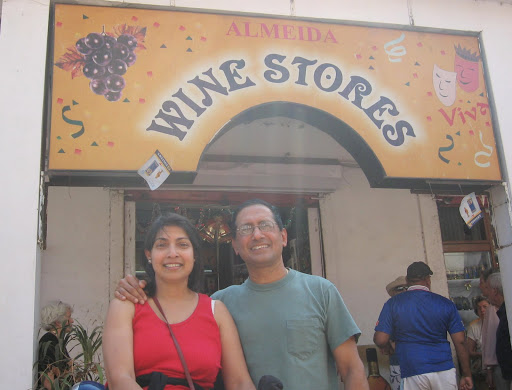
Though hard to imagine, it is easy to get lost in the quiet pace of a Goan bazaar. Staring at strings of spicy sausages hanging from the rafters or at rows of Port wine bottles in a neighboring liquor store—one rather amusedly named Almeida Wine Stores–see right– alas no relation—one loses the feeling of being grounded in reality.

So get away from the beaten path in Goa and ramble in the old enclaves where once guitars twanged seductively and carafes of wine were downed in joyful celebration.
When three days later, we prepared to board another Kingfisher Airlines flight to Delhi, I was actually sorry to leave the peaceful paradise behind—a place where the names of beaches such as Calangute and Vagator, Baga and Colva, roll mellifluously off the tongue evoking days of wine and seafood dinners (see below) savored under the stars along the sands where the salty tang of Arabian Sea air stimulated the appetite for more.

IMG_0104

)To continue your armchair travels with us on our January 2008 trip, please click the Delhi link).

Bon Voyage!

Delhi: Ancient Capital of Kings and Colonizers

IMG_0111

Outside the Red Fort in Delhi

There really are two Delhis—Old Delhi, at least a millennium old, studded with the tattered architectural remnants of at least seven ‘sultanates’ and New Delhi, the colonial city of Sir Edwin Lutyens and Herbert Baker, characterized by sandstone solidity and Indo-Sarasenic motifs. If you try, like we did, to visit the scattered monuments of old Delhi at dawn, long before tourist hordes have laid claim to the footprints of history, you will be enchanted and transported to a long-gone epoch when valiant Moghul troops clamored along mud trails and left behind evidence of their lasting enthusiasm for the rugged plains of India.

Strolling In the Footprints of History:

IMG_0612

IMG_0606

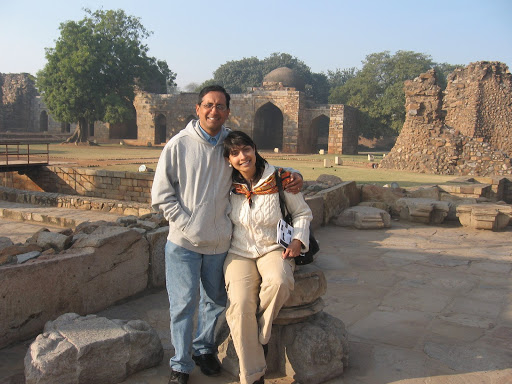
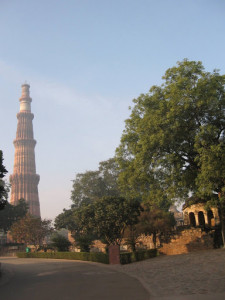
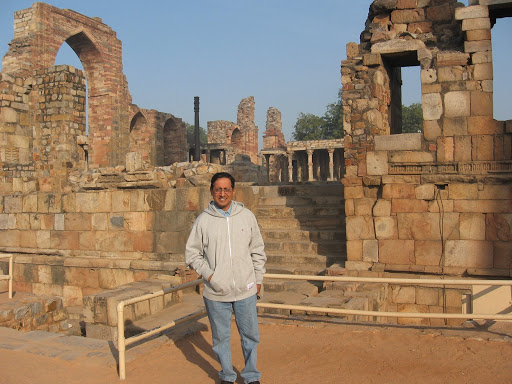
At the Mehrauli Complex that marks the location of the famous Qutub Minar (above left), the towering minaret that reaches out to the skies, I was charmed by the coalescence of three religions—Hindu, Jain and Islam as evidenced in the motifs on the granite and sandstone carvings. The eternal mystery of the iron pillar that has refused to rust will bedazzle as will the arches and columns, corridors and canopies that mark the existence of a once-flourishing society (above right). Almost magical, as is the Roman Forum when devoid of visitors, I could have stayed in this complex all day.

IMG_0613

But other parts of Old Delhi beckoned—as at the hunkering Red Fort whose ramparts have seen centuries worth of historic happenings from the establishment of his capital by Moghul Emperor Shah Jehan in the 1600s to the arrival of their majesties George V and consort Queen Mary at the opening of the Delhi Darbar in 1911. Once inside the complex, now thoroughly equipped with security machinery including friskers who inspect each visitor for concealed arms, there is much to be learned about Islamic architecture and royal lifestyle within its precincts.

IMG_0120

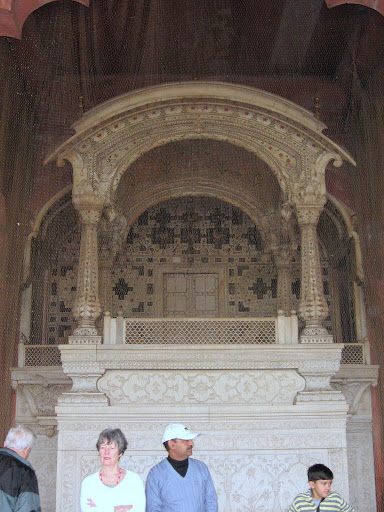
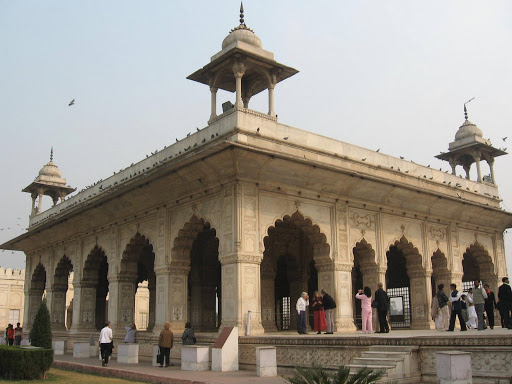
As I crossed the alleyway crammed with jewelry and clothing stores that line the old Meena Bazaar, I could almost hear the tinkle of anklets that once adorned beautiful courtesans of the harem who vied with each other to purchase the most enticing merchandise. Once inside the vast environs of the fortress, we gazed with wonder upon the main features of Islamic decorative arts that would find their fullest fruition in the majesty of the Taj Mahal in Agra. Still, the first-time visitor has an amazing introduction to marble carvings of flowers and vines, pietra dura inlay inspired by Renaissance Florence featuring semi-precious stones encrusted in non-porous marble and lace-like lattices that permit the circulation of air and allow residents to remain concealed while looking upon the passing scenes of daily life outside. In the two main buildings—the Diwan-E-Am (House of Commons, if you like) and the Diwan-E-Khas (House of Lords, for private audience with the Emperor–above left) one can see every element of Islamic design as manifested on the Indian sub-continent(below left), not to mention that tiny gem—the Moti Masjid or Pearl Mosque (below right) built for the exclusive use of the emperor himself.

IMG_0114


IMG_0118

Just across the street in the busy narrow alleyways of Chandni Chowk, one of the oldest parts of Delhi in continuous use by its residents, lies the Juma Masjid, the world’s third-largest mosque, capable of accommodating 20,000 worshipers. Unlike the world’s other great mosques such as the Blue Mosque in Istanbul which is entirely enclosed, the Juma Masjid is open to the skies, its holy mihraab covered with Koranic calligraphy. As we circulated at noon through the amazingly spacious dimensions of this mosque, we felt the full weight of Indian Islam settle upon us for the sounds of the muezzin’s calls wafted around our shoulders and little boys in white skull caps prepared for afternoon namaaz. Outside on the frenzied streets, cycle-rickshaws took fascinated visitors around the maze-like tangle of allies and gullies where homes, shops, restaurants and offices sat cheek by jowl.

Lingering Amidst Edwardian Designs:

IMG_0108

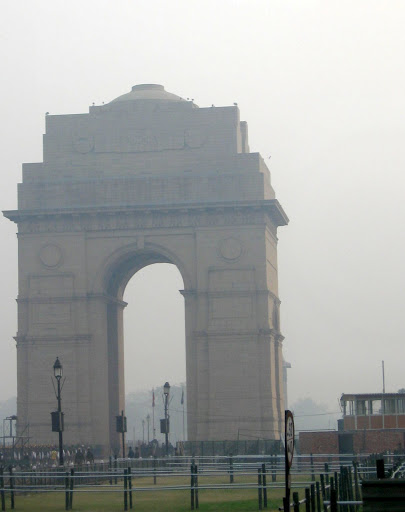
Lutyens’ New Delhi is visible, sedate and coy, behind towering evergreen yew hedges where his white-washed, squat bungalows peep shyly. His Edwardian vision for a grand capital is evident at India Gate (left) and along the promenade that extends all the way up the hill to Rashtrapati Bhavan, once the Viceroy’s Residence, now home of India’s President. Here, pink and yellow sandstone form a complex labyrinth of stolidly impressive buildings that once proclaimed the power of the mighty British Raj but currently house indigenous Indian government offices and ministerial residences. A drive past the buildings offered us a closer look as traffic flowed freely around the rotaries that brought order to Delhi’s habitual chaos.

Other samples of modern Delhi’s vibrant social life are glimpsed at Connaught Circus, the magnificent interlocking series of crescent-shaped buildings where today everything from suiting and clothing to handicrafts and handbags might be purchased. Meanwhile, on the outskirts, in the new residential ‘colonies’ that mushroomed after Independence to accommodate new settlers from areas of Sind and Pakistani Punjab, one sees the complexities of North Indian lifestyle and culture in flashy new cars and designer boutiques.

Embarking upon the Rail Journey of a Lifetime:

IMG_0125

IMG_0134

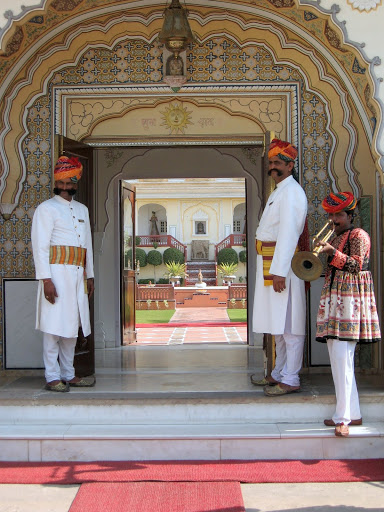
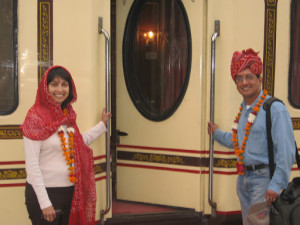
We stayed at The Claridges in Delhi, a hotel that must not be mistaken for having any kind of association with its posh, more revered namesake in London. Front Office services left a lot to be desired in this five-star hotel, though the meals we had at Pickwick’s, the restaurant on the ground floor, were outstanding. We didn’t stay there too long, however, making our move the next evening to Safdarjung Railway Station where we boarded the famous Palace on Wheels train in the midst of a great amount of welcome fanfare that included folk music, red powder tikkas on our puzzled foreheads, marigold garlands, tie and dye dupattas for the ladies and turbans for the gentlemen and an introduction to the two men who would be our personal valets throughout the trip (above right) .

IMG_0588

Ours were Anil and Mahaveer  (left) who escorted us to our cabin in the Udaipur saloon.

(For more information on the Palace on Wheels Tour, please click on the Jaipur link).

Bon Voyage!
Chittorgarh: Final Outpost of Rajput Honor


IMG_0413

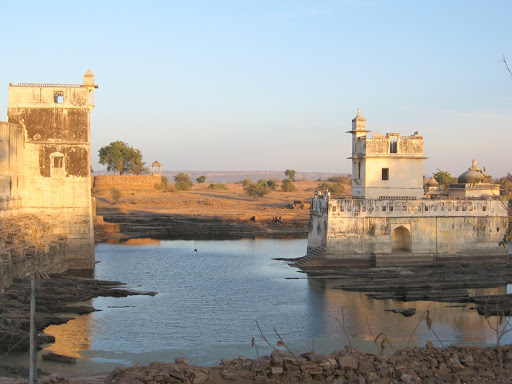
Outside Queen Padmini’s Palace

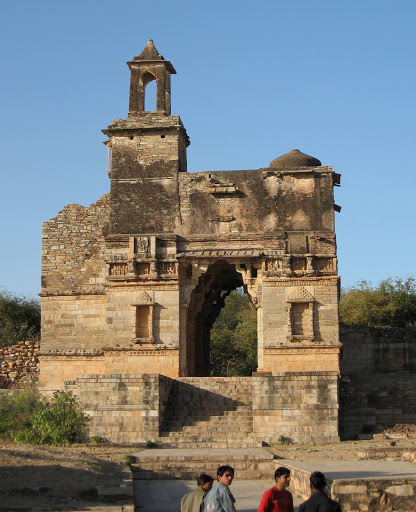
The disappointment of not seeing tigers was dissipated by our arrival in stirring Chittorgarh, a part of Rajasthan that I had never before visited. Here, the main attraction is the incredible fort that stretches out as far as the eye can see along a rocky promontory reached along a snaking mountain path that opens up at seven intervals through ‘Pols’ or Gates, each of which is studded with metal goads to deter charging elephants. Merely imagining the warfare that might have smeared the walls with the blood of courageous soldiers, kept me deeply reflective during the long drive up to the fort’s ramparts.

IMG_0403

Once the driver expertly negotiated those narrow gates and entered the fort’s expanse, there was so much to discover. As Rajasthan’s mightiest fort, it had been the target of successive invaders from 1303 when Sultan Allaudin Khilji had marched his troops in, to 1535 when Bahadur Shah of Gujarat had made a bid for the territory, to the final assault upon it by mighty Moghul Emperor Akbar who in 1567 was finally able to capture it and vanquish the brave Rajput rulers.

IMG_0409

In a brilliant sound and light show that we witnessed along the walls and ramparts of the fort, we heard the stirring stories of ‘jawhar’, a conspiracy to commit mass-suicide by the honorable women of the court, by jumping into a bonfire, because they would rather give up their lives than be violated by the marauders. I could not help wondering why these women did not choose a more painless way to die—but then, where would be the sting of Death in so pyrrhic a sacrifice?

IMG_0397

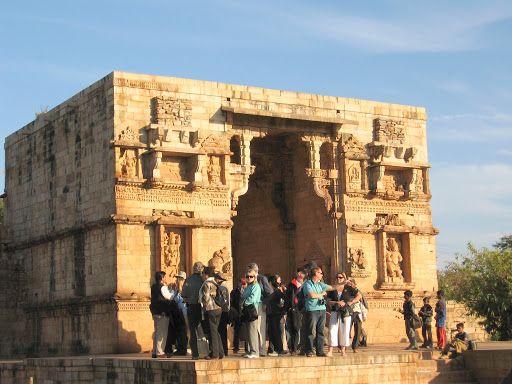
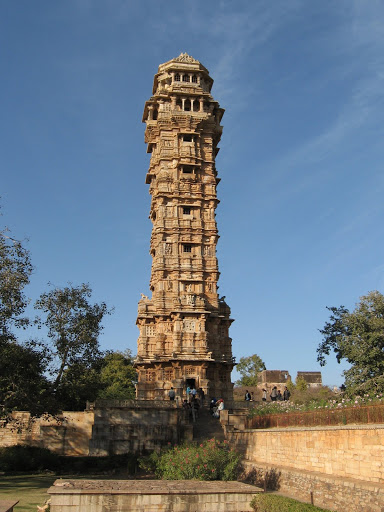
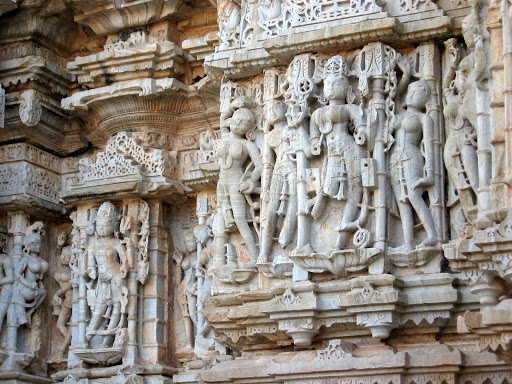
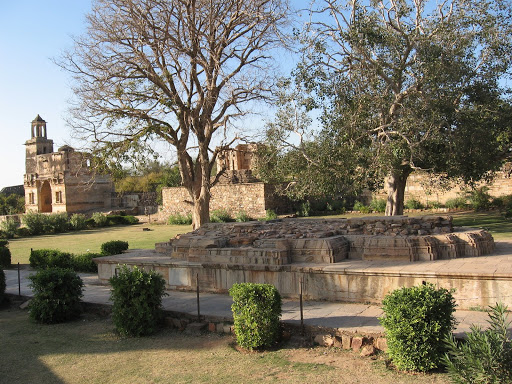
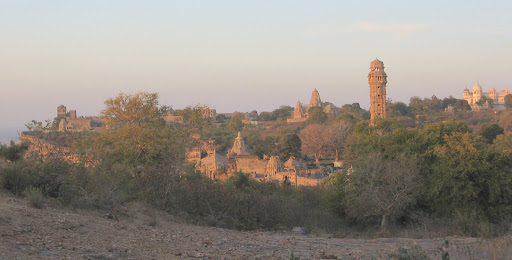
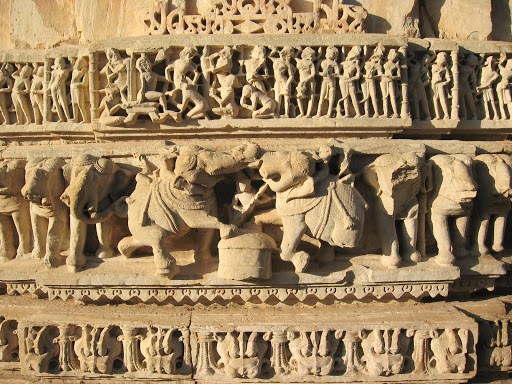
Chittorgarh is too massive to discover on one afternoon or indeed even in a month. Its many corners are studded with Hindu temples, one of which honors the royal lady Meera Bai, a poetess and spiritualist and great devoteee of Lord Krishna whose poems and songs are the stuff of legend inasmuch as the tales of courtly heroism and chivalry hark back to a long-dead epoch. The most visited of monuments in this complex is the Vijay Stambh or Victory Tower (left), a monument that rises nine stories into the sky and features an intricate array of carved figures. Just a few feet away is the breathtaking Kalika Mata Temple, also covered with stone carvings featuring a stunning array of fat and lovable elephants and Indian deities portrayed as courtesans in various poses of dance and seductive entertainment (see below). When I had encircled the temple and paid respects inside to the goddess to whom it is dedicated, I made my way down to the Gaumukh Resevoir, source of a natural spring, named for Nandi, the Bull or ‘Gau’ whose sculpture guards the entrance.

IMG_0405

IMG_0407
IMG_0400

Another attraction at this complex is Padmini’s Palace, a small and rather modest two-story structure in white marble (below right) that commemorates the chastity and honor of Queen Padmini upon whom Allaudin Khilji had lustful designs. Because her husband, the Rajput chieftain, would not give her up to the more powerful Khilji, she devised a way by which she could be seen by him indirectly–through a mirror hung on a wall—thus preserving her modesty and her honor. Such tales of men and women who went to their deaths painted with the bright colors of honor and nobility abound in stirring Chittorgarh, a town that is visited only on the daytrip circuit by tourists from nearby Udaipur.

IMG_0417

IMG_0415
Perhaps that would explain why its people seem to be untouched by the swift march of time. I met the cutest children selling postcards who completely stole my heart away long before their bright and dazzling smiles reached out to me in wordless ways and their total lack of guile pulled at my heart strings. Of these, I will never forget 12 year old Udailal, from whom I purchased postcards and who persuaded me to request members of our party to buy postcards from him. A Grade VIII student during the week, he sells postcards for pocket money on the weekends. His industry and his enterprise were admirable in one so young and so determined to make a success of his life. In his spotless blue shirt, perfectly pressed and in the neatness with which his hair was oiled and combed, I saw a level of grooming that proclaimed high self-esteem and I felt transported to the fifties, to a time when kids were completely mannerly and lovable and a true pleasure to talk to. The future of India, I realized, lies in the hands of these children and if their fortitude and hard work and sense of dignity that comes from such simple labor is any indication, I am convinced that only bright days lie ahead for the country of my birth. It was brushes with such ordinary folks as these that made me realize how essential it is for the sensitive traveler to look beyond the beggars and the crippled in order to find positive signals of the strides that India has recently made and to know that this trend can only continue into the future.

IMG_0412

Another fleeting moment that stays with me in Chittorgarh was the naked gratitude I spied upon the face of our tour guide when I offered him a cup of coffee during one of our tea breaks. “Here”, I said to him, completely spontaneously, “why don’t you have this? I think you require this much more than I do”. He looked at me as a smile of unabashed delight spread all over his face while he reached out and took the proffered cup from my hands. I know that it is sights like these that will stay with me long after I have filed away the photographs of temples and forts and mosques and palaces.

IMG_0398

Back on the Palace on Wheels, the twinkling lights on the fortress of Chittorgarh receded into the distance as the train slowly ate up the miles towards Udaipur, stately residence of kings and their consorts.

A lovely overveiw of the architectural marvels of Chittorgarh

A lovely overveiw of the architectural marvels of Chittorgarh

(To continues your travels with us on the Palace on Wheels, please click on the Udaipur link).

Bon Voyage!
Bombay: Stirring Remnants of a Colonial Past

IMG_0056

The Almeida Family at Bombay’s most distinguished landmark–The Gateway of India

Bombay seemed to sparkle softly in the clear light of a winter’s afternoon when I arrived there in late December 2007 at the start of what would prove to be one of the most exciting months in my memory. Brisk temperatures and a complete lack of humidity peeled away the polluted haze that usually accompanies the weary traveler on a ride into the city from the distant suburb of Andheri where the international airport is located. Habitual traffic snarls along the Western suburbs undid the speed acquired on the newly-minted flyovers of which the city is proud, but by the time we arrived at the waterfront at Apollo Bunder to occupy rooms at the Taj Mahal Hotel, we were well and truly ready to crash.
IMG_0051

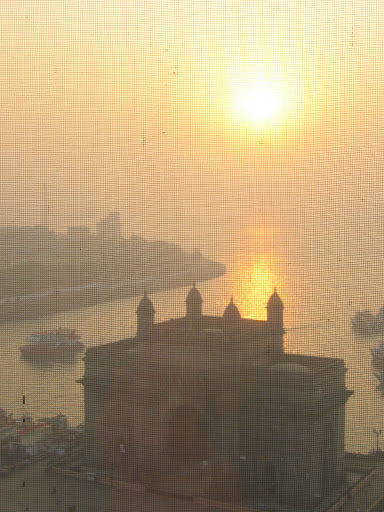
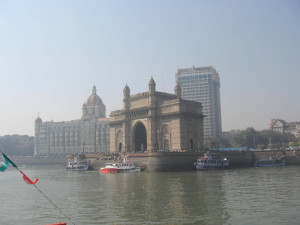
We lay bathed in golden light at dawn as the sun swept over the Arabian Sea and gilded the granite edifice of the Gateway  of India (right). In the hushed air-conditioned seclusion of our room, we floated miles away from the urban chaos. Later, fuelled by an incredible breakfast buffet, we strolled outside the Taj amidst the rubble left behind by cable installation on the tarred roads as eager vendors attempted, somewhat inexplicably, to sell us colossal balloons. At the Wellington Fountain, near the Regal Cinema, traffic moved far more smoothly than I remembered. Our forays into the National Gallery of Contemporary Art in the former C.J. Hall permitted us to admire the architectural handiwork of Rohit Khosla of Delhi who has transformed the Victorian space quite ingeniously into a modern art gallery featuring the work of India’s most significant living artists.

Fort Area on Foot:

IMG_0030 IMG_0036

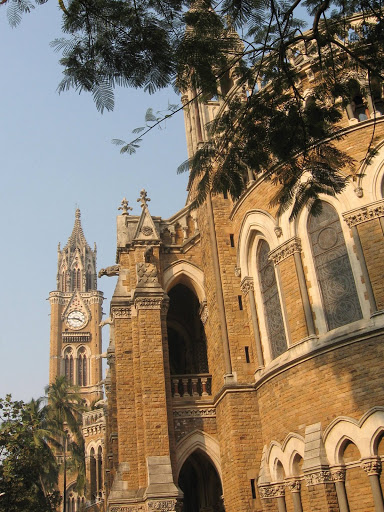
But it was on a walking tour of the former colonial area of Fort that I fell on love all over again with the city of my birth. Armed with Fiona Fernandez’ book entitled, Ten Heritage Walks of Mumbai, I embarked on my round of re-discovery, starting at the fabulous Indo-Saracenic Prince of Wales Museum guarded by palm tree sentinels. Crossing the street to the quadrangle of Elphinstone College, my own proud alma mater, my heart skipped a beat as memories of carefree college-days came flooding back. Having been recognized as a heritage building, it has been spruced up considerably and looks far more spiffy that I can ever remember it being during my own dust-ridden student years within its hallowed walls. Still, the fact that the college counts among its alumni some of the city’s best-known industrialists, patriots, lawyers and statesmen is reason enough to excuse the lack of routine maintenance.

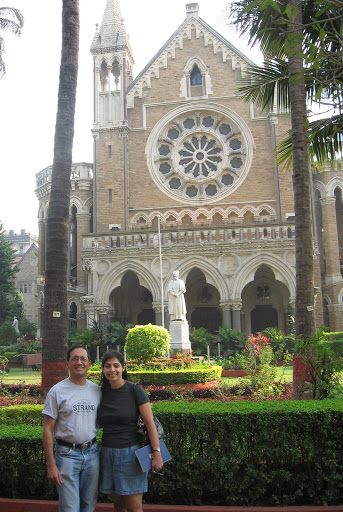
Walking over past the Civil Courts towards the outer borderlines of the campus of Bombay University, I admired the Indo-Gothic facades, the spiral stairways, the tall pillar of the Rajabai Tower within whose walls lie concealed the library with its miles of stacks over which I had once poured as a doctoral student and the handsome columns of the Convocation Hall where once, in graduation cap and gown, I had been part of the procession that comprised Commencement Exercises . This time round, I proudly posed with Llew (see above), delighted to introduce him to the oft-frequented pathways of my happy youth.

IMG_0040

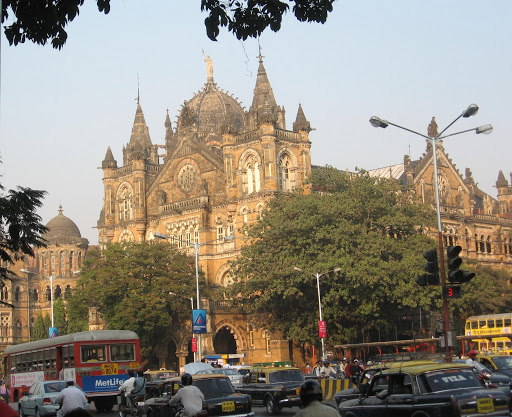
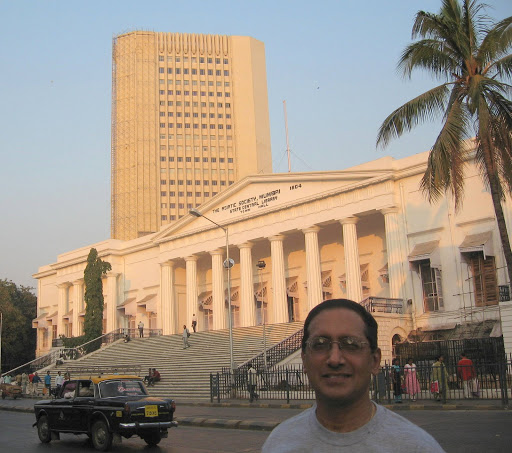
The Bombay High Court and the Central Telegraph Office that lie along the periphery of the Oval Maidan echo architectural elements and bring the walker to the famous Flora Fountain, the heart of the old Fort. All along the road leading eventually to the embrace of the Old Lady of Bori Bunder, the Victoria Terminus (above left), the eye is thrilled by the variations in architectural design  of India that characterize the buildings of the late nineteenth century. It is difficult, however, to truly admire their details as one is too busy watching one’s step to avoid tripping over pot holes and recently dug up sidewalks. Still, the adventurous local historian in me could not but be swept by a sense of exhilaration as I traversed those stony pathways, taking at will a by lane here or an alley there only to find myself in a Victorian park or abreast of a perfect crescent or gazing upon the walls of a Parsi agiary at one step and the solid masculinity of the old Reserve Bank of India where I had once worked or the Neo-Classical columns of the Town Hall (below right) on the other. I cannot recommend enough that visitors to Bombay abandon the indignities of public transport to traverse randomly on foot over these historic colonial realms.

IMG_0041

IMG_0026


Bombay on Wheels:
Bombay also promises the soft breezes of the Arabian Sea at Marine Drive where the Art Deco buildings imitate those of Miami’s South Beach. Alongside the gigantic concrete ‘tetrapods’, built to combat the fury of the ocean’s crashing waves, these buildings form the jewels in the Queens Necklace that glitter at night as endless traffic snakes its way up into the wooded reaches of Malabar Hill. It is worth exploring this part of downtown Bombay from the well-brushed sands of Chowpatty Beach, site of once-significant protests against crippling colonial policies, to the leafy serenity of Laburnum Road at Gowalia Tank, site of Mani Bhavan, a grand and lovely wooden mansion where Mahatma Gandhi made his home during his infrequent visits to the city. Converted quite movingly into a Gandhi Museum, this is one of my favorite museums in the world, modest though it might appear to the well-traveled visitor. The vignettes from Gandhi’s life, captured on the top floor in miniature are superbly done and the simple room, cordoned off to visitors, in which Gandhi spent his time, furnished only with his meager possessions– low desk, sandals, walking stick, eye glasses, etc. is deeply moving, particularly to those who are well-informed about the policies and personal beliefs of the Mahatma, his austerity and his renunciation of all comforts and luxuries.

On Malabar Hill, the Parsee Tower of Silence, last resting place of the religion’s devotees, which cannot be visited but merely skirted, brings visitors a lesson on the unique beliefs and practices of this tiny but very significant Indian ethnic minority who have contributed so enormously to the cultural and economic life of the community. It is also on Malabar Hill that a Jain Temple is an oft-visited site–its marble carvings and sterling silver doors fascinate the first-time visitor. Atop a resevoir that provides the city with its water supply, sits a revered garden whose curiosities include an Old Lady’s Shoe (from the Mother Goose Rhyme) and a Floral Clock. These were the sites I visited often as a child on a weekend evening’s outing in the company of my parents and brothers and visiting them today always brings a lump of nostalgia to my throat.

Further down the tree-lined street, where the Peddar Road Flyover emerges, take a detour towards the left to drive along Warden Road to see the apartments that comprise some of the world’s most exorbitant real estate. At the end of this road, at Haji Ali, stands a Muslim mausoleum in the middle of the sea, its marble façade lapped gently by the grey and murky waves that engulf its walkway completely at high tide. The drive along the city’s Golf Club and Turf Club take one into its greener reaches to bring into focus the world’s largest outdoor laundromat at Mahalaxmi Railway Station where the city’washermen or ‘dhobis’ launder the clothes and linens of the populace in a completely unique fashion.

Carven Craftsmanship in Elephanta’s Caves:
Amazingly, only a short boat ride away from the Gateway of India, at Elephanta Island, are perfectly preserved Hindu rock-cut monolithic cave temples, a trip to which offers two things: an unusual view of the city from the Bay in noisy ‘launches’ that imitate the voyages of British administrators to and from the colony, and the opportunity to marvel at the industry and artistry of devoted carvers who created exquisite religious panels between the fifth and seventh centuries to appease their vast pantheon of gods.

IMG_0014

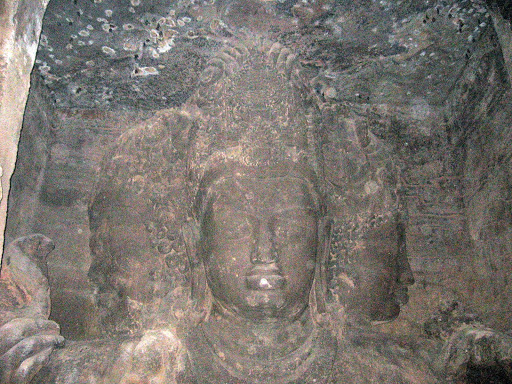
Of these, Shiva as Trimurti (right) is the best known but every single one of the panels tells its own quiet story—reams of Hindu mythology are faithfully reproduced upon their granite walls as also the long saga of wanton destruction perpetrated upon these temples by fanatic Portuguese missionaries in their zeal to spread the Christian faith in newly-colonized India.

As a bonus, one can find humor and comedic performances in the antics of brazen monkeys, one of whom actually snatched a bottle of Limca from a startled tourist, twisted the screw top open and drank thirstily off its contents, right before my disbelieving eyes.

IMG_0010

Named by the Portuguese for a stone elephant that once guarded entry on to the island, there is now a modern mini-railway line (left) that takes visitors from the boat’s dock to the rock-hewn steps—lined by the distractions of stalls selling clothing, jewelry and cheap handicrafts—where palanquins hoisted up by sturdy bearers allow one to be transported in comfort.

‘Mumbai’ in Motion:
 Recently re-named ‘Mumbai’, the city, like the country, is obviously in motion. It has often been described in guidebooks as India’s most prosperous city and indeed this is evident in the many gold and diamond jewelry ‘showrooms’, gourmet restaurants and vibrant nightclubs that have sprouted in recent years to fulfill the desires of the nouveau riche. But there is the other Bombay—the Bombay that is dearer to my heart—a Bombay of gracious old buildings whose paint is peeling hopelessly away and stripping it of its collective memory in the bargain. A Bombay of timeless peanut-vendors and juice-pressers who tempt local residents with small treats on a routine day. A Bombay of wily urchins and crafty salesmen, stoic policemen and crude taxi-drivers, of jaded long-distance commuters and street side booksellers. This is the Bombay that continues to survive in the midst of the flashy new money, the current awareness of heritage preservation, the celebrity chefs whose TV programs are raking them millions of rupees in multi-cuisine restaurants and the number-crunchers on the Bombay Stock Exchange, where fortunes are made each passing day as the Sensex index rises. This is not the Bombay of my growing years, but its newly-fashioned global avatar.

IMG_0060

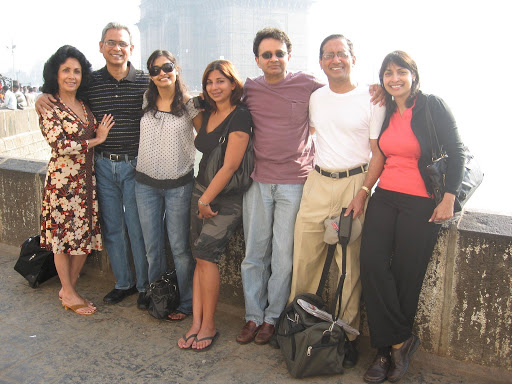
Who would ever fathom that in this seething city of eighteen million people, we would actually bump into friends, also visiting India from the United States and Australia, at Bombay’s most distinguishable monument The Gateway of India (left)? Amidst hugs and squeals, we posed for pictures taken by an obliging passer-by, and remembered our salad days in this nostalgia-ridden city (see picture above left).

Indeed, much has changed and though I travel to the city if not twice then at least once a year, I am still unable to keep abreast of its rapid alteration. But no matter how changed its complexion, the eternal heartbeat of Bombay is what I carry with me in my consciousness wherever I may travel or choose to live.

This is the Bombay that I invite you to discover for yourself on your own adventurers in the city.

(To continue your journey with us through the route we took in January 2008, please click on the Goa link).

Bon Voyage!
Bharatpur: Exploring the Keolodev Ghana Bird Santuary

IMG_0528

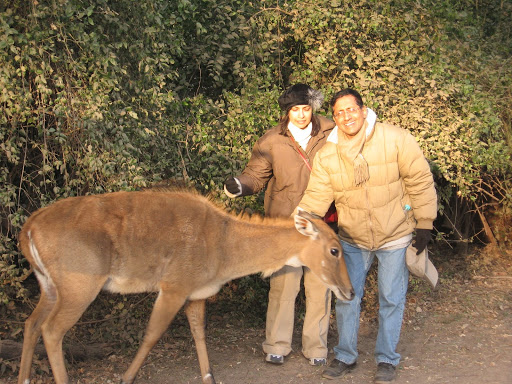
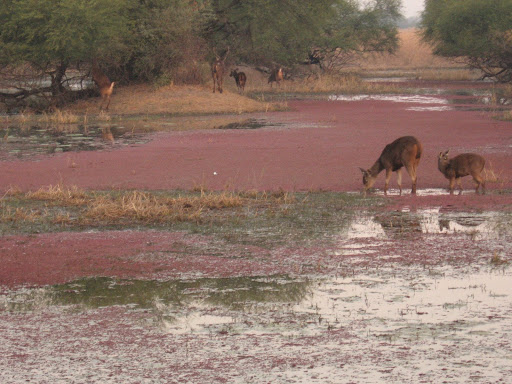
Coming face to face with a sambha–Indian antelope– at the Keolodev Ghana Bird Sanctuary at Bharatpur

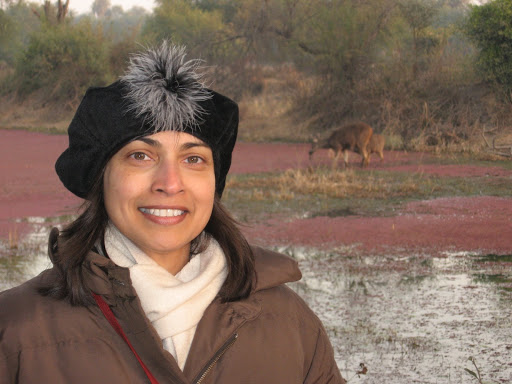
Because the whole point of a safari or of a bird watching expedition is to be able to catch sight of as many furred or winged creatures as possible, one needs to get to them at first light when they emerge from their night time hideouts to feed and drink at watering holes. Our excursion to see migratory Siberian birds took us to the bird sanctuary at Bharatpur early one cold morning when, anticipating the freezing temperatures, we dressed warmly and left our train.

IMG_0512

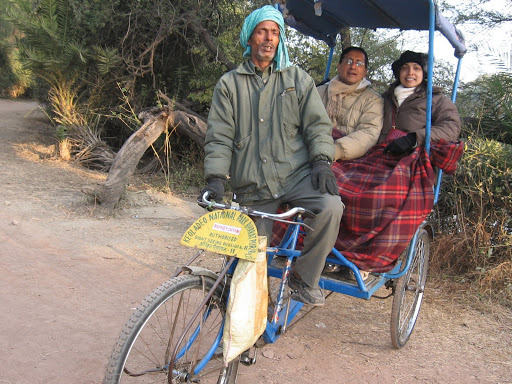
Arriving at Bharatpur while it was still dark, we were transferred to cycle-rickshaws, another interesting mode of Indian transport which Palace on Wheels passengers were given the opportunity to experience. The rickshaw driver functions as a tracker, ‘sighter’ and commentator and one can only hope for a competent guide who, in addition to possessing the necessary knowledge and skills, can also speak English in order to pass on his invaluable information to his passengers. We were not disappointed. Our driver was an expert ‘sighter’ and as he pedaled deeper and deeper into the sanctuary, he seemed to see our winged friends in spots that we would never have dreamed of looking. Initially, the mile after mile of dry shrubbery seemed to yield nothing at all, for, as our driver informed us, the monsoon has been scarce for several years and the watering holes have all but dried up.

IMG_0502

IMG_0499

IMG_0520

IMG_0532

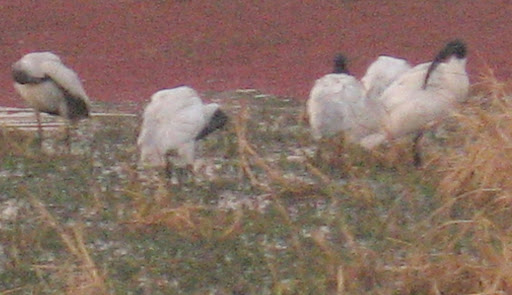
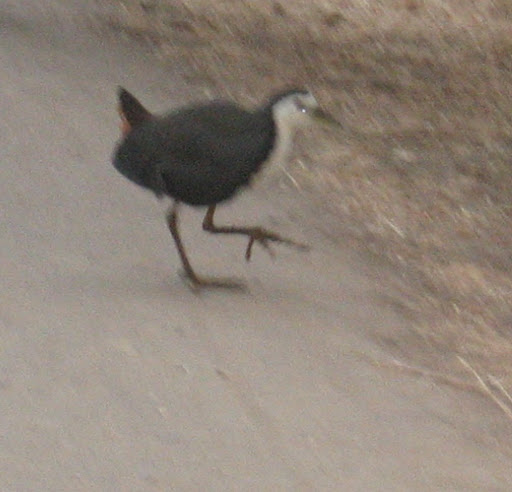
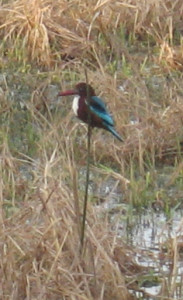
(The range of birds that we spotted at Bharatpur included Ibis and Egret, Herons and Kingfishers)

For migratory birds from Northern Europe to be attracted to settle and nest in these spots, they require water.

IMG_0509

Then, just when it seemed as if our excursion would be another wild goose chase (pun unintended!), the landscape opened up and daylight broke over the sanctuary to reveal hordes of hidden birds such as ibis and egrets, herons, kingfishers and owls in the shallow wetlands that encompass the eleven square miles of ‘ghana’ or dense forest that make up this area. In-between we saw sambha or antelope and nilgai or blue bull so tame, they walked right past us without batting an eyelid while we clicked pictures furiously, not willing to let the intimate moments with such wild creatures pass us by.  Despite the fact that the wetlands are now almost dry and the presence of the Siberian crane is just a happy memory in these parts, we spent one of the most unforgettable mornings of our trip on this wonderful excursion.

IMG_0530

Plus, the outing afforded another one of the heartwarming moments that I will always carry with me from my travels in India: the beaming smile and grateful salaam I received from our rickshaw driver when I tipped him handsomely for his efforts as a tracker and sighter and when I peeled off my warm woolen gloves and presented them to him because his had holes in them as large as new potatoes. He was so surprised by my gesture that he put them straight into his pocket! “Try them on”, I urged him, “see if they will fit you”. But he was so busy being astonished by my gesture that a sudden shyness came over him and turning quickly away, perhaps to shield himself from embarrassment, he thanked me quietly and made off in a hurry.

IMG_0533

It was moments like these–moments of sudden giving–that rewarded me with some of the most brilliant smiles I saw on my travels–smiles that were worth their weight in gold. It still warms my heart to realize that somewhere on that paved sanctuary road in the boondocks of Bharatpur, is a cycle rickshaw-driver who, on wintry mornings, no longer needs to blow upon his freezing blue fingers or to warm them at a passing campfire.

(To continue to follow on our travels with The Palace on Wheels, please click the Agra link.)

Bon Voyage!

India: Beloved Land of My Birth

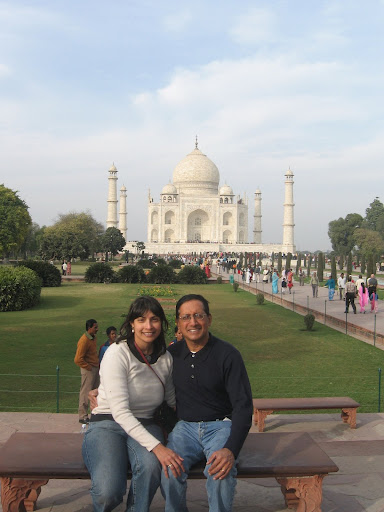
Llew and I pose at the Taj Mahal in Agra at the culmination of our travels in North India in January 2008

As you might have realized from browsing through this website, I was born and brought up in India,  a country that I continue to love dearly and that remains in my heart no matter where I might travel or choose to live. For the nearly twenty odd years since I have lived in the West, I have traveled to India regularly if not twice a year then at least once in the summer. The long vacations afforded me by my position as a Professor makes it impossible to stay away from the  beloved land of my birth. Each time I have returned to India, I have explored a different facet of her geography and although I have been traipsing across the length and breadth of India since I was a child in the company of my parents, it has been only as a mature adult that I have come to fully appreciate the richness of her culture and her wealth of history.

Follow me now on my sojourn over Indian trailways. Take your pick of the choices above from the farthest reaches of the Himalayas in the foothills of the verdant Vale of Kashmir  to the tri-colored sands of Kanyakumari (Cape Comorin). Let us walk in the footsteps of kings in Rajasthan and dally with colonial officials in Bombay and Calcutta. In-between, we shall uncover little-known hamlets like Chittorgarh that the world forgot and Orcha that it has only just begun to  discover.

My India awaits…join me on a journey of passion and pleasure.

Bon Voyage!
Britannia Rules The Waves!

Britannia Rules the Waves

(Llew and Rochelle at our dining table decorated with a festive Fall theme)

Dear Gourmet Club Members:

Since I am such a confirmed Anglophile and since we have never tried to cook British Food (“Is there such a thing?” asks Amy), I thought we would take inspiration from across the pond and whip up some magic.

Seeking counsel from a number of high-profile chefs who have created a sensation on the TV Food Network (Jamie Oliver, Nigella Lawson and the Two Fat Ladies) as well as from our own resident English lady Jan Meyrick (who also lent me her Yorkshire Pudding Pan), I have come up with a traditional British menu which contains all the favorites, but gussied up to reach gourmet heights. I hope we will find it interesting to cook and delicious to sample.

Please note that all recipes serve 8 and that crème fraiche should be available at a gourmet food store such as Balducci.

Let’s plan to have a jolly good time!
Happy Feasting!
 Llew and Rochelle

BRITANNIA RULES THE WAVES!

Date: Saturday, October 13, 2007

Time: 7.30 pm.

Place: Holly Berry House, 25 Pequot Avenue

Southport, Connecticut 06890-1300

WINE LIST
La Craie, Pouilly-Fume, Domaine de L’Abbaye
Chateau de Cazenov, Grand Vin de Bordeaux
Saint-Deran, Les Trois Bouquets 2005
Cotes du Rhone, Saint-Esprit 2005, Delas
MENU

Appetisers:
PIGS IN BLANKETS
ANGELS ON HORSEBACK
(Dan and Amy DeLannoy)

 Main Dish:

BEST ROAST BEEF WITH YORKSHIRE PUDDING AND ROSEMARY ROASTED POTATOES

(Llew and Rochelle Almeida)


Side Dishes:

MINTED PEA PUREE
CAULIFLOWER GOAT CHEESE GRATIN

(Brett and Mary-Lauren Factora)

Dessert:

STICKY TOFFEE PUDDING

(Bonnie and Art Thurnauer)

PIGS IN BLANKETS

(Nigella Lawson)

2 cups plus 5 tablespoons self-rising flour
1 heaping teaspoon salt
2 tablespoons grated Red Leicester or Cheddar
1 cup whole milk
1 egg
3 tablespoons vegetable oil
50 pork cocktail sausages (mini hot dogs)

For glazing:
1 egg, mixed with a splash milk and 1/2 teaspoon salt

Preheat the oven to 425 degrees F.

Measure 2 cups of flour into a bowl, add the salt and grated cheese and mix lightly with a fork. Pour the milk into a measuring cup to come up to 1-cup mark and then crack in the egg and add the oil. Beat to combine, then pour into the dry ingredients, forking to mix as you go. You may, at the end, feel the dough’s either too dry or too damp: add either more milk or more flour and fork together again until you’ve got a soft dough that’s not too sticky to be rolled out.

Break the dough into 2 pieces and roll 1 piece on a lightly floured surface. Scone dough is a dream to work with; in fact, I find it deeply pleasurable. Just roll as clumsily and heavy handedly as you like: no harm will come to it. You want a thin, but not exaggeratedly so, rectangle. A square wouldn’t be the end of the world either, so don’t start getting out the geometry set: this is the roughest of instructions.

Cut the dough into approximately 1 3/4-inch strips, and then cut each strip at approximately 2 1/2-inch intervals so that you end up with a collection of small, raggedy oblongs (I just cut each strip as I go, but it’s probably more efficient to do the whole batch of dough at 1 time).

Take a cocktail sausage and put it at 1 end of an oblong at a slight diagonal and then roll up, pressing on the infinitely compliant dough to squeeze it shut, and then place on a nonstick baking sheet, or 1 lined with parchment. Carry on until you’ve finished all your strips and then get to work with the remaining dough. Three baking sheets should do it.

Now, dip a pastry brush into the beaten egg mixture and paint on the pastry for a golden glaze. Put in the oven and cook for 12 to 15 minutes, by which time they should be puffy and burnished. Remove from the oven and let cool a little before giving them to the children.


ANGELS ONHORSEBACK* (The Two Fat Ladies)

40-50 fresh oysters (ask the fishmonger to schuck them for you)
20-25 thin slices of bacon, each cut into two
salt and freshly ground pepper
40-50 small rounds of toasted white/whole wheat bread (easiest to cut rounds with a small round cookie cutter)
lemon juice to taste & paprika to taste
Wrap each oyster in a slice of bacon and fasten with a cocktail stick. Season with a sprinkling of salt and pepper. Broil just long enough to crisp the bacon or bake in a preheated oven at 425 degrees F for 5-6 minutes. Remove each stick and arrange the oyster in a round of toasted bread. Sprinkle with a few drops of lemon juice. A dusting of paprika adds a little color.

*Note: You can make the same appetizer called “Devils on Horseback” using prunes instead of oysters.


BEST ROAST BEEF WITH YORKSHIRE PUDDINGS AND ROSEMARY ROASTED POTATOES

(Jamie Oliver, The Naked Chef)

 (2.5 kilograms) (5 1/2-pound) fore-rib, wing-rib or sirloin of beef, French trimmed
Sea salt and freshly ground black pepper
Olive oil
3 red onions, halved
2 bulbs garlic, plus 4 cloves garlic, peeled
7 pounds (3 kilograms) roasting potatoes, peeled
3 rosemary sprigs
2 thumb-sized pieces ginger, peeled and diced
1/2 bottle robust red wine

Yorkshire pudding, recipe follows

Preheat oven to 450 degrees F (230 degrees C), and heat a large thick-bottomed roasting tray on the stovetop.

Rub the beef generously with salt, then add a little olive oil to the tray and lightly color the meat for a couple of minutes on all sides.

Lay the onions and bulbs of garlic in the tray with the beef on top of them, then cook in the pre-heated oven for a total of 1 1/2 hours.

While the beef is roasting, parboil your potatoes in salted boiling water for around 10 minutes and drain in a colander.  Toss about to chuff them up, this will make them really crispy.

After 30 minutes, take the tray out and toss your potatoes and rosemary.

With garlic press or grater, squeeze or grate the cloves of garlic and ginger over everything in the tray.

Shake the tray and whack it back in the oven for the final hour.

Remove the potatoes to a dish to keep warm, place the beef on a plate, covered with foil, to rest, and get your greens and Yorkshire puddings on. Remove most of the fat from your roasting tray and you should be left with caramelized onions and sticky beef goodness.

Add 1 teaspoon of flour to the tray and mash everything together.

Heat the tray on the stovetop and when hot, add the red wine. Simmer for 5 to 10 minutes, stirring every couple of minutes, until your gravy is really tasty and coats back of a spoon.

Add any juice from the beef and feel free to add some water or stock to thin the gravy if you like.

Pour through a coarse sieve and push it through with a spoon, pushing it through with a spoon, and serve in a warmed gravy jug. Serve with Yorkshire puddings.

HUGE YORKSHIRE PUDDINGS:
1/2 pint (285 milliliters) milk
4 ounces (115 grams) all-purpose flour
Pinch salt
3 eggs
Vegetable oil

Preheat oven to 450 degrees F.

Mix the batter ingredients together.

Let rest for 10 minutes

Preheat a Yorkshire pudding tray or muffin tin with 1/2-inch (1 centimeter) of oil in each section. After the 10 minutes divide the batter into the tray.

Cook for around 15 to 20 minutes until crisp and puffy, don’t open the oven door before then or they won’t rise.
MINTED PEA PUREE

(Nigella Lawson)

4 cloves garlic
Salt
4 cups frozen peas
½ cup creme fraiche
½ cup grated Parmesan or pecorino
2 teaspoons dried mint

Special equipment: Food processor

Fill a pan with cold water and throw in the cloves of garlic.

Bring to the boil and then add salt and the peas.

Cook until tender, drain, and put into a food processor, or blender, and add the creme fraiche, cheese, and dried mint.

Puree the peas until knobbly and check the seasoning, adding salt if you need to. Tip the pureed peas into a bowl (or back in the pan is probably a better idea) and cover to keep them warm.


CAULIFLOWER GOAT CHEESE GRATIN
(Bobby Flay)
Serves 8

1 large head cauliflower, cut into florets
2 cups heavy cream
1/2 pound Monterey Jack cheese, coarsely grated
2 cups grated Parmesan
6 ounces goat cheese, cut into small pieces
Salt and freshly ground pepper

Preheat oven to 400 degrees F.

Layer the cauliflower, heavy cream, and the 3 cheeses in a medium casserole dish. Season with salt and pepper. Roast for 20 to 30 minutes or until the cauliflower is soft and the sauce has thickened slightly. Remove from the oven and let rest for 10 minutes before serving.

Cook’s Note: Recipe can be doubled and made in a roasting pan.

STICKY TOFFEE PUDDING
(From Victoria magazine)

½ stick softened unsalted butter
¾ cup granulated sugar
1 large egg, lightly beaten
1 ¾ cup all-purpose flour, plus additional for dusting dates
1 tsp. Baking powder
¼ tsp. Ground mace (or to taste
6 oz. Medjool dates, pitted
2 cups boiling water
1 tsp. Baking soda
1 tsp. Pure vanilla extract

For the Toffee Sauce:

1 ½ sticks unsalted butter

2 cups (10 oz) firmly packed dark brown sugar

1 cup heavy cream

Lightly whipped cream for garnish
–Pre-heat the oven to 350 degrees F. Butter well a 10”X3” round cake pan.

–In a bowl, with an electric mixer, beat the butter until creamy.

Add the sugar, a little at a time, and continue to beat the mixture until it is

light and fluffy.

–In a bowl, combine the egg with 2 tablespoons of the flour

and the baking powder and beat it into the creamed mixture until well

combined.

–Onto a piece of waxed or parchment paper, sift the remaining flour and mace.

–With the mixture on slow speed, add the flour mixture to the

creamed mixture, a little at a time, until combined.

–Toss the dates with a little flour, chop fine and transfer them into a bowl.

–Add the boiling water to the dates and stir in the baking soda and vanilla.

–Slowly add the date mixture to the batter, combining well.

–Transfer the batter to the cake pan, spreading it evenly.

The batter is quite runny at this stage. Do not be alarmed.

–Bake pudding in the oven for 30 to 35 minutes, or until a cake tester

inserted into the center comes out clean.
Meanwhile, make the sauce:

–In a saucepan, set over moderate heat, melt the butter, add the sugar

and cook, whisking, until combined well.

–Add the cream, bring to a boil and simmer, whisking occasionally,

for three minutes, or until sauce is thick.

–Pre-heat the broiler.

–Pour ¼ of the sauce over the top of the hot pudding, spreading

it into a even layer, to coat the top completely.

–Keep the remaining sauce warm. Place under the broiler, about three inches

from the heat, and broil until it bubbles, rotating the pan to glaze evenly.

–Be careful, the sauce burns easily.

–Cut the pudding into serving pieces while still hot, transfer to

dessert plates and spoon some of the sauce around each serving.

–Garnish with whipped cream.


(Happy Anglophiles having a jolly good time)

Grilling! Grilling! Grilling!


(Bonnie and Art getting cosy by the grill on the deck in their backyard) 

Hosted by Bonnie and Art
Saturday, June 9, 2007

7:00 pm.

From the heading at the top of this page, you can see that we will be using (maybe over-using) our grill. I thought it would be fun, since we’re at the brink of summer, to try out some new recipes that might be go-to items throughout the summer. So, get ready for mostly grilled selections; and we’ll get our second propane tank filled….

WINE SELECTION

Reds:

–Cote-du-Rhone, Sainte Esprit 2005, Delas.

–Mauricio Lorca. Opalo 2004, Mendoza Argentina

–Ostatu Crianza 2004, Rioja Alavesa

–The Potts Family, Bleasdale, Shiraz Cabernet Sauvignon 2003

Whites:

–Pouilly-Fuisse, Domaine Daniel, Grand Vin Pollier de Bourgogne, 2005

–Clos des Rochers, Pinot Gris 2005, Grand Premier Cru

–Galiciano Godella Dia

MENU

Appetizers:

Grilled Shrimp with Spicy Tomato Horseradish Dip
(Rochelle and Llew)

Entrée:

Grilled Pork Tenderloins with Grilled Pineapple Salsa
(Bonnie and Art)

Salad:

Grilled Romaine Salad with Spicy Caesar Dressing
(Amy and Dan )

Sides:

Grilled Sweet Potatoes with Lime Cilantro Vinaigrette
(Amy and Dan)

Chili-Garlic Roasted Broccoli
(Bonnie and Art)

Dessert:

Grilled Peach Melba
(Mary Lauren and Bret)


Grilled Shrimp with Spicy Tomato Horseradish Dip
(Recipe by Bobby Flay)

32 large shrimp, shells removed, deveined  3 T. fresh lime juice
4 T. olive oil       3 T. fresh lemon juice
1 T. finely chopped garlic     Dash of hot pepper sauce
1 ½ tsp. finely chopped fresh thyme   2 tsp. Worcestershire sauce
Salt and freshly ground pepper
7 plum tomatoes, cut in half, seeds removed and grilled
3 T. prepared ketchup
¼ cup fresh horseradish

Marinate shrimp in the olive oil, garlic and thyme for 1 hour. Remove from marinade and season with salt and pepper to taste. Grill for 2 to 3 minutes on each side. Serve with the spicy tomato dip.

For dip: Place the rest of the ingredients in the bowl of a food processor and process until almost smooth. Season with salt and pepper to taste.


Grilled Romaine Salad with Spicy Caesar Dressing
(Bobby Flay)

1 T. prepared mayonnaise    1 cup olive oil
1 tsp. Dijon mustard     2 T. red wine vinegar
1 tsp. freshly ground pepper   Salt and freshly ground pepper
1 tsp. pureed canned chipotles   4 hearts of romaine lettuce
1 tsp. Worcestershire sauce   2 T. olive oil
1 T. fresh lime juice     4 oz. piece of parmesan cheese,
1 tsp. capers        shaved
2-3 anchovies     Grilled croutons
5 cloves of garlic

Put all ingredients, except oil, vinegar, romaine, parmesan, and croutons in a food processor and process until blended. Slowly mix in 1 cup olive oil, and then mix in the vinegar. If too thick, add a little water.

Cut each heart of romaine in half lengthwise, leaving the end intact so each half holds together. Cut the tops of the lettuce, if necessary. Brush with olive oil and season lightly with salt and pepper. Grill over medium heat until the lettuce chars and wilts slightly, about 6 minutes, turning a few times. Place one section of romaine on each dish, drizzle with the dressing and garnish with shaved cheese and croutons.


Grilled Pork Tenderloins with Grilled Pineapple Salsa
(Emeril Lagasse)

3 (1-pound) pork tenderloins, trimmed of fat and silver skin
8 T. olive oil
1 T. ground chipotle chili powder    ¼ cup finely chopped red onion
2 tsp. salt, plus a pinch     1 jalapeno pepper, seeded and minced
1 tsp. freshly ground black pepper   2 T. minced red bell pepper
1 ½ tsp. dried Mexican oregano, crumbled  1 T. finely chopped fresh cilantro
2 T. minced garlic      Fresh cilantro sprigs, for garnishing
4 T. fresh lime juice      Cilantro Oil, for drizzling, recipe follows
1 Pineapple, peeled and cut crosswise into ½ inch slices
Preheat grill to high. Rub the pork tenderloins all over with 4 tablespoons of the olive oil, then sprinkle evenly with the chipotle chili powder, 2 tsp. salt, the pepper, and the oregano. Rub the tenderloins well with the garlic and drizzle 2 tablespoons lime juice over all. Allow the tenderloins to sit, refrigerated, for 45 minutes before cooking.

Brush the pineapple slices lightly with 1 tablespoon of the olive oil, then place the pineapple slices on the grill and cook, turning occasionally, until softened slightly and nicely marked by the grill, 2 to 3 minutes per side. Remove from the grill and allow to cool to room temperature. Dice the pineapple slices (discard the tough core portions) and place in a medium non-reactive bowl. Add the red onion, remaining 2 tablespoons of lime juice, remaining 2 tablespoons of olive oil, remaining pinch of salt, jalapeno, red pepper, and chopped cilantro and stir to combine. Set aside while you grill the pork.

Place the tenderloins on the hottest part of the grill and cook, turning occasionally, until well browned on all sides, about 10 minutes. Reduce the grill temperature to low and continue to cook, turning occasionally, until a thermometer inserted into the center registers 145 degrees F. Remove the tenderloins from the grill and allow to sit, loosely covered, for 10 minutes.

Slice the tenderloins on the diagonal and serve with the grilled pineapple salsa and fresh cilantro sprigs. Drizzle with Cilantro Oil.

Cilantro Oil:
¼ cup fresh cilantro leaves
2 T. fresh mint leaves
½ cup extra-virgin olive oil
Salt and pepper

Place herbs in a mini-chopper and blend. Slowly add oil to emulsify. Season with salt and pepper.

Grilled Sweet Potatoes with Lime Cilantro Vinaigrette
(Gourmet Magazine)

2 pounds sweet potatoes (4-5, preferably long)
2 T. fresh lime juice
¾ tsp. kosher salt
1/8 tsp. black pepper
¼ cup olive oil
2 T. chopped fresh cilantro leaves

Cover potatoes with cold water in a large pot, than bring to a boil. Simmer until slightly resistant in center when pierced with a sharp small knife, 20-25 minutes, then transfer to a large bowl of cold water to stop cooking. Drain well. When cool enough to handle, peel potatoes with a sharp small knife and quarter lengthwise.

Prepare grill for cooking. Whisk together lime juice, salt ,and pepper and add oil in a slow stream, whisking. Whisk in cilantro.

When fire is hot, grill potatoes on lightly oiled grill rack, turning, until grill marks appear and potatoes are just tender, 3-6 minutes total.

Serve potatoes warm or at room temperature, drizzled with vinaigrette.

Cooks notes: Potatoes can be boiled and peeled 1 day ahead and chilled, covered. Do not over boil potatoes as they will get mushy.


Chili-Garlic Roasted Broccoli
(Rachel Ray)
¼ cup extra virgin olive oil
4-5 cloves garlic, finely chopped
1 T. chili powder
1 T. grill seasoning blend
2 large heads of broccoli, cut into thin, long spears

Preheat oven to 425 degrees. Place olive oil, garlic, chili powder and grill seasoning in the bottom of a large bowl and add the broccoli spears. Toss to coat broccoli evenly then transfer to a large nonstick baking sheet. Roast broccoli until ends are crisp and brown and stalks are tender, 17-20 minutes.

Grilled Peach Melba
(Alton Brown)

1 cup sugar, plus 2 tablespoons
1 cup water
3 ½ T. freshly squeezed lemon juice, divided
2 vanilla beans, scraped
8 medium peaches, peeled, pitted and cut in half
16 ounces, frozen raspberries, thawed
Vanilla ice cream
8 Almond biscotti

Place 1 cup sugar, water, 1 ½ tablespoons of lemon juice, and the seeds from the vanilla bean into a small saucepan and set over high heat. Bring the mixture to a boil and boil for 1-2 minutes. Remove from the heat. Add the peaches, spooning the sauce over them. Set aside.

Place the raspberries, the remaining 2 tablespoons of lemon juice, and 2 tablespoons sugar into he bowl of a food processor and puree. Pass the mixture through a fine mesh sieve into a small bowl. Cover and set in refrigerator.

Once the grill is hot, place the peaches over direct heat and grill on each side for 3-4 minutes or until they are tender. Remove from the heat to a container with the syrup and cover with aluminum foil for 5 minutes.

To serve, place the ice cream into 8 bowls and top each bowl with 2 peach halves. Drizzle each bowl with the raspberry sauce and serve immediately. Serve with almond biscotti.

(Gourmet Club Members enjoying the grilled offerings in the Britz-Thurnauer Dining Room)