Simple Italian Food from TV Chef Mario Battali

GourmetClubDinnerMarch2007005
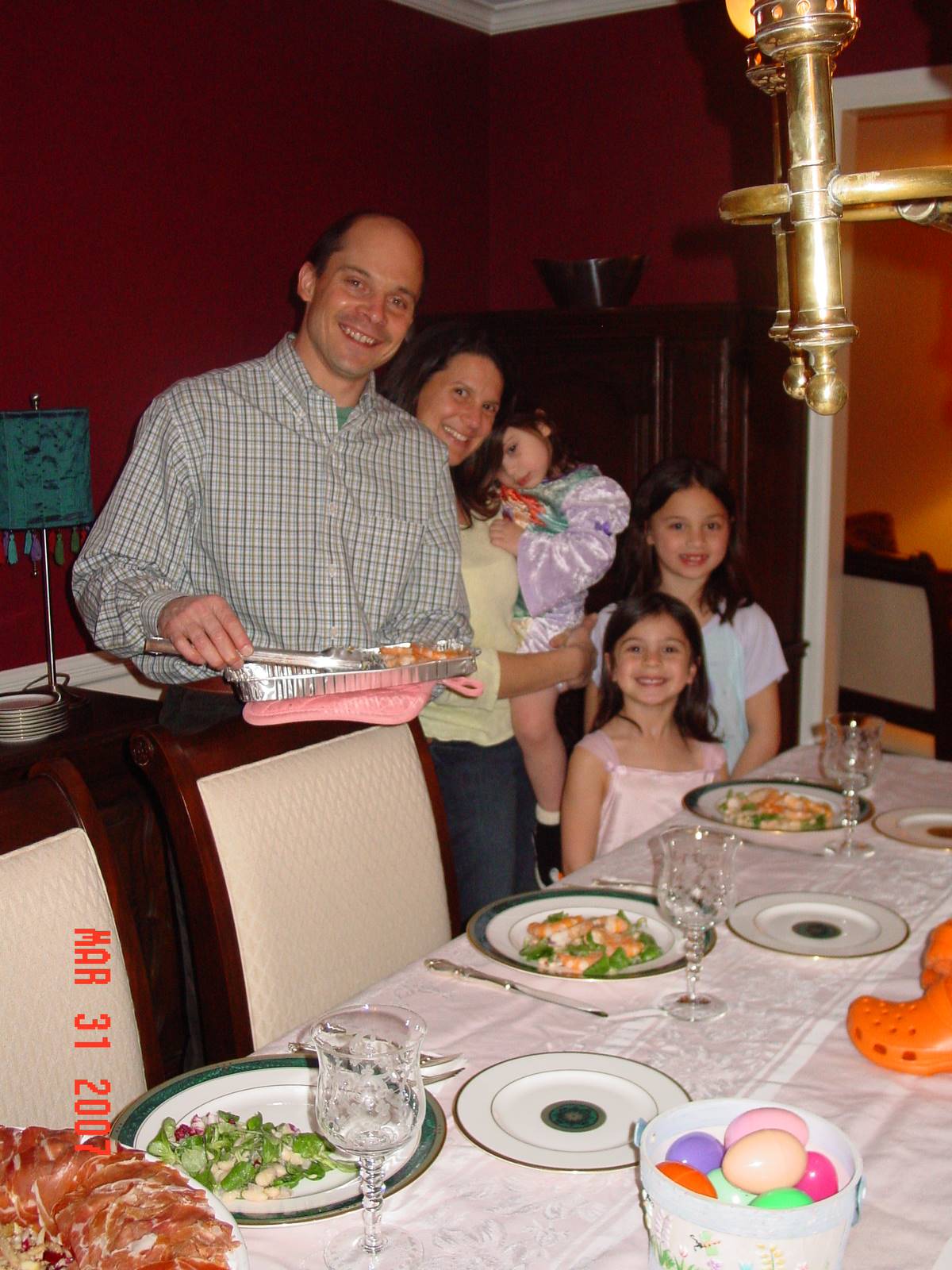
Brett and Mary-Lauren Factora with their daughters Cassandra, Sage and Isabella around their dining table at the start of our meal.

Dear Beloved Gourmet Club,

After scanning the globe from Asia to The America’s, we have decided to land in Italy to enjoy the recipes and cuisine of Chef Mario Batali.

We have not been to any of his restaurants or watched his show.  However, we did catch a segment about him on the Food Network where he struck us as a colorful character with a mix of part chef, part artist and part marketeer.  He came highly recommended from some family and friends.  As we studied his recipe books and the web, we found some fun and interesting variations on some otherwise ordinary dishes.  We hope you agree.

The menu is as follows:  Please note that the yields are provided on each recipe and will need to be adjusted accordingly.

Most will need to be doubled, the dessert will need to be 1 and ½ ed.


Bonnie/Art                 Warm Terrine of Sausage, Peppers, Polenta, and Mozzarella

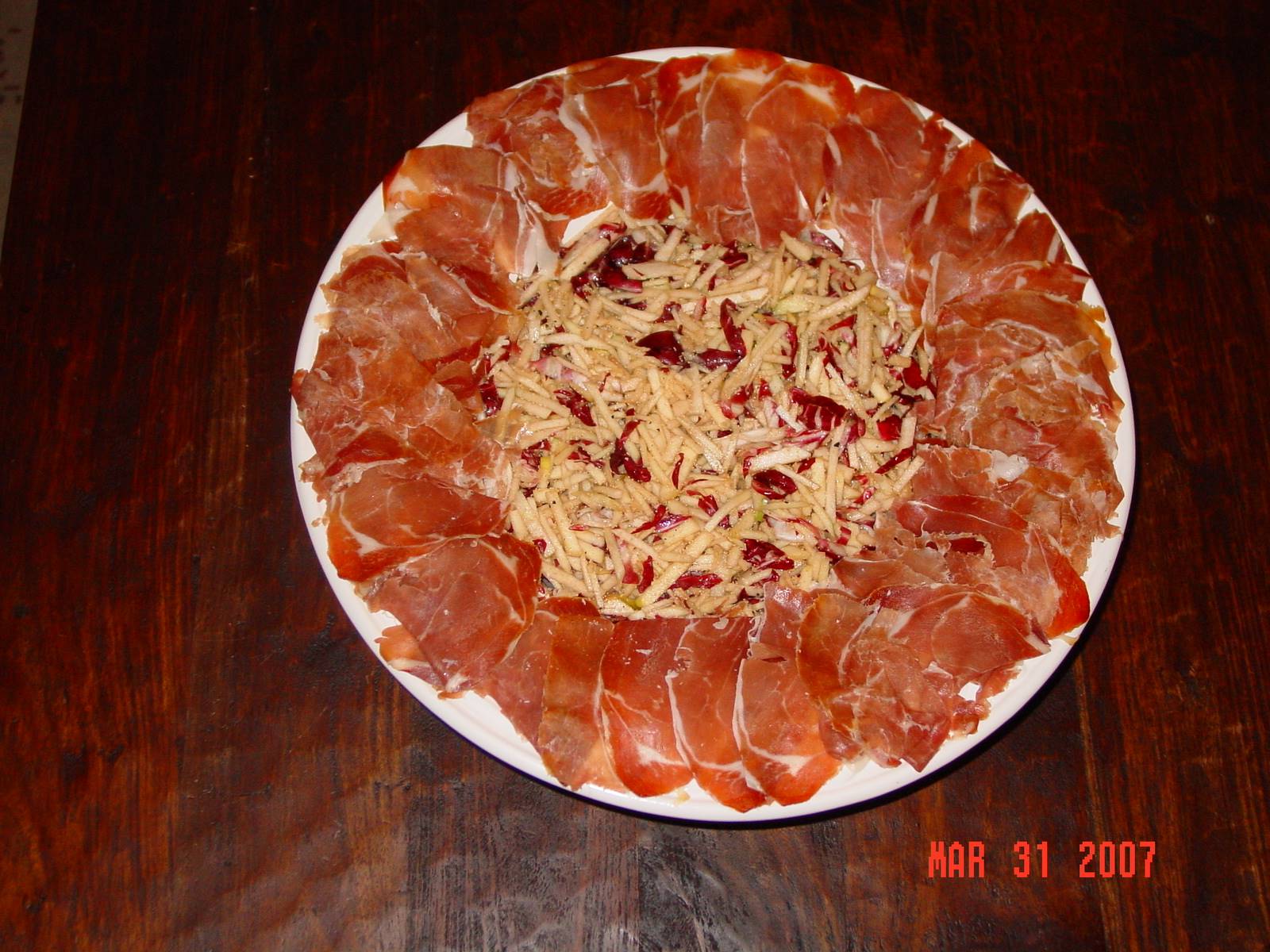
Rochelle/Llew          Prosciutto di Parma con Insalata di Mele Parmigiano (Prosciutto with Apple Salad)

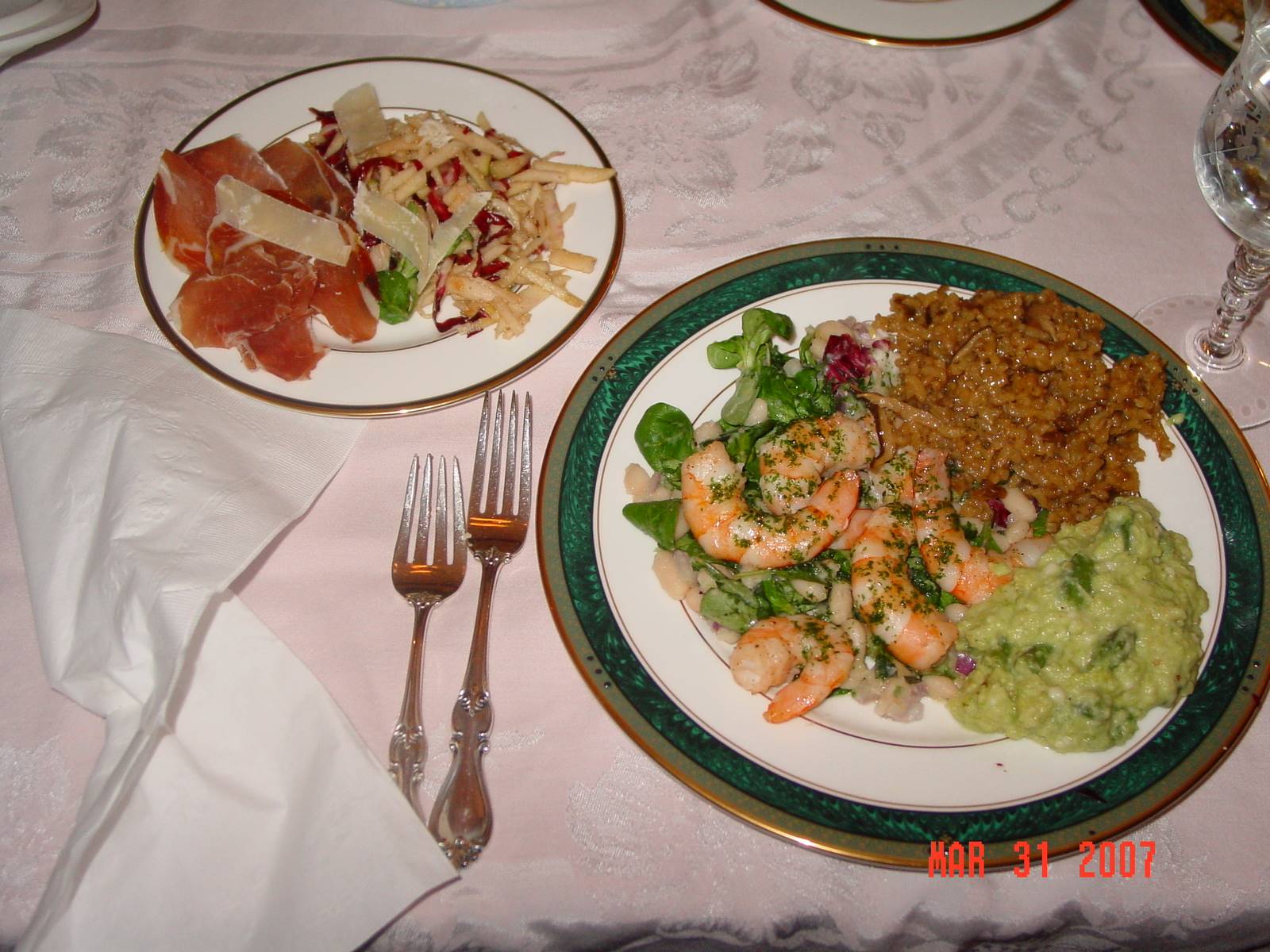
ML/Bret                      Grilled Shrimp with White Beans, Rosemary, Mache, and Mint Oil

ML/Bret                      Asparagus Sformato with Fondata

Rochelle/Llew          Risotto with Porcini, Shiitake, and Vin Santo

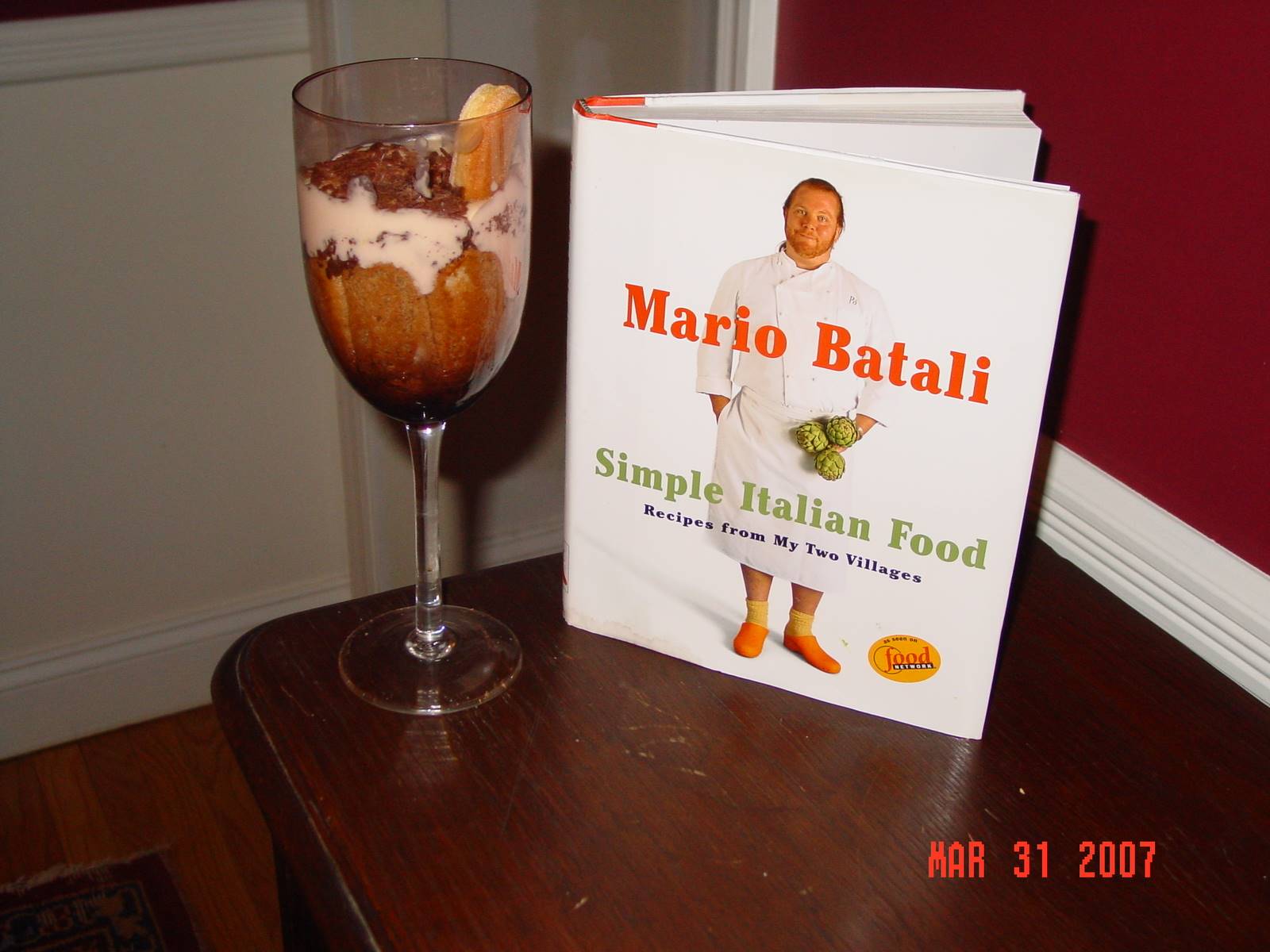
Amy/Dan                  Tiramisu-the Dinosaur

We look forward to welcoming you all this Saturday, March 31st at 7:30 at our home.

Warm Regards,

ML and Bret
GourmetClubDinnerMarch2007002

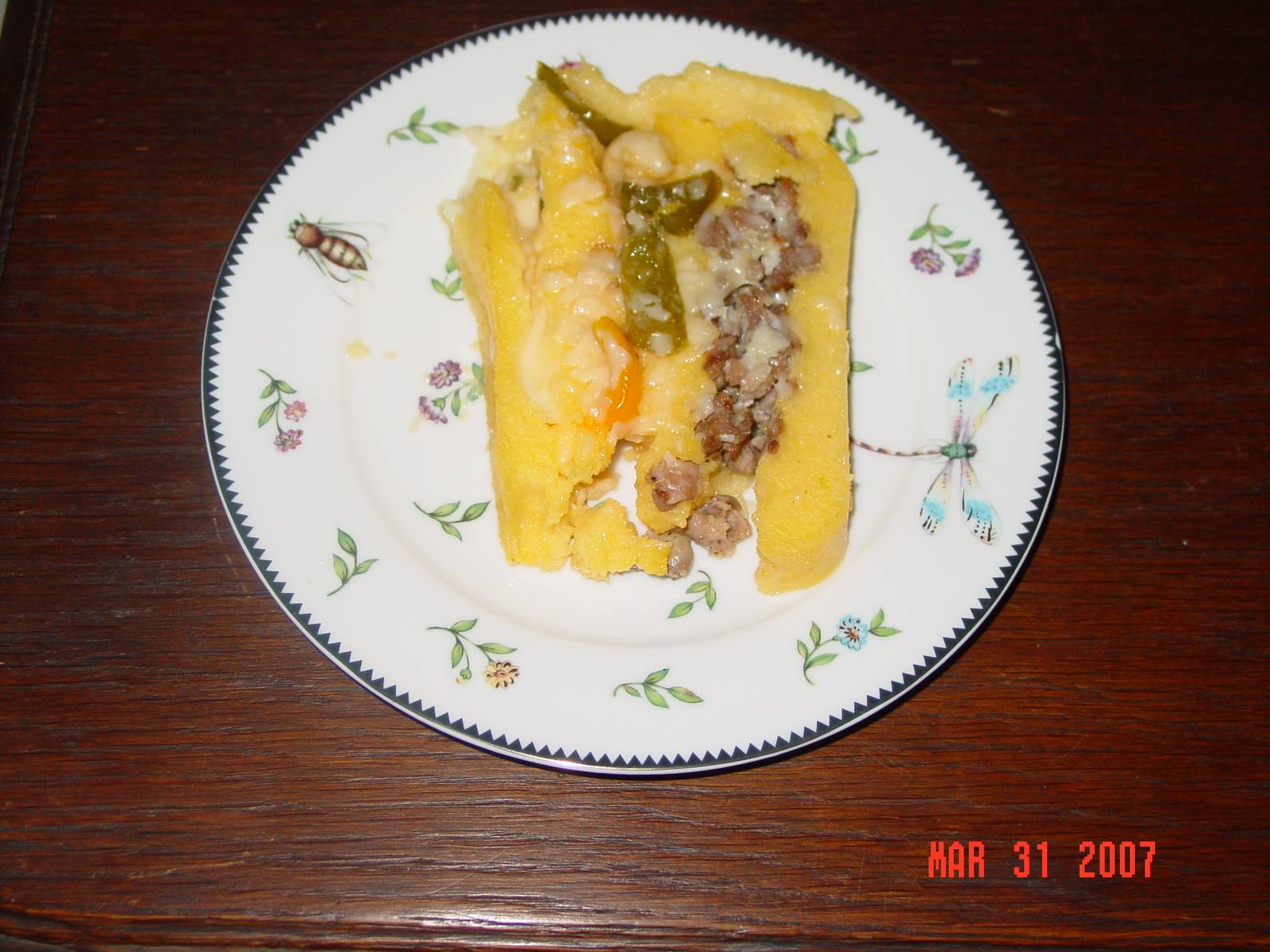
Warm Terrine of Sausage, Peppers, Polenta, and Mozzarella

Serves 6

8 oz sweet sausage
2 tablespoons extra-virgin olive oil
12 garlic cloves, peeled and left whole
1 large red bell pepper, cored, seeded, and cut into ½” wide strips
1 large green bell pepper, cored, seeded, and cut into ½” wide strips
8 oz fresh mozzarella cheese, cut into strips 3 inches by ¼” by ¼”
6 cups water
1 teaspoon salt
1 teaspoon sugar
2 cups quick cooking polenta or yellow cornmeal
¼ cup grated parmigiano-reggiano cheese

preheat oven to 350o

Arrange the sausage in a baking pan and cook in the oven for 20 minutes.  Drain off the fat, then crumble the cooked sausage to resemble rough bread crumbs.  Set aside.

In a medium sauté pan, heat the olive oil over medium-low heat.  Gently sauté the garlic until golden brown on all sides, 8 to 10 minutes.  Add the bell peppers and sauté unil soft but not browned, 7 to 8 minutes longer.  Remove from heat, transfer the garlic and peppers to a bowl, and let cool.

Bring the mozzarella to room temperature.  Arrange the sausage, peppers, garlic, and mozzarella in separate bowls.  Set out a terrine, 13X4X4 inches.

Bring the water to a boil, adding the salt and sugar.  Slowly add the polenta to the boiling water in a thin stream, whisking continuously.  Lower the heat and cook until the polenta resembles the texture of hot cereal, 2 to 3 minutes.  Remove the pot from heat.  The polenta will begin to thicken immediately, so time here is of the essence.

Moving quickly, pour a ¾” layer of polenta into the prepared terrine.  Sprinkle all the crumbled sausage over the polenta.  Cover the sausage with about 1½ cups more polenta, using a spatula to smooth the top.  Next, make a layer with the peppers and garlic cloves and top with another 1½ cups warm polenta.  Smooth and flatten the polenta to make a nice, even layer all the way around the edges.  Arrange the mozzarella over the polenta (but do not bring the mozzarella to the edges as it will stick to the sides when it melts).  Fill the terrine with a final layer of warm polenta, there may be polenta left over.  Smooth the top all the way to the edges.  Cover the terrine with plastic wrap and chill overnight.

Preheat oven to 4750

To serve, invert the terrine onto a cutting board.  (It should come out quite easily.)  Cut the terrine in ¾” thick slices.  Place the slices on a baking sheet and bake for 10 to 12 minutes.  Sprinkle with grated cheese and serve immediately.
GourmetClubDinnerMarch2007003

Prosciutto di Parma con Insalata di Mele Parmigiano (Prosciutto with Apple Salad)

Serves 4


1/2 pound thinly sliced prosciutto di Parma
1 Granny Smith apple, peeled and cored
1 McIntosh apple, peeled and cored
1 Golden Delicious apple, peeled and cored
1 tablespoon poppy seeds
3 tablespoons extra-virgin olive oil
1 tablespoon red wine vinegar
1 head radicchio di Treviso, leaves detached
Salt and pepper
Parmigiano-Reggiano, for shaving

Place the prosciutto on a large platter. Julienne all apples and place in a mixing bowl. Add the poppy seeds, olive oil, vinegar and radicchio and salt and pepper, to taste and toss to coat. Arrange the salad in the center of the plate and shave curls of Parmigiano-Reggiano over the salad and ham. Serve immediately.

GourmetClubDinnerMarch2007006

Grilled Shrimp with White Beans, Rosemary, Mache, and Mint Oil

Serves 4


1½ cups cooked great northern beans
1 tablespoon chopped fresh rosemary leaves
2 tablespoons extra-virgin olive oil
4 tablespoons finely chopped red onion
1 tablespoon chopped fresh marjoram leaves
juice and zest of 1 lemon
salt and pepper
2 cups fresh mache, washed and spun dry
12 jumbo shrimp (about 1 1/3 pounds), preferably with heads on and partially peeled
¼ cup mint oil

Mint Oil

½ cup packed fresh mint leaves
¾ cup extra-virgin olive oil

Bring saucepan of water to a boil.  Prepare an ice bath.  Plunge the mint leaves into the boiling water for 30 seconds, then remove to the ice bath.  Squeeze out the excess liquid and puree in a food processor for 1 minute with the olive oil.  Makes 1 cup

Preheat the grill or broiler

In a mixing bowl, stir together the cooked beans, rosemary, olive oil, onion, marjoram, and lemon juice and zest.  Season to taste with salt and pepper.

Add the mache to the beans and toss to combine.  Arrange in the centers of 4 plates.

Season the shrimp with salt and pepper, brush with a bit of additional oil, and grill just until cooked through, about 4 minutes per side.  Prop 3 shrimp against the mache and beans, teepee fashion, on each plate.

Drizzle with the mint oil and serve.
GourmetClubDinnerMarch2007008

Asparagus Sformato with Fondata
2 cups bechamel sauce, recipe follows
1 pound fresh medium asparagus, rough ends removed
1 teaspoon salt
1 pinch freshly ground nutmeg, or to taste
1/4 cup grated Parmesan
2 eggs and 2 yolks
2 ounces butter
1/4 cup fresh bread crumbs, lightly toasted under broiler
Bechamel: Balsamella 
1 stick unsalted butter 
1 cup all-purpose flour 
4 cups hot milk 
1/2 teaspoon freshly grated nutmeg
Fondata: 
4 ounces fontina cheese 
6 ounces heavy cream 
1/2 teaspoon salt 
Freshly ground black pepper

Melt butter in a 2-quart saucepan until frothing. Remove from heat and stir in flour with a whisk. Cook over low heat for 4 to 5 minutes, stirring constantly. Add 1/2 of the hot milk and whisk until smooth. Add remaining milk and whisk until smooth. Bring to boil, add nutmeg, lower heat and simmer 10 minutes. Can be used hot or cold.
Preheat oven to 400 degrees F.
Bring 4 quarts water to boil. Add 2 tablespoons salt. Blanch the asparagus until just tender (1 minute) and remove to ice bath and refresh. Once the asparagus has cooled, remove from the ice bath and pat dry.
Cut the cooled asparagus in 1/2. Cut the top 1/2 into 1/2-inch pieces and set the pieces aside. Place the bottom halves in a food processor and blend into a fine puree.
In a mixing bowl, mix the pureed asparagus, the bechamel, salt, nutmeg, Parmesan, eggs and yolks. Stir until thoroughly combined. Gently fold in the top halves of the asparagus pieces which had been previously set aside.
Butter an 8-inch bundt pan and coat with bread crumbs. Pour the asparagus mixture into the bundt pan. Fill a 12-inch baking pan 2/3 filled with hot water. Place the bundt pan on the baking pan, so that the bundt is standing in the hot water. Carefully place the baking pan (with the bundt pan) into the oven. Bake until the top of the sformatio is golden brown and a dipped toothpick comes out clean, about 35 to 40 minutes. Remove and allow to cool 15 minutes. Meanwhile, make the fondata.
To make the fondata: Mix the grated fontina, the heavy cream, and the salt and pepper in small saucepan. Heat gently, stirring constantly, until smooth and creamy.
To serve: Turn the sformato out onto a large plate. Cut into 2-inch slices and place the slices on serving plates. Spoon the fondata over the slices and serve immediately.
Risotto with Porcini, Shiitake, and Vin Santo

Serves 4

4 cups chicken stock
4 tablespoons extra-virgin olive oil
½ medium red onion, finely chopped
8 ouncecs fresh porcini mushrooms, stems and caps sliced ¼” thick
8 ounces fresh shiitake mushrooms, hard stems removed and slice ¼” thick
1½ cups Arborio rice
4 tablespoons (1/2 stick) unsalted butter
1 cup Vin Santo (an Italian wine, substitute a fino or amontillado sherry)
½ cup freshly grated parmigiano-reggiano cheese
salt and pepper

In a medium saucepan, heat the chicken stock to a simmer and place on a back burner over low heat.

Heat the olive oil in a heavy-bottomed 12-14 inch sauté pan over medium heat,  Add the onion and sauté until translucent but not browned, about 5 minutes.

Add the mushrooms and sauté until lightly browned but not fully cooked, 6 to 7 minutes.  Add the rice and stir 1 minute to coat thoroughly.  Ladle ½ cup of warm stock over the rice and cook, stirring constantly, until the liquid is absorbed.  Add another ladle of broth and continue to cook, keeping the risotto at a slow boil and adding more stock.  Repeat until riceis quite al dente (12 to 14 minutes).  Add the butter, wine, and cheese and bring to a boil again, continuing to stir until the rice is done – firm and tender all the way through.

Season with salt and pepper and serve.
GourmetClubDinnerMarch2007010

Tiramisu-the Dinosaur

Serves 6

4 ounces strong espresso (or substitute 2 teaspoons instant coffee in 1/2 cup water)
2 ounces Italian brandy
4 egg yolks
2 tablespoons sugar
2 egg whites
2 cups mascarpone cheese (may substitute ricotta or cream cheese)
30 small savoiaridi, or 15 broken in half (a.k.a. Ladyfingers)
3 ounces bittersweet chocolate, broken into 1/4 inch pieces
3 ounces milk chocolate, shaved or grated
6 large wine goblets

Mix coffee and brandy together and set aside.

Over a double boiler, beat egg yolks and sugar until mixture lightens in color and forms ribbons (i.e. halfway to zabaglione). Allow to cool 5 minutes.

Meanwhile, beat egg whites to stiff peaks. Fold mascarpone into egg yolk mixture one quarter at a time. Fold mascarpone mixture into egg whites and set aside.

Lay savoiardi along edges of wine goblets all the way to the bottom, lining the entire glass (while keeping 6 savoiardi for later use). Using a pastry brush, and paint the cookies with the espresso/brandy mixture.

Fill each goblet one third full with mascarpone mixture and sprinkle with broken chocolate. Lay one savoiardi across center and and paint with coffee mixture. Fill each goblet with remaining mascarpone mixture, topping each with shaved chocolate. Lay one savoiardi in each of the remaining 5 goblets and and paint with espresso mixture.

Can be served at room temperature. Tiramisu was served chilled in the 1980s.
Bon Voyage!


(The red portions of this map show all the parts of the world that I have visited. To create a similar map for yourself, click on the link below and follow the prompts.)

Countries Visited Map

Where on earth would you like to go?

Would you like to stand on the edge of the Grand Canyon? Or would you prefer to watch a Shakespearean play performed in his birthplace on the Banks of River Avon? How do you feel about roaming through the exotic Grand Palaces of Thailand or bargaining for handicrafts in the mystic medinas of Morocco?

If the idea of packing your bags at short notice to explore the furthest reaches of our planet excites you, then come with me. We’re kindred spirits on a similar quest–to uncover the mysteries of our Earth and to become one with the diversity of her spirit.

The thirst for exploration has kept me constantly fascinated, perpetually awed and eternally eager to learn. Let me share with you some of my own close observations and interesting experiences of the world as it has revealed itself to me over the years in its endless guises.
Take your pick of the offerings below. Then, after you have become my traveling companion on this journey of discovery, share with me the accounts of your own travels. We do not need to pack up our passports to be armchair travelers. All we need is to take flight on the wings of our imaginations. If you are willing, we can travel together into exciting realms that are virginal and just waiting to be discovered.
Bon Voyage!

Dinner by Giada

Autumn 2006—Dinner by Giada

Hosted by Bonnie and Art
Autumn Harvest Dinner by Giada de Laurentis
Five of the items we are making tonight are recipes I gathered from the Food Network (to which I am a dedicated watcher; some may say addicted). Specifically, these recipes were shared and demonstrated by Giada deLaurentiis (whom Art thinks is totally HOT, but I think is a great cook who provides simply delicious suggestions.) And since Italian is Art’s favorite food-type, (and Giada is his favorite Italian) we will be enjoying her selections….

GourmetDinnerNovember2006014

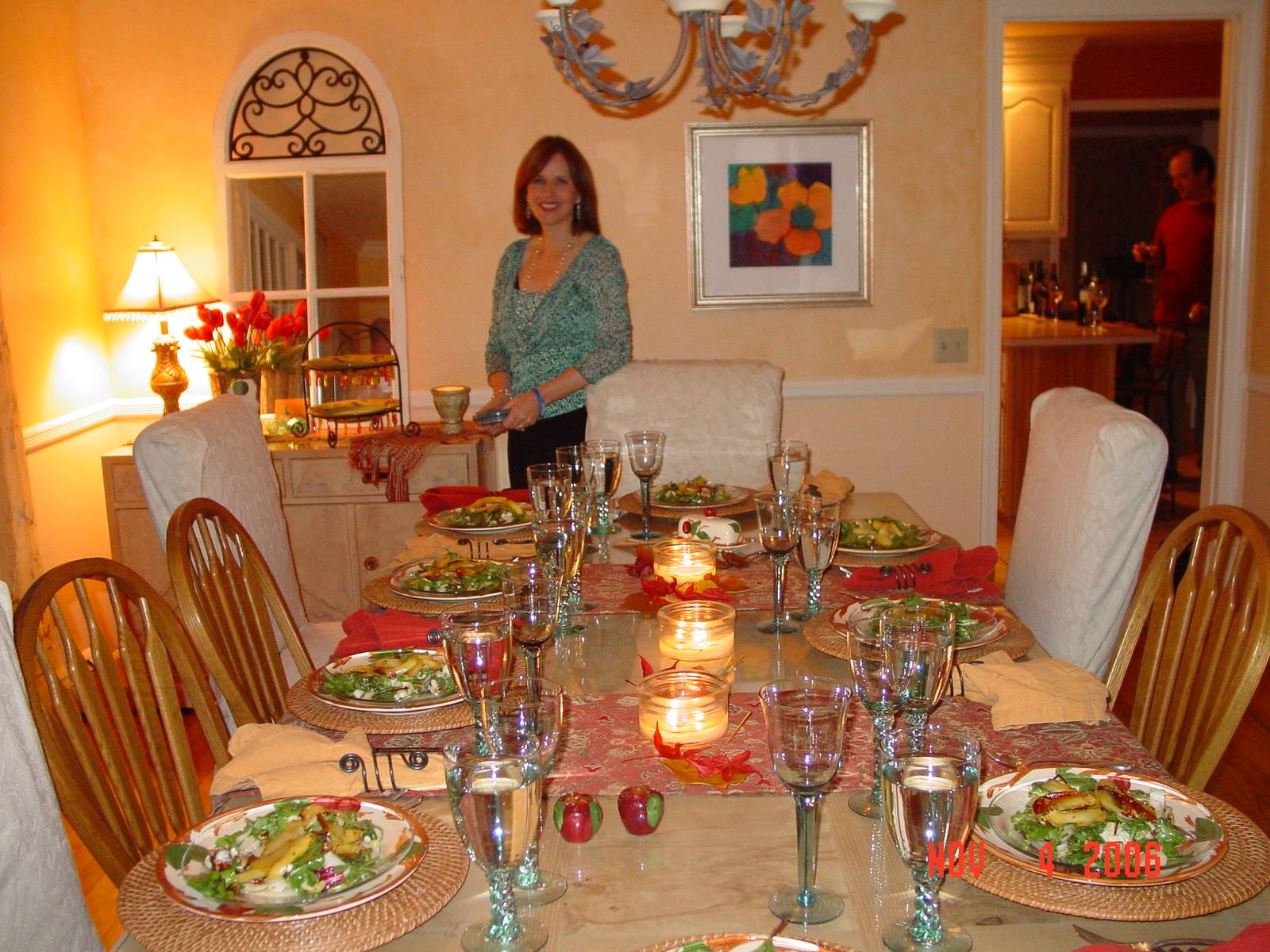
(Bonnie at her beautifully laid dining table all set for our salad course)

MENU


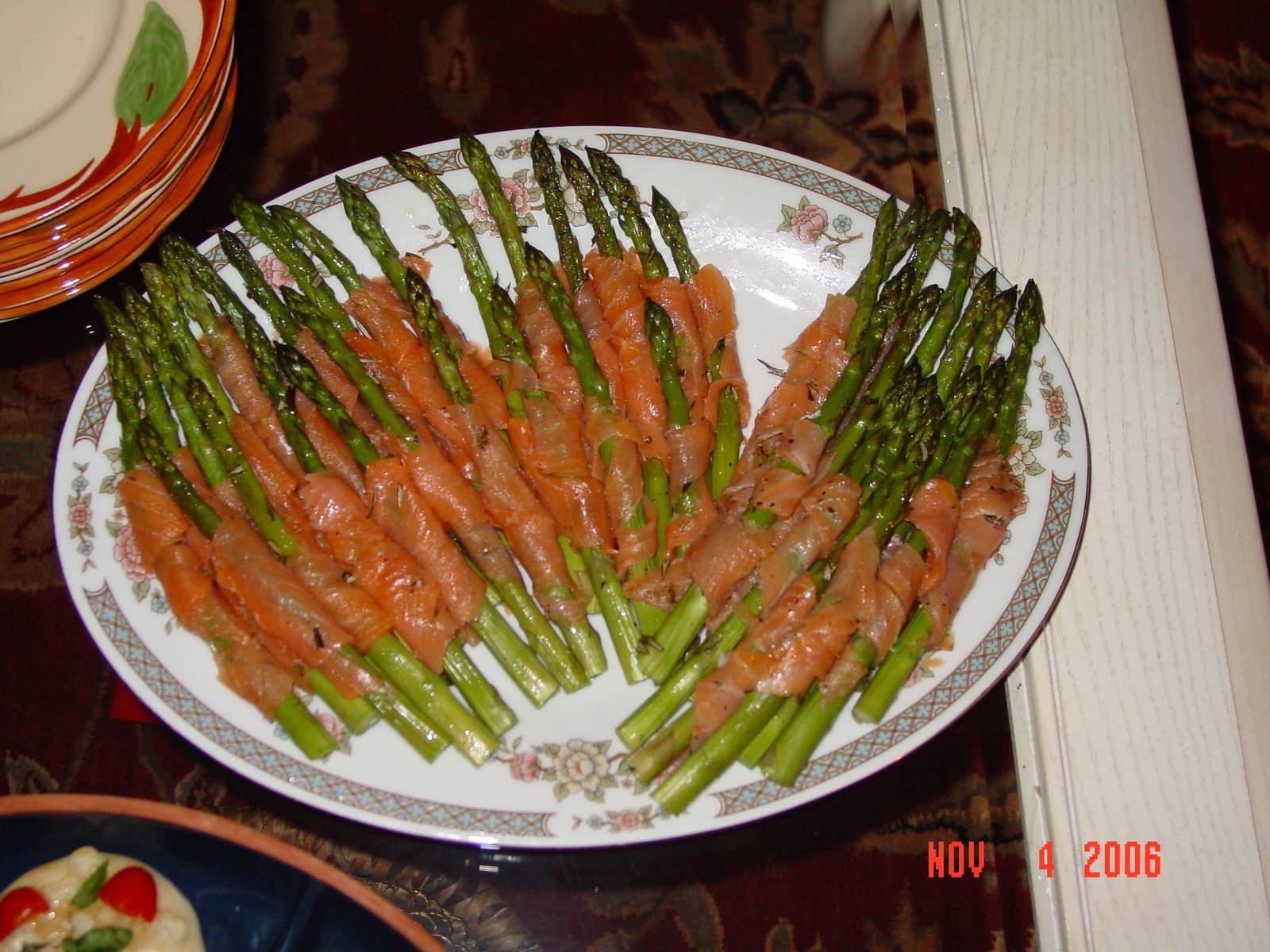
Appetizers:Asparagus and Smoked Salmon Bundles
and
Pizzette with Gorgonzola, Tomato and Basil
(Mary Lauren and Brett)


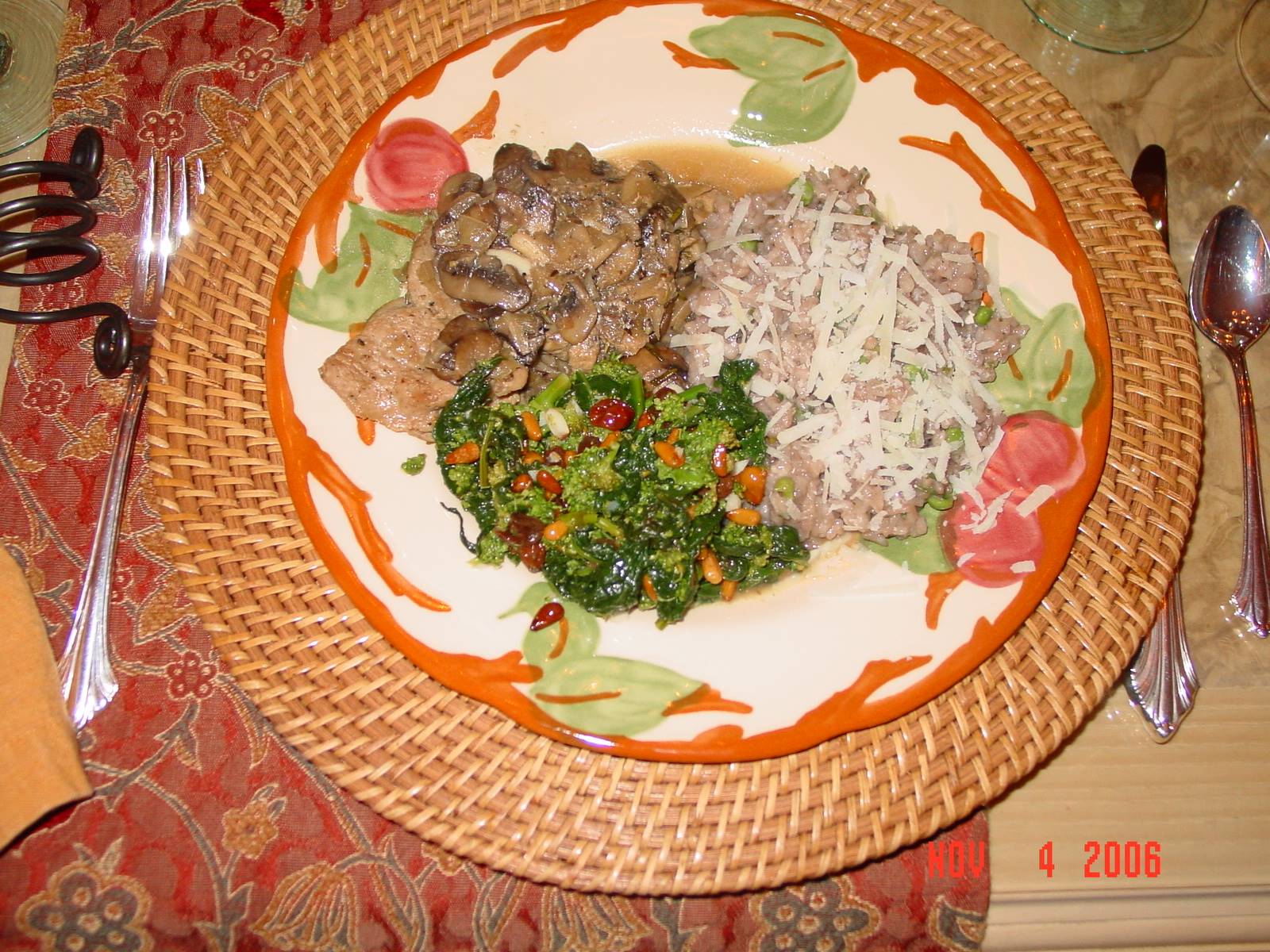
Entrée:Veal Marsala
(Bonnie and Art)


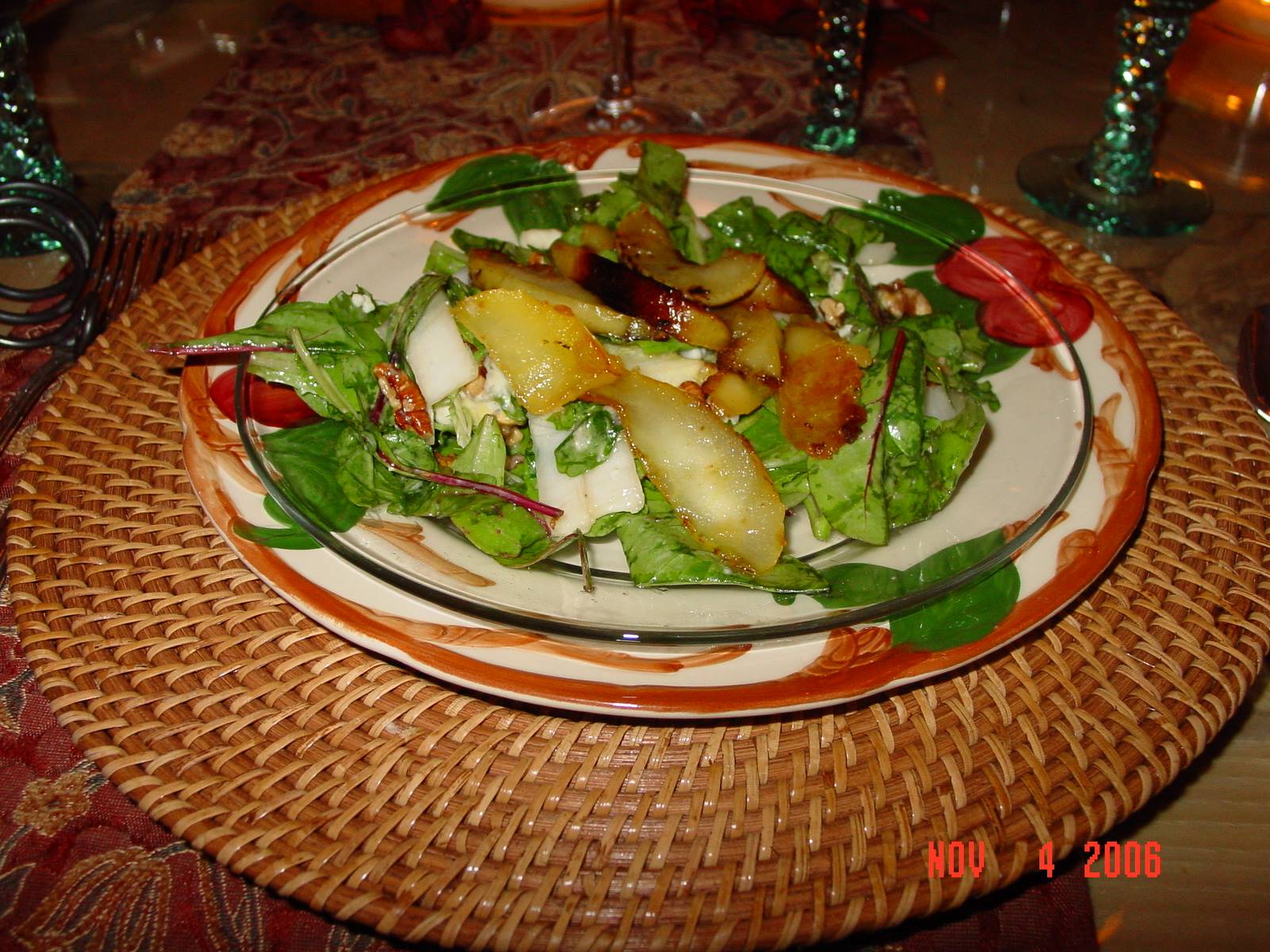
Salad:Sauteed Apple Salad with Roquefort Cheese and Walnuts
(Amy and Dan )Sides:

Red Wine Risotto with Peas
and
Sauteed Broccoli Rabe
(Llew and Rochelle)

Dessert:

Pumpkin Ice Cream Pie
(Dan and Amy)

GourmetDinnerNovember2006008

Asparagus and Smoked Salmon Bundles

Makes 4-6 servings

1 bunch asparagus, ends trimmed (about 20 spears)
Pinch kosher salt
2 Tablespoons olive oil
Pinch freshly ground black pepper
1 Tablespoon chopped fresh rosemary leaves
4-6 oz. thinly sliced smoked salmon

Preheat oven to 425°. Lay the asparagus on a foil-lined baking sheet. Drizzle with olive oil. Sprinkle with rosemary, salt, and pepper. Roast until cooked and starting to brown around the edges, about 10 minutes. Remove from the oven and transfer to another baking sheet to cool.

Once the asparagus have cooled, wrap each spear in a slice of smoked salmon. Arrange on a serving platter and serve at room temperature.

Note: I made this last weekend and was happy with the peppercorn smoked salmon I bought at Trader Joe’s. I bought 2 packages and cut each slice into halves or thirds before I wrapped the asparagus spears.


GourmetDinnerNovember2006028

Pizette with Gorgonzola, Tomato, and Basil

6 servings

8 oz. purchases pizza dough
2 tsp. extra-virgin olive oil
3 oz. Gorgonzola, crumbled
¼ cup fresh basil, torn in pieces
3 oz. Cherry tomatoes, quartered
Salt and freshly ground black pepper

Preheat oven to 475°. Roll out the pizza dough to ¼ inch thick. Using a 2-2 ½ inch diameter cookie cutter, cut out 18 circles from the dough. Arrange the circles on a heavy large baking sheet. Sprinkle the Gorgonzola cheese over the circles. Top with the tomatoes, pressing them gently into the dough. Bake until the pizzettes are golden brown, about 10 minutes. Drizzle the pizzettes with oil. Sprinkle the basil over the pizzettes. Sprinkle with salt and pepper. Arrange on a platter and serve immediately.

Note: I noticed that Trader Joe’s has pizza dough in their refrigerated section, if you’re looking for pizza dough.

Veal Marsala
4 servings

8 veal cutlets (3 oz. each) 2-4 garlic clove, smashed
Salt and freshly ground black pepper 2 oz. assorted mushrooms, sliced
2-3 T. unsalted butter ½ cup sweet Marsala
2-4 T. olive oil ¾ cup low-salt chicken broth
1 large shallot, finely chopped Leaves from 1 fresh rosemary sprig

Sprinkle the veal with salt and pepper. Melt 1 T of butter and 1 T. of oil in a heavy large skillet over medium high heat. Add 4 veal cutlets and cook until golden brown, about 1 ½ minutes per side. Transfer the veal to a plate. Add another T. of butter and oil, if necessary. Repeat with the remaining 4 cutlets. Set the cutlets aside.

Add 1 T. of oil to the skillet. Add the shallot and garlic. Sauté until fragrant, about 30 seconds. Add a T. of the olive oil, if necessary. Add the mushrooms and sauté until tender and the juices evaporate, about 3 minutes. Season with salt. Add the Marsala. Simmer until the Marsala reduces by half, about 2 minutes. Add the broth and the rosemary leaves. Simmer until reduces by half, about 4 minutes. Return the veal to the skillet. Pour in all of the pan juices. Cook until heated through, turning to coat, about 1 minute. Stir the remaining 1 T. of butter into the sauce. Season the sauce with salt and pepper, to taste.

Using tongs, transfer the veal to plates. Spoon the sauce over the veal and serve.

GourmetDinnerNovember2006015

Sauteed Apple Salad with Roquefort Cheese and Walnuts
6 servings

¼ cup Sherry wine vinegar or red wine vinegar
1 T. sugar
1 T. chopped fresh thyme or 1 tsp. dried
1 cup crumbled Roquefort cheese
½ cup plus 1 T. olive oil
½ cup chopped toasted walnuts
6 cups mixed baby greens
3 cups trimmed watercress
1 Belgian endive, sliced
1 ½ lbs. Golden Delicious Apples, peeled, cut into ½ inch thick slices

Combine vinegar and thyme in small bowl. Gradually whisk in ½ cup oil. Season to taste with salt and pepper.

Combine greens, watercress and endive in large bowl. Heat remaining 1 T. oil in large nonstick skillet over medium-high heat. Add apples and sugar and sauté until apples are almost tender, about 8 minutes. Increase heat to high and sauté until golden brown, about 5 minutes longer. Place atop greens in bowl. Sprinkle salad with Roquefort and walnuts. Toss with enough dressing to coat. Serve, passing remaining dressing separately.

GourmetDinnerNovember2006020

Red Wine Risotto with Peas
4 servings

3 ½ cups canned low-salt chicken broth 1/3 cup frozen peas, defrosted
3 T. unsalted butter
¼ cup chopped fresh Italian parsley
1 cup finely shopped onion
½ cup freshly grated Parmesan,
2 garlic cloves, minced plus additional for garnish
1 cup Arborio rice
½ cup dry red wine (good quality)
Salt and freshly ground black pepper

Bring the broth to a simmer over medium-high heat. Cover the broth and keep it warm over very low heat.

Melt butter in a heavy large saucepan over medium heat. Add the onion and sauté until translucent, about 8 minutes. Stir in the garlic and sauté for 30 seconds. Stir in the rice and cook for about 2 minutes until the rice is toasted. Add the wine and stir until it is absorbed, about 1 minute. Add ¾ cup of hot broth; simmer over medium-low heat until the liquid is absorbed, stirring often, about 6 minutes. Repeat, adding ¾ cup of hot broth 2 more times, stirring often, about 12 minutes longer. At this point, the risotto can be made 4 hours ahead. Refrigerate the risotto (the rice will still be firm) and remaining broth, uncovered, until cool. Then cover and keep them refrigerated until ready to proceed.

Bring the remaining broth to a simmer, then cover and keep it warm over very low heat. Stir ¾ cup of hot broth into the partially cooked risotto over medium heat until the broth is absorbed and the risotto is hot, about 3 minutes. Add the remaining broth and simmer until the rice is just tender and the mixture is creamy, about 5 minutes longer. Stir in the peas and parsley. Add the ½ cup of Parmesan. Season, to taste, with salt and pepper. Sprinkle additional cheese over and serve.

Note: I was glad to see that this recipe offers a make-ahead option since risotto usually needs to be made just before serving.

Sauteed Broccoli Rabe
4-6 servings

4 bunches (12-16 oz. each) broccoli rabe, stems trimmed
¼ cup olive oil
1/3 cup raisins
3 garlic cloves, chopped
Salt
½ tsp. dried crushed red pepper flakes
2 T. pine nuts, toasted

Working in batches, cook the broccoli rabe in a large pot of boiling salted water until crips tender, about 2-3 minutes per bunch. Transfer the broccoli rabe to a large bowl of ice water to cool. Reserve about ¼ cup of the cooking liquid. Strain the cooled broccoli rabe and set aside.

Heat the oil in a heavy large skillet over medium heat. Add the garlic and red pepper flakes, and sauté until the garlic is golden, about 1 minute. Reduce heat to medium-low. Add the broccoli rabe and toss to coat. Add the reserved cooking water, the raisins, and cook until the broccoli rabe is heated through and the stems are tender, about 4 minutes. Season with salt to taste. Just before serving, toss the mixture with pine nuts.

GourmetDinnerNovember2006042

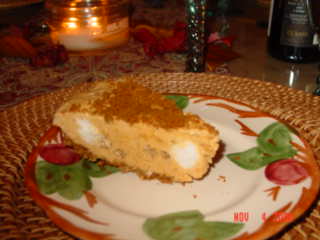
Pumpkin Ice Cream Pie

For one pie

Crust: 24 ginger snaps, crushed and mixed with enough butter to pat into pie pan (about 2 Tablespoons, softened). At this point, save about 2 Tablespoons of crust mix to sprinkle on top of pie. Bake crust for 8 minutes at 350 degrees. COOL COMPLETELY BEFORE FILLING.

Filling: 1 cup pumpkin
¼ tsp. nutmeg
½ cup sugar
1/8 tsp. cloves
½ tsp. salt
½ cup chopped pecans, optional
½ tsp. cinnamon
1 quart softened vanilla ice cream
Mix first 7 ingredients together to blend, then fold in the vanilla ice cream. Sprinkle the saved ginger snaps on top. Put into cooled crust and freeze for at least 3 hours. Overnight is best.

Note: I recommend that you make two pies, Amy, one without nuts. I thought you would like this recipe since you can make it the day before. I have made it several times and we all love it!

Exploring the Border Town of Thakilek, Burma


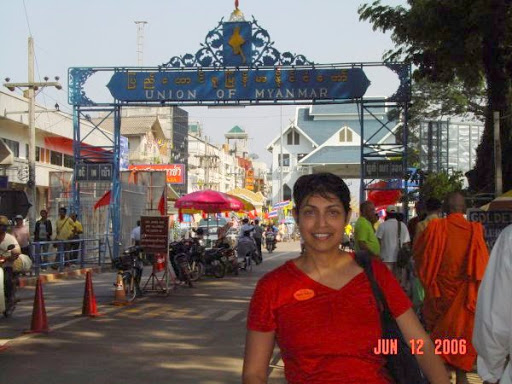
 (At the border between Thailand and Burma, there is a huge sign that announces one’s entry into the Union of Myanmar) 

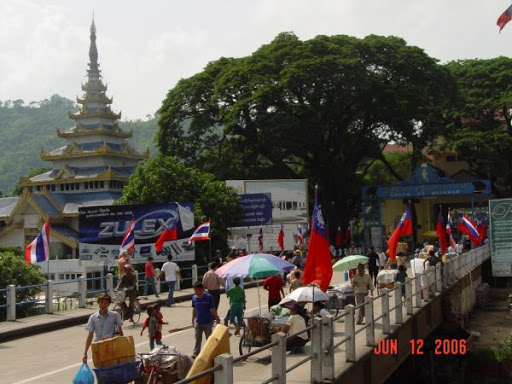
After posing for a number of pictures, we left Sop Ruak behind us and proceeded north to Mae Sai, the northern-most town on the border of Thailand. Though this is rather a one-horse town, it is distinctive for the numbers of Burmese traders who cross the border daily to hawk their wares in Thai markets. Of course, we could not resist the thought of crossing the border physically into the Union of Myanmar, a very easy walk across a narrow bridge where Immigration formalities are carried out.

Thailand_Dsc05291

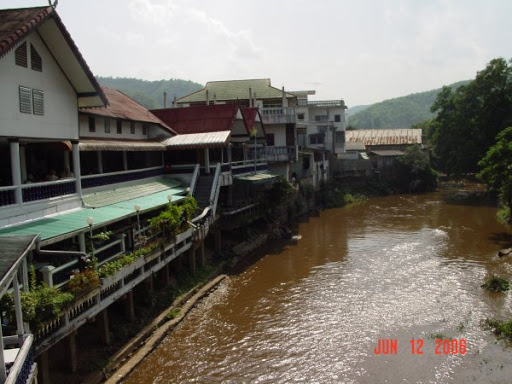
 The picture above shows the murky waters of the river across which is constructed the access bridge that gets visitors over from Thailand into Burma. No fanfare, no fuss. Once immigration formalities are carried out (something of a challenge if you don’t speak Burmese!), you walk right across into Burma. Don’t allow yourself to feel intimidated by the army presence in the hordes of soldiers milling around and the imposing portraits of army generals on the walls of the Immigration Office. For the most part, service is courteous and prompt even if communication of any kind is non-existent.

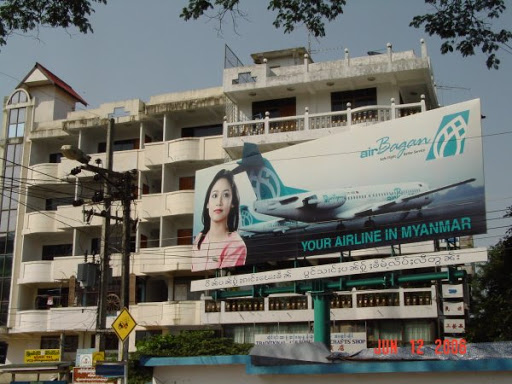
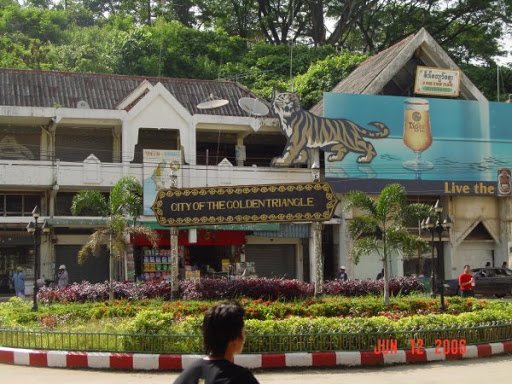
Obtaining a Burmese visa at the border crossing, we proceeded on foot into the Burmese town of Thakilek and found it to be not much different from Mae Sai. In the middle of a bustling roundabout was a huge billboard announcing international flights by Air Bangan, Burma’s flag carrier. Traffic seemed orderly enough and, at first sight, there seemed little difference between any small Thai town and this Burmese border settlement.

Thakilek advertises itself as the City of the Golden Triangle as most visitors heading towards the farthest reaches of Thailand pass through this town. Though it hasn’t much to say for itself, it does present the tourist the interesting opportunity to cross borders and enter into a world that has remained sheathed for almost a quarter of a century. Because it is rather difficult for Western tourists to obtain visas to Myanmar from their coutnry of origin, the foot route into Burma from Thailand offers a unique opportunity to glimpse one of the least-known parts of Asia. For a mere five dollars, one gets the exotic stamp of an infrequently explored country on one’s passport–another small bit of excitement to warm the cockles of any avid traveler’s heart!

If ambience and a distinctively old Burmese “Road to Mandalay” kind of atmosphere is what your toursist heart craves,  there is a striking blue pagoda of a Buddhist monastery in Thakilek and on exploring the town further, I found it to be rather well laid out. The “City of the Golden Triangle” finds  its greatest revenue comes from tourist buses that cross over from the Thai side to buy cheap souvenirs to remember their visit.

 Bon Voyage!


Of Tapas and Tio Pepe

This essay appeared in the Travel section of the Summer 2006 issue of Bombay’s Upper Crust magazine. Click here to read more about the magazine.

 Of Tapas And Tio Pepe: On A Gastronomic Tour Of Spain
ROCHELLE ALMEIDA says Spain’s taste buds have gone through a revolution and the culinary pleasures are now varied.

If you think that Spain’s gastronomic repertoire is restricted to just tapas and paella, think again. The nation’s taste buds have undergone a revolution in recent years and visitors to the Iberian Peninsula can now partake of culinary pleasures that are excitingly varied. Of course, much depends on which part of Spain you choose to explore because each region capitalises on its own produce. But if you are adventurous enough to experiment, you will be rewarded with an abundance of delightful meals that will make your palate sing Ole! My gourmet adventures began in the capital, Madrid, where at the bustling Puerto del Sol, a huge billboard advertising Tio Pepe, Spain’s superb dry sherry, smiles down on tourists in much the same way that the fizzing bottle of Coca-Cola bubbles forth at New York’s Times Square. The preferred potent at meal-time, though, is Sangria and most restaurants do a fairy decent version of this fruity cocktail. Easy to reproduce at your home bar, Sangria is simply equal parts of a red wine (try one of their excellent Riojas) with a sparkling lemonade and throw in a combination of cubed apples (leaving the skin on for color), orange and pineapple segments. Serve in tall glasses tinkling with crushed ice. I had Sangria everywhere I traveled in Spain, but by far the best concoction was in Toledo, right outside the Sinagoga del Transito, where the many climbs amidst that hilly terrain had stirred my thirst buds awake.

Paella (pronounced Pa-ay-ya) is Spain’s contribution to global gormandising and though every Madrileno will recommend a different restaurant, you can’t go wrong at Ristorante La Sirena Verde on the Gran Villa, one of Madrid’s main thoroughfares. I was, fortunately, tipped off by a knowledgeable gourmet about this completely unpretentious place, and I’m glad I took him at his word. After you have crossed the threshold into this restaurant, head upstairs where the décor takes on a decidedly nautical air and shades of blue combine with off-white to create a space that is evocative of Spain’s sea-faring heritage. Extremely attentive wait staff brought me menus and recommendations from a wine list which, though not a mile long, covered a gamut of budgets. Settling for a rather good white Rioja, (Cune, semi-dry) I browsed the menu and chose the Paella del Mariscos (24 Euros for two persons), a Seafood Paella that is a meal in itself —other variation is a Paella de Valencia which, in addition to the seafood, includes chicken. Needless to the say, the seafood version has rice cooked in fish stock while the Valencia uses chicken broth. Both versions come studded with tender green peas.

But it is the unmistakable presence of the flavor of saffron, that most prized of condiments, that makes a memorable Paella. Grown on the vast plains of Castilla La Mancha, early spring sees the profuse emergence of this crocus cultivar so that the fields turn purple in response to the resurrection of the flowers after the long dormant winter season. It is because the stamens of the crocus have to be carefully picked and graded by hand that saffron is such an expensive condiment. Fortunately, a little goes a long way. When you add a few strands to warm milk or water, you bring out the flavour of the precious stamens. The mixture is added to the Paella pan just before the rice is fully cooked through and the heat is turned off. Overheating the condiment would cause the fragrance to dissipate completely. Paella del Marisco comes with clams, giant prawns, calamari, squid, and a plethora of shrimp, making it a seafood lover’s delight. If yours is an authentic Paella, your waiter will serve it to you straight off the flame in a special flat Paella pan, usually made of beaten copper. It is the pan’s shape — its essential shallowness — that keeps each grain of rice separate and dry, preventing it from cooking into a gloppy mass in the way that Italian risottos tend to become after the addition of all that hot stock to Arborio rice.

Spain is also famous for its Serrano ham-serre means dry in Spanish and the hams are so-called because they are left to smoke in the dry air of the mountains in the Alpajurra region in Andalucia. All over Spain’s cities from Madrid to Seville, you will find sidewalks dotted with Musees de Jambon (pronounced Haam-bau). They are not called museums for nothing — what one finds inside, hanging from the rafters, are row upon row of smoked hams of varied flavour, each originating in a different part of Spain. Spaniards love their jambon at mid-morning when they place it on long slices of baguette-like bread and eat it like an open sandwich with a cup of coffee. The same Serrano ham is a standard item on tapas menus. Don’t sneeze at this modest peasant snack. You might well find yourself making a meal of it, particularly if you combine it with the superlative Manchego, Spain’s best-selling cheese made from sheep’s milk on the plains of La Mancha, habitat of Don Quixote and Sancho Panza — hence the name. This extraordinarily flavourful cheese is also melted over Serrano ham and served over toasted bread, to create a grilled version — Spain’s response to France’s Croque Monsieur. And that brings me to tapas. No longer mystery morsels, these delectable appetizers have brought out the creativity in contemporary chefs so that a whole range awaits the adventuresome palate. I decided to make a meal of tapas at Ristrorante Naturbrier at Plaza Santa Ana in Madrid where in a pavement café, under the brilliantly illuminated Neo-Classical building of the Teatro Espagnol, I sampled a variety of pickled manzilla olives and smoked hams, tuna paste and marinated mushrooms as I sipped a truly splendid Toro red wine. Literally meaning “cover”, tapas originally referred to the slice of ham that was used as a cover to prevent insects from falling into the glasses of wine that were sipped at the counter by patrons in Spain’s innumerable bars. As time went by, these snacks that were served free of charge to regular patrons evolved into the more complicated and creative offerings that today include smoked meats and salamis, olives — both green and black and often stuffed with pimentos-marinated artichokes and mushrooms, and spicy seafood. They serve the same purpose as Italy’s antipasto platters. In fact, the more you eat your way through Europe, the more you will realise that with slight cultural variations, almost all national cuisines follow the same basic conventions. While it is customary to seek out great meals at restaurants, don’t overlook the very decent fare to be found in the cafeterias attached to major monuments. One of the more interesting and comfortably priced meals I ate was in the cafeteria of the Museo del Prado where, after gobbling up the artistic offerings in the form of Goyas, El Grecos and Velasquez in the galleries, I was left with little energy to go out in search of a sit-down meal. The cafeteria was the best bet and I was pleasantly surprised to find that the Beef Ragout or Stew that my husband Llew ordered as well as the Spinach and Chickpea Soup that I chose were delicious and superbly flavored, not to mention very filling when combined with the good crusty artisinal bread that was a part of the meal.

Don’t even think of leaving Spain without partaking of the country’s favorite snack — Chocolate and churros. Ideally eaten in-between meals, for elevenses or at tea-time, simply the best place to indulge in these irresistible goodies is just past the Teatro Real (Royal Theater) in Madrid. You will arrive on Calle de Arenal, a street known firstly for its bull-fighting arena, the Plaza del Toros, and secondly for the Chocolateria San Gines, an establishment that dates from the late 1800s and still serves the best version of Spain’s fast-disappearing national snack. I plonked down at old-fashioned marble topped tables to enjoy the treat (a steal at 3 Euros) and dunked my churros (long deep-fried sticks of dough) fondue-style into the sauce-like hot chocolate as I saw the local Madrilenos do. Don’t expect to finish the entire cup, no matter how confirmed a chocoholic you might be. The heaviness of the chocolate, its thickness, its cloying sweetness, all of which seem delectable at first soon seem much too rich after a few spoonfuls. And yes, you will need to use the spoon that is very thoughtfully provided for the hot chocolate is much too thick to be sipped in the conventional style. Perhaps that’s why they also serve a tall glass of iced water with this staple.

Everywhere I ate in Madrid, I found the meals uniformly satisfying. But by far some of the most interesting dishes I ate was at La Truscha Restaurant near Plaza Santa Ana where I opted for wonderful grilled trout stuffed with Serrano ham, garlic and capers and Chicken grilled with Garlic after consuming deliciously simple tapas-smoked ham and pickled manzilla olives. I found also that the house wine, a white Valdapenas, was surprisingly good and surprisingly cheap-wine is often cheaper than soft drinks in Spanish restaurants.

When I did leave Madrid behind to drive south and take in the Moorish treasures of Andalucia, I was delighted to come upon a restaurant in the very midst of Granada where the North African Islamic influence is clearly in evidence. At Granada’s main square, the Puerta Nuevo, I ordered Doner Kebab, and was astonished to find that it was the most popular item on the menu. Thinly sliced and delicately spiced marinated lamb was served in a hearty pita pocket with a liberal helping of onions, tomatoes and shredded lettuce in a spicy yoghurt dressing. Easily one of the cheapest meals I ate in Spain (3.50 Euros per Doner Kebab), this is the budget traveler’s answer to good gastronomy.

After touring the mighty Al-Hambra Palace, my appetite was whetted for a good repast and I was pleased to come upon one of Spain’s most common menu offerings — Shrimp sauteed in olive oil and flavored liberally with garlic and parsley. I ate this marvelous meal, very reminiscent of Italy’s Shrimp Scampi in Ristorante Valle del Punta in a tiny village called Padul right outside of Granada. A fire was actually lit in the open grate bringing much needed warmth to the rustic interior. Washed down with beer, it made a fine meal especially since I used the sesame studded bread rolls to sop up the last drop of the garlic flavored oil on my plate.

Cruising down the Costa del Sol, I contented myself with modest pickings in the ritzy-chic beach resort of Marbella as sight-seeing and beach-combing took priority over long-drawn-out meals. All the beach towns along the coast, though, from the main city of Malaga to small villages such a Torremolinos and Benalmadena offer a variety of eateries to suit every pocket. Overtaken by seasonal visitors, mainly from the British Isles, their menus feature everything from Fish and Chips to Moroccan tagines (since Morocco lies right across the Straits of Gibraltar and the Rif Mountains of the Northern African coast seem close enough that you feel compelled to reach out and touch them). Hold on to your enthusiasm for more sybaritic fare, however, until you reach the bull-fighting city of Seville. Having arrived there rather late in the evening, I chose to go out immediately in search of dinner, pausing only to gasp at the huge monolithic mass of the magically illuminated Gothic Cathedral, one of Europe’s largest, and ending at La Cueva, a restaurant in the former Jewish quarter called the Barrio Santa Cruz. Like all Spanish spaces that are frozen in time, Santa Cruz is a complicated network of narrow cobbled streets and alleys full of souvenir shops, restaurants and tapas bars. Le Cueva Restaurant is located on Calle Rodrigo Caro in a very pretty patio and is decorated in typical Spanish colonial style with ceramic pots and plates, the heads of bulls stuffed and mounted on walls, and the festive costumes of renowned matadors framed as wall art. There were wooden chairs painted quaintly with faiance designs and patterns, checkered tablecloths, antique Spanish religious statuary, and lovely ceramic pottery and pitchers to hold food. One could also choose to sit outside in a charming orange grove (the Patio de Naranjos) that is softly lit by wrought-iron lanterns.

I decided to eat an assorted platter of Spanish sausages as my first course (13 euros). These arrived promptly — Serrano ham, a variety of smoked sausages, liverwurst and manchego cheese. Llew chose a Caldera or Lamb Stew for his entrée while I went for the Frito Mixto, a plate of assorted fried fish, lightly dipped in batter and fried to a crisp (12 euros each). It reminded me very much of the fried fish my mother serves in Bombay. A pitcher of icy cold Sangria with bits of apple and oranges floating in it (8 euros) accompanied our meal. A noisy group of middle-aged French tourists at an accompanying table brought much life and vitality to the atmosphere while we savored our Spanish repast.

Seville is distinctive for its endless groves of orange trees. Indeed, each street is lined by miniature orange trees that form picturesque canopies as you stroll under them. I was fascinated by the fact that I could reach out and pluck the oranges right off the branches, only to be disappointed at finding the fruit too tart to be edible. That’s when I discovered that it is not the fruit that is prized but the rind of the Seville orange which being particularly bitter is coveted in the manufacture of quality marmelade. It was in the late 1800s that a shipment of sour Seville oranges arrived in the UK. Unable to consume them, a home chef threw them into a pan and boiled them with a measure of sugar. The rind softened as it cooked and gave the jam a subtly bitter flavor. Thus was born the famous orange marmelade that is a staple at British breakfast tables. Each year, shiploads of Seville oranges make their way across the English Channel to England where the golden shreds are transformed into the world-famous orange marmelade. Next stop: Cordoba, that ancient gem of the Moors, city of the gigantic Mezquita-Cathedral, offered another unforgettable meal. This time my quest for sustenance began in La Juderia, the abandoned Jewish district, to find a suitable restaurant for a good Andalucian meal. Referring to my guidebooks, I opted for La Churassca Restaurant on Calle Romero that offered a variety of barbecued meats in Argentinian or Brazilian style. Set in a traditional white-washed building in the heart of the Jewish district, the restaurant was very picturesquely decorated with all kinds of regional motifs including ceramic tiles and serve ware that are the hallmarks of the potteries of this area. My waiter, a gracious old man who was both attentive and helpful, suggested I start off with traditional Spanish Potato Omlettes (4.50 euros). Though this was nothing to look at and lacked any kind of presentation finesse, the dish was surprisingly delicious and flavorful. Spanish Omlettes are meals in themselves but a smallish wedge makes a good appetizer if you decide to opt for a multi-course meal. On my waiter’s recommendation, I ordered the Grilled Pork Loin served with Sauce Arabes (12.50 Euros) for which the restaurant is well reputed. Though quite edible, the meal was not outstanding.

Though I have mentioned Toledo earlier, it was in this fascinating medieval city that we brought our travels in Spain to a close. To end on a sweet note, I would heartily recommend that you make a quick stop at Marzipan San Tome, a confectionery store right behind the Iglesia San Tome, the most frequently visited monument in the entire city, for a taste of their legendary marzipan whose preparation goes back centuries. Indeed, the manufacture and the consumption of marzipan can be traced back to the Middle Ages and on tasting the very delicately shaped confections in this sweet shop, I discovered that some recipes (just powdered almonds, sugar, egg whites and almond essence kneaded to a soft dough) just don’t change despite the passage of time. I guess the belief is that if it ain’t broke, you don’t fix it!

Sampling my way through Spain was as much fun as inspecting its museums, strolling through its Islamic remains and exploring its legendary gardens. Whether it is rural fare your heart might desire or the more sophisticated meals of its imperial heritage, your tongue will stand up to salute this distinctive cuisine as you sing Viva Espana!

Chiang-Mai & Chiang-Rai: Last Leg of our Travels in Thailand

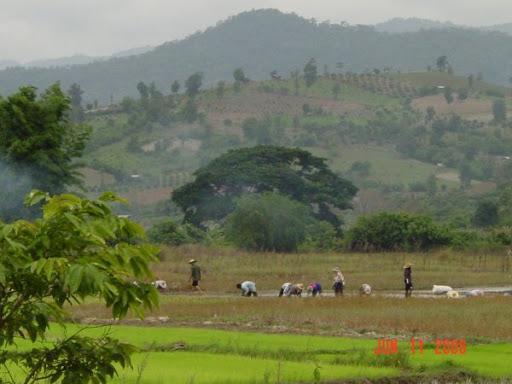
(Traditional Thai farmers seen hard at work in the rice paddies iof Northern Thailand)

Then we flew north to the Lanna town of Chiang-Mai, referred to as the “Rose of the North”. A much quieter town that Bangkok, Chiang-Mai is full of local color and character, most of which comes from the number of hill tribes for whom the northern mountain chains have been home for centuries. These colorful people, members of the Akha, Lau, Lisu, Padong, Karen and other tribes, still wearing their traditional costumes, crowd the markets, hawking their wares in the form of wooden and lacquer handicrafts, toys, cotton bags and silverware.

Our base in Chiang-Mai, the beautiful Hotel Empress (left) on Changklan Road, was a dream and as we entered its marvelously elegant lobby, we felt a sense of luxury settle about our shoulders. It was in Chiang-Mai, a much more relaxed leg of our journey, that I found the time to take soothing dips in the hotel pool and relax by the poolside.

Everyone had told us about Chiang-Mai’s colorful Night Market and we explored it on our first day in town, buying a lovely array of silk and cotton garments, local Thai wooden toys, beautifully luxurious Thai silk scarves and lacquer bangles from the local folks. The markets also held a variety of footwear, silverware, wall hangings and other decorative items. Bargaining was a required skill in negotiating the best prices and, before long, we became rather adept at it ourselves.
For both nights that we spent in Chiang-Mai, we ate dinner at the Night Market, feasting on cheaply priced Vietnamese Pho (a noodle soup that is a one-dish meal), Chicken and Pork Satays served with spicy peanut sauce and large Prawns Grilled with Garlic and Pepper to create tongue-tingling flavors that we washed down with the very good Thai Singha beer. There were also a number of fresh fruit juices easily available including the exotic passion fruit juice and refreshingly cold coconut water that was obtained by sipping from “young coconuts” through a straw.

Chiang-Mai’s biggest tourist attraction is Doi Suthep (left), a Buddhist wat situated high up on a mountain that is approached by a narrow winding road. Our guide Nong with whom we drove up to the heights of the mountains showed us the solid gold chedi or pagoda, the gold-filigreed chatris or umbrellas that flank the four corners of the chedi, the ornate wihan, fragrant with the burning of joss sticks and many replicas of Buddhas in various graceful poses. The decoration of this wat was so spectacular that one didn’t quite know what to notice.

Most striking of all the images that one encoutners in Doi Sutep is the Emerald Buddha (left), a replica of the one found in the Wat attached to the Royal Palace in Bangkok. Flanked on both sides by more ornate statuary, this Buddha is one of the most sacred of the guises in which the Buddha is found in Thailand. The air was fragrant with joss sticks as we walked around to see the Buddha from every angle.

There is an interesting legend that surrounds the construction of this temple. King Ku Naa of the 13th century placed a relic from the collarbone of the Buddha upon a white elephant’s back and set it free to select the spot upon which a stupa would be constructed to house the sacred item. The elephant left Chiang-Mai and started its journey, climbing the highest reaches of the Doi Suthep mountain. After three days and nights, he signaled the spot by trumpeting and turning thrice and then fell down and died. King Ku Naa not only built the stupendous gold chedi to house the relic, but he also created a replica of the white elephant to be honored by generations of devotees. Today, thousands of pilgrims climb Doi Suthep by using the magnificent Naga or Snake Staircase that has 360 steps to the top. For the benefit of those not wanting to make the climb, there is a funicular railway which, for just 20 baht, will whisk you up to the top in minutes.

I used the funicular to get to the peak, but took the staircase on the way down, astonished by the thousands of colorful ceramic pieces that gave the staircase its color and durability. Temple bells were seen in abundance around the wat’s precincts and prayer wheels were turned by the faithful each time they uttered a prayer. Everywhere in the north, the heart of Lanna territory, beautiful doors carved in expensive teak wood feature Lanna dancers with elaborate head-dresses and fine costumes. We enjoyed the views of Chiang-Mai from the top of the mountain and the mist-shrouded hills on the way up and down made the entire trip highly evocative of Thailand’s past. At the foot of the mountain, we took a side trip to the Orchid Jade Factory where we watched a film on the selection and cutting of jade for the creation of decorative figurines and jewelry and saw skilled artisans at work.

Deciding to see the rest of Chiang-Mai on our own, using local transport, I summoned a tuktuk driver to pick us up at our hotel to take us on a city sight seeing tour. He arrived on schedule and despite the fact that communication was problematic everywhere, he performed very competently indeed showing us the ornate Wat Phan Do, the ancient ruins of Wat Phra Sing, a monk’s initiation ceremony at Wat Chedi Luang and the beautiful Wat Chiang Man whose chedi is surrounded by stone elephant heads. Interestingly, the wihan houses two tiny but very significant statues—the Crystal Buddha dating from 2,500 years and a Marble Buddha dating from 1,800 years. Stopping only for lunch in a tiny restaurant where we sampled Northern Thai cuisine, influenced greatly by Burmese cooking styles, we ate Green Papaya Salad seasoned with Thai Nam Pla or Fish Sauce and Glass Noodle Salad with Chicken Sausages.

Then, Nim, our tuktuk driver took us to see the amazing number of handmade crafts for which the area is known. We started off by exploring the Thai Silk Village where we saw the incredible creation of pure silk from the very first stage to the last. We witnessed tiny silkworms feeding on mulberry leaves, spinning cocoons in which the eggs are laid but not allowed to hatch. As live silk moths fluttered around us, we saw how the cocoons are harvested. After the silk fibers have been spun around the cocoons by the worms, human beings spin them into spools of pure silk thread that are finally woven on hand looms into lengths of pure Thai silk. The entire process was so fascinatingly described and demonstrated that by the end of it we fully understood the time, effort and backache that goes into the making of a single silk scarf or shawl. Needless to say, silk products were on sale at hefty prices, most of which we passed up completely.
Our next foray was into a gems cutting factory where we saw the manufacture of expensive jewelry and wall pictures. Finally, Nim took us to a handicrafts outfit where we watched the making of Thailand’s traditional umbrellas from rice paper that is painted and then lacquered and used for interior decoration as wall pieces. Everywhere we went, we were treated with the utmost courtesy and made to feel like valued guests in the finest traditions of Eastern hospitality. Indeed, our four hour tuktuk ride that cost us a mere 300 baht provided far more atmosphere that would an air-conditioned vehicle and we were glad we opted for this method to see Chiang-Rai, its noisy Warorot Market and its canal that runs the length of the city and was built by King Meghrai to keep out Burmese invaders.

Chiang-Rai—Last Leg of our Travels:

Our next long excursion was to Chiang-Rai which we reached an hour later. Upon reaching the city, we were delighted to find that our accommodation was the exclusive Legend Boutique Resort and Spa on the very banks of the Mee Kok River in an absolutely idyllic setting. Our “room” was an individual villa with its own patio that came complete with swing and garden furniture. Sinking into the air-conditioned luxury of our room, we treated ourselves to the tea and coffee thoughtfully provided and later went out in search of dinner to the lovely wihan-style dining hall where we partook of delicious dishes that were very comfortably priced as a Country and Western singer strummed his guitar and sang some old favorites for our listening pleasure. We were sure we would have a totally luxurious time in this spa hotel and we planned to treat ourselves to the relaxing pleasures of traditional Thai massage offered by the well-trained masseuses in the spa. We made appointments for the next day and went to bed under the romantic drapes of mosquito nets that hung from four poster beds.

Our excursion, the next day, by local bus transport for just 22 baht each, took us to Doi Tung, a mountain resort that was chosen by the Queen Mother as the spot upon which to build a Swiss-chalet style house and English-style country gardens reminiscent of the home in Switzerland in which she had lived for many decades and raised her children. At the foot of the mountain, we transferred into a mini-bus that for just 75 baht each took us up to the mountain and back. We were joined by two English sisters, Donna and Tanya, who shared our vehicle and talked to us about their wide travels in South East Asia. Once up on the mountain, my Mum Edith and myself, both passionate gardeners, lost ourselves in the wonders of the Mae Fah Luang Gardens (ab0ve left) which were in full bloom and created such a spectacular set of sensuous delights. We took countless pictures among the coleus, dahlias, roses, hollyhocks, orchids and petunias that were planted in tiers on the mountainside in an absolutely ingenious landscaping design. Sculptures, waterfalls, rock gardens, etc. added to the atmosphere of this wondrous place and made for some very soothing hours indeed. The gardens employ an army of staff to keep them sprucely tended and we saw so many gardeners working like busy bees to make sure that not a petal was out of place in those vast environs. We did not visit the Swiss chalet-like villa of the Queen Mother as we had dallied for long in the gardens.
Then, we were driving down the winding mountain road once again and arriving at the base of the range from where we took another local bus and returned to the city center. A tuktuk ride dropped us back at our hotel just in time for a relaxing swim in the kidney shaped pool and our massages that were administered by very ably trained masseuses under mosquito nets on the river banks. In the expert hands of these women, we relaxed our cares away, closed our eyes and gave ourselves up to a pampering that included acupressure techniques and yogic poses in the ancient traditional science that has been practiced and popularized in Thailand for generations. Later that evening, as we sipped soothing ginger and lemongrass tea, we felt so light—as if the weight of the ages had been lifted from our shoulders.
That evening, our last in South East Asia, we enjoyed more live music in the restaurant as we ate Red Snapper Fillets in Black Bean Sauce over Noodles. Our breakfasts had been so gargantuan in the mornings that we had eaten only very light lunches, leaving ourselves ample opportunity to try out local cuisine at sit-down diners which were always superbly cooked and presented.

Conclusion:
Our visit to South East Asia was a wonderful introduction to a culture that was completely alien to us. We learned a great deal about the rituals associated with Buddhism and about the attitude of the local people towards religion, modernity, family values, etc. Thai Airways, that we used for our entire trip, were just amazing in the quality of the service offered, the graciousness and kindness of the cabin and ground crew, and the ease with which we transitted through countries and cultures. Because Thailand has never been colonized, the native culture has remained unadulterated by exposure to the West. Thus, English is spoken almost nowhere in Thailand except by hotel receptionists. This, of course, is not the case in Singapore, where English is widely-spoken, though heavily accented. Food, in this part of the world, if you are inclined towards the ferocity of spice and the soothing coolness of coconut milk, is a marvelous conglomeration of flavors achieved through the use of exotic condiments, herbs and spices such as tamarind and lemongrass, galangal and garlic, kaffir leaves and coriander root, not to mention the ubiquitous chillis that come in bright red and green.
As always, it was the desire to please among the local people that impressed us the most. They are proud of their heritage and eager to share it with the rest of the world. Despite what has been written about the tendency to cheat among people in Bangkok, we found everyone honest and straight-forward. There is little visible poverty in this part of the world though there are few signs of affluence. People seem to have the basics—clean air, clean streets and enough food to go around. Water cannot be drunk straight from the taps in Thailand but must be purchased.
In the final analysis, South East Asia provided a feast for the senses. We responded to all the stimulation offered us and hope to return to partake once more of all the promises of this unusual and very fascinating civilization.
Bon Voyage!

The Golden Triangle: Confluence of Three Countries


Thailand_Dsc05282

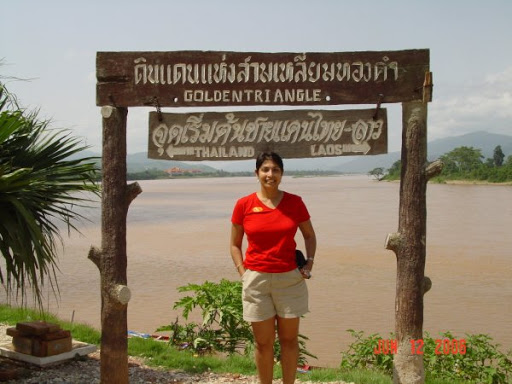
At the Golden Triangle on the banks of the Mekong River

 
The next day, we drove along the mountain roads from Chiang-Mai to Chang-Rai, a three hour journey that provided us with some of the most enduring images of our entire visit. Mile after mile of highway went past water-logged rice paddies where hardworking peasant farmers wearing traditional straw hats to keep off the merciless sun and neck scarves to keep off sunburn could be seen. By using ancient implements and methods, rice cultivation is the mainstay of this rural economy and involves most of the country’s people.

Thailand_Dsc05274

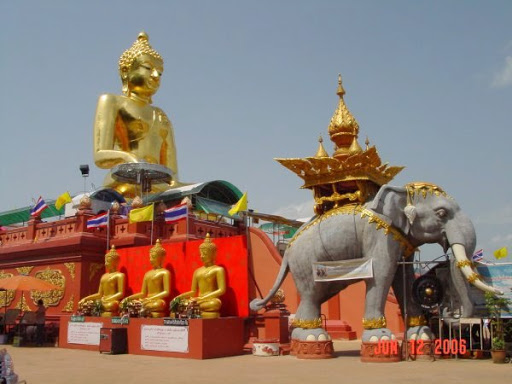
The mountains created enchanting landscapes as we passed through coconut groves and scores of wayside stalls selling freshly harvested pineapples. We reached Chang-Rai by mid-day but proceeded directly to the northern borders of Thailand to see the Golden Triangle, a place where the three countries of Thailand, Burma and Laos meet.

Thailand_Dsc05288

Our first stop was the ancient town of Chiang Saen whose walls, in ruined state, attest to its occupation by successive dynasties of Lanna kings, each of whom left his mark by fortifying the town against foreign invasion. Though it is a rather nondescript town, Wat Chedi Luang, a 12th century wat still attracts passers-through and its large Buddha image is a definite draw in the wihan. We made a quick stop here and then proceeded to the town of Ban Sop Ruak where the Golden Triangle is the chief attraction. In less than an hour, we were sitting down to a buffet lunch in a resort restaurant right on the banks of the legendary Mekong River that winds its way through China, Laos, Thailand, Burma, Vietnam and Cambodia. Here too, the fresh green vegetation gave the entire region its distinctive ambience, enhanced by the knowledge that we were in one of the world’s most remote outposts.

Thailand_Dsc05279

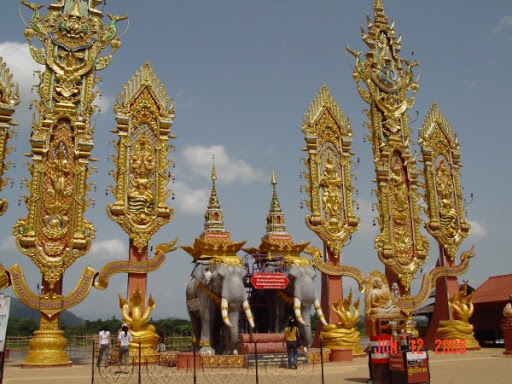
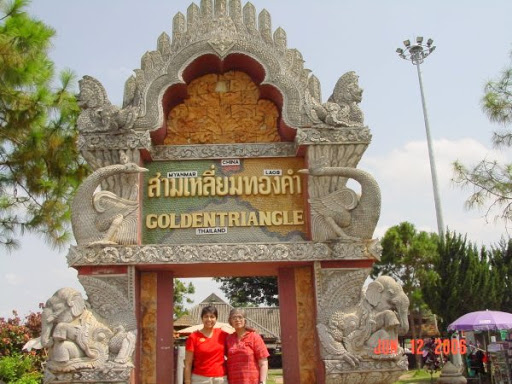
At Sop Ruak, elaborate stone arches mark the confluence of three countries—Burma, Thailand and Laos. Indeed, Laos is separated from Thailand only by the Mekong and the tail of the Triangle that juts into the river is still a part of Burma (now called Myanmar). The region is called the Golden Triangle because it was once home to a flourishing trade in the cultivation of the local poppy flower from which opium was derived. In recent years, Thailand has invested in heavy crop substitution so that the poppy has been almost wiped out from the region. In Myanmar, the Paradise Casino and Resort is now the main money-earner though gambling is illegal in Thailand.

Thailand_Dsc05287

We were thrilled to discover that only 250 miles upstream along the Mekong River was the border of China and seeing a ferry on the river that sported the red flag of China, we knew how close we were to this huge Communist country. This thought was exciting but we were sorry that we could not enter China on this trip.

Thailand_Dsc05289

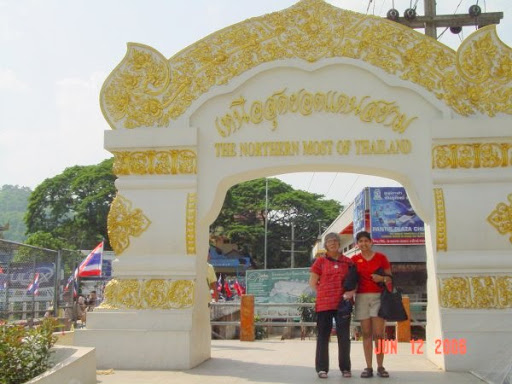
Then, after posing for a number of pictures, we left Sop Ruak behind us and proceeded north to Mae Sai, the northern-most town on the border of Thailand (left). Though this is rather a one-horse town, it is distinctive for the numbers of Burmese traders who cross the border daily to hawk their wares in Thai markets. Of course, we could not resist the thought of crossing the border physically into the Union of Myanmar, a very easy walk across a narrow bridge where Immigration formalities are carried out. Obtaining a Burmese visa at the border crossing, we proceeded on foot into the Burmese town of Thakilek and found it to be not much different from Mae Sai. However, there was a striking blue pagoda of a Buddhist monastery in Thakilek and on exploring the town further, I found it to be rather well laid out. It calls itself the “City of the Golden Triangle” and its greatest revenue comes from tourist buses that cross over from the Thai side to buy cheap souvenirs to remember their visit. For more information about our historic crossing into Burma, please click on the Burma link.

Singapore: An Idyllic Island-Nation


SEASIDE_Dsc05072

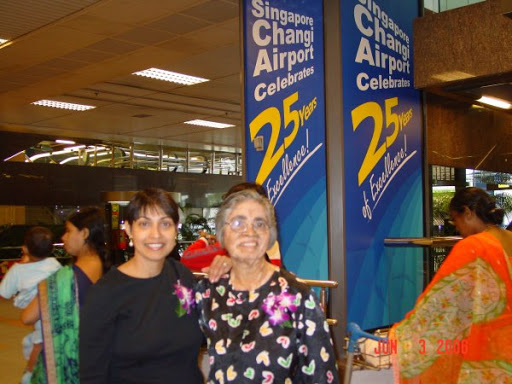
Our sojourn began in Singapore, a country that I have wanted to visit for the past 25 years. Somehow, I never got around to that corner of the globe and when I did arrive there with my mother Edith, flying into Changi airport, I found that it was everything I had heard about and more. The airport is ablaze with color in the golden Italian marble flooring and walls and the pots and pots of purple orchids spilling over in abundant profusion.

SEASIDE_Dsc05045

This year, Changi airport (left) completes its 25th anniversary and celebrations extended into the creation of enhanced facilities for passengers that include free Internet access, showers and massages!

On the drive into the city along the East Coast Parkway, I felt as if I was traveling in one huge garden for the amount of greenery has to be seen to be believed! Highways in superb condition are lined with towering trees. Traffic jams are non-existent on this paradisiac island as the number of cars on the road is strictly regulated by exorbitant automobile taxes and the unrealistic cost of even the most modest vehicle. Only one in ten Singaporeans owns a car and most are required by law to keep them for no longer than five years so that the question of vehicular emission from old and crumbling vehicles does not contribute to air pollution. I realized in only a couple of days that if society seems so extraordinarily disciplined in Singapore, it is because throughout their lives, its citizens are governed by rules which include such things as instant death for drug pushers and users and heavy fines imposed for the possession of chewing gum or for littering. This explains the antiseptically clean streets from which truly one could quite easily eat a meal!

SEASIDE_Dsc05077

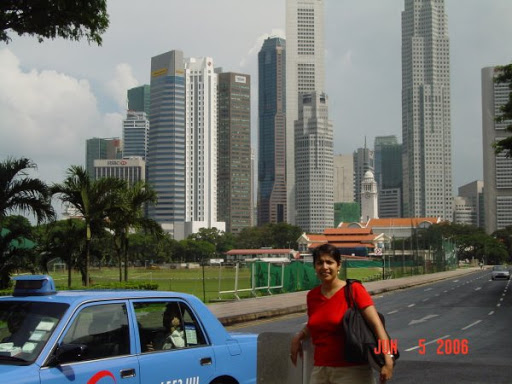
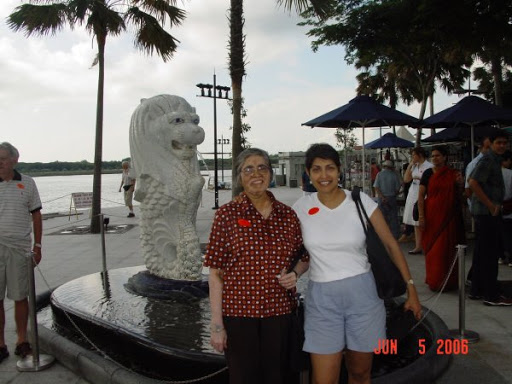
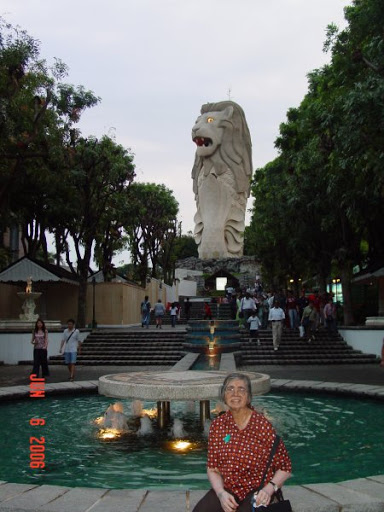
We settled into the Peninsula Excelsior Hotel on Coleman Street, just a step away from the busy Financial District. Within a couple of days, we learned the layout of the “downtown” area, characterized by the ubiquitous skyscrapers and the interesting architecture of the new Esplanade Building that resembles Singapore’s most famous fruit, the durian (which I found absolutely delicious—it is reminiscent of India’s jackfruit but has a sweeter, creamier flesh that just melted in my mouth). Of course, we caught a glimpse of Raffles Landing in the old Colonial District, posed for photographs at Merlion Park where the nation’s icon–half-lion-half-fish–guards the entrance to the Singapore River. Our drives around the city took us into the midst of bustling Chinatown where we visited the ornate Thian Hock Keng Chinese Temple, the Al-Abrar Mosque and the Sri Mariamman Hindu Temple. In just a few yards of urban space, we became aware of Singapore’s multi-ethnic and multi-religious community. Later visits to the hundred-year old St. Andrew’s Cathedral confirmed Singapore’s great diversity and the determination of its administration and its people to maintain harmony despite racial and cultural difference.
Dinners at beautiful Boat Quay and Clarke Quay introduced us to Singapore’s excellent restaurants and their unusual cuisine—for instance, we had our meal cooked before our eyes on hot stones that sizzled and spluttered mouth-watering juices around us as we feasted on salmon and steak on the banks of the Singapore River. Being fellow-foodies, my mother and I tried and tested some of Singapore’s best-known dishes at its famous Hawkers Centers and in the many food courts that dot its innumerable malls. My brother Roger, a frequent visitor to Singapore, recommended the Chilli Crab and the Char Kway Teow cooked up by Thye Hong at Newton Circus Hawkers Center which were to die for, the crab so huge that the two of us had trouble finishing it.

SEASIDE_Dsc05058

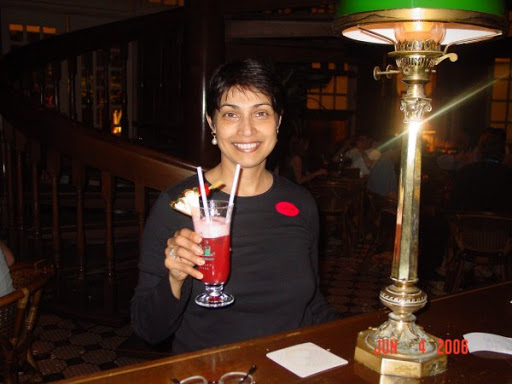
Of course, no gastronomic tour of Singapore would be complete without a visit to the famous Raffles Hotel, one of Asia’s oldest and most elegant, home to such writers as Joseph Conrad and Somerset Maugham, where we treated ourselves to a Singapore Sling (above left), the cocktail that was invented in its Long Bar. Listening to some fabulous live music that night, we sipped our Slings and reveled in Singapore’s well-known night life.

SEASIDE_Dsc05070

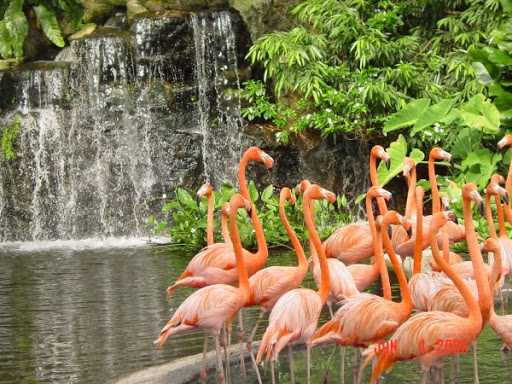
But it is not just urban delights that Singapore offers. Its natural pleasures are also rife and we enjoyed the trip to the Jurong Bird Park (right) where we walked through a Waterfall Aviary watching thousands of colorful birds feed as they serenaded our approach. I was fascinated by the Penguins on Parade as they waddled like young men in tuxedos on the rocks, dived into the water and swam elegantly in its depths. Aboard the air-conditioned Panorail train, we passed by a variety of birds that included bright pink Caribbean flamingos, pelicans and hawks of every kind including the American bald eagle. At the famous Night Safari, we drove around a zoo in dimmed lights on a slow mobile that took us past a variety of nocturnal animals from lions to hyenas with a python thrown in for good measure.

SEASIDE_Dsc05095

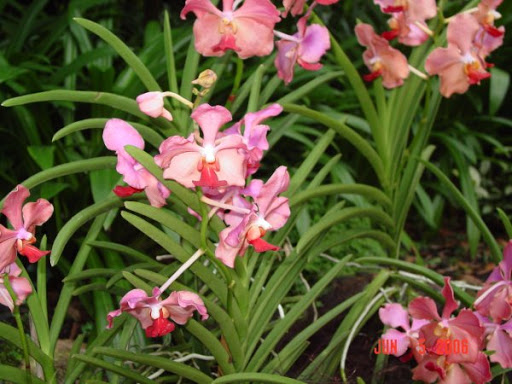
On another morning, we dallied in the National Orchid Gardens (left)  where newly created varieties had been named for some of the world’s best-known people.

SEASIDE_Dsc05123

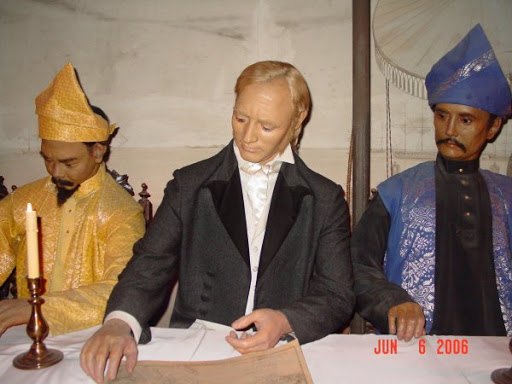
On another afternoon, we took the cable car from the heights of Mount Faber to Sentosa Island, a massive amusement park which includes everything–a performance of live dolphins at Dolphin Lagoon; an Underwater World that takes visitors into a tunnel surrounding them completely by creatures of the deep including the rare dugong; a completely awesome Wax Works Museum called “Images of Singapore” which recalls the history and diversity of this island nation from its founding by Sir Stamford Raffles (left) to its current avatar as one of the world’s most technologically advanced countries; the Carlsberg Tower which, on a clear day, offers views of the South China Seas and the shores of Indonesia; a laser lights show at a Musical Fountain (below).

SEASIDE_Dsc05128

Indeed, Singapore has found ways to attract, keep and bring tourists back panting for more, in the variety of its shopping possibilities, its palate-pleasing cuisine and the amount of endless experiences it offers every visitor. Since shopping was not on our list of priorities, we merely skimmed through the famous Orchard Road, one of the world’s best-known shopping districts, taking in the sights of massive billboards announcing Shopping Week in Singapore with a number of deals to lure easy spenders. We rode in the wonderful MRT (Mass Rapid Transit) subway system and found it clean, cheap, quick and simplicity itself to use. Everything is mechanized and runs like clockwork. Like any Western country, punctuality prompts the rhythms of daily life. By the end of our stay, I discovered that though life is governed by regulations in Singapore, these become a way of life for the people who no longer feel oppressed by their existence, but perhaps even grateful for them.

Kanchanaburi: Crossing the Bridge on the River Kwai


SEASIDE_Dsc05161

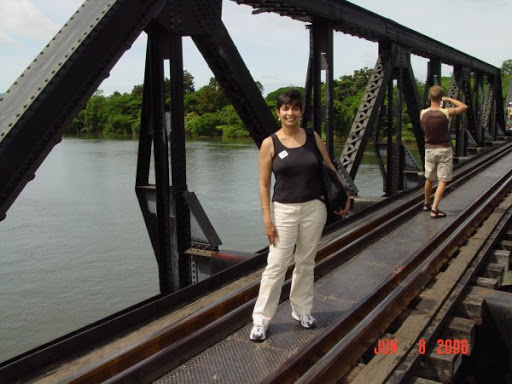
Walking across the infamous Bridge on the River Kwai-ai in Thailand

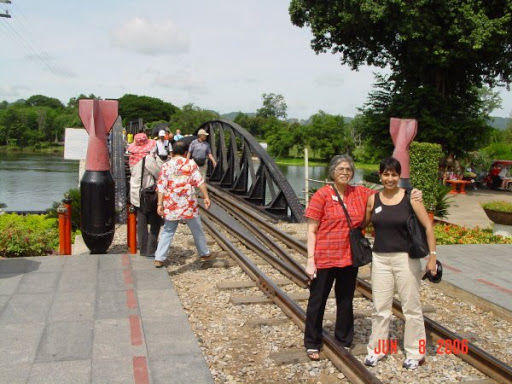
A two-hour drive at the crack of dawn from Bangkok took us to Kanchanaburi, a small sleepy town on the border between Burma and Thailand that attained notoriety during World War II as the base for the construction of the Death Railway, the name given to the Burma-Siam Railway. It was in 1939, upon realizing that the sea route to Burma was blockaded by Allied ships in the Straits of Malacca that the Japanese army set upon the project of finding a land route into Burma. This would open up for them the possibilities of invading India and thus taking over the railway system constructed by the British that would give them access to the furthest reaches of modern-day Pakistan, Afghanistan and Iran. Thus, Japanese engineers masterminded a plan that involved the construction of a railway line that would snake 450 miles from the town of Thanbyuzayat in Burma, crossing, at several junctures, the three small rivers that flow through this tropical jungle area and ending in the creation of a wooden trestle bridge over the Kwai Aie River just outside the town of Kanchanaburi in Thailand (the new name for Siam).

SEASIDE_Dsc05180

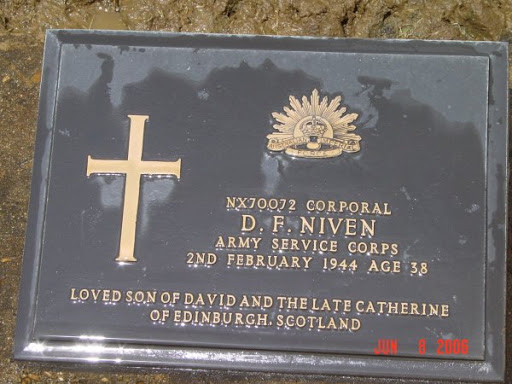
In an insane desire to achieve this goal within a single year, the Japanese recruited Asian laborers from countries like China, Malaysia and India and utilized their Prisoners of War (POWs) from Allied countries such as England, Australia and Holland to construct the railway. I will not go into the horrendous details that characterized the inhuman treatment that was meted out to these individuals in the Samurai ideology that Japan had adopted, i.e. that it is undignified to surrender. David Lean’s 1957 film entitled Bridge on the River Kwai has immortalized the suffering of these prisoners that included physical brutality, near-starvation, the menace of mosquitoes that brought with them the dangers of malaria, frequent outbursts of cholera and typhoid and tropical ulcers that ravaged human flesh. 200,000 Asian slave laborers and 13,000 Allied POWs gave their lives in the building of this notorious railroad as the Japanese considered these human beings completely dispensable and showed no respect whatsoever for their lives (above left).

SEASIDE_Dsc05182

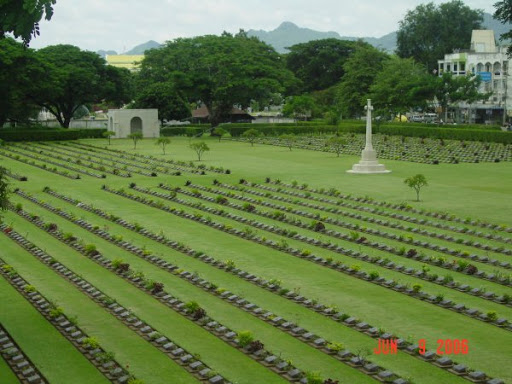
Today, the bodies of these soldiers, pried from makeshift graves along the railroad track after the war ended, lie buried in the Kanchanaburi War Cemetery which is impeccably maintained by the Commonwealth War Graves Commission. Japanese reparations after its surrender in 1945 caused a modern iron-clad bridge to be built over the River Kwai upon which, we, contemporary visitors, walked solemnly, recalling the horror of that era. Meanwhile, the JEATH War Museum (an acronym for Japan, England, Australia and America, Thailand and Holland), next-door to the Chung Kai Cemetery (above left), documents coldly the statistics and eye-witness accounts, carries a few heartbreaking sculptures and a number of exhibits that take one through the awful conditions under which wars are fought and thousands of men perish.

SEASIDE_Dsc05158

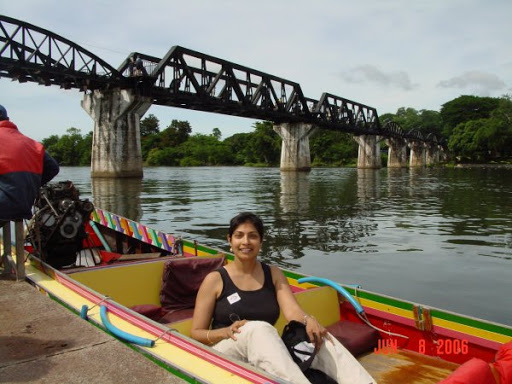
Our excursion into Kanchanaburi (which the POWs referred to as “Kanburi”) began with a ride on what our guide called a “James Bond” boat (left)  on the River Kwai. A very peculiar vessel, this brightly colored craft had a long, narrow, pointed snout and was maneuvered by a Thai boatman who took us into wild Thai jungles that were ringed by tall, verdant mountains. A while later, the boat deposited us at the modern bridge over the river which we crossed on foot as we posed for photographs. I was humbled and silenced into thinking of the numbers of young and ambitious men who gave their lives that the project might be completed.

SEASIDE_Dsc05169

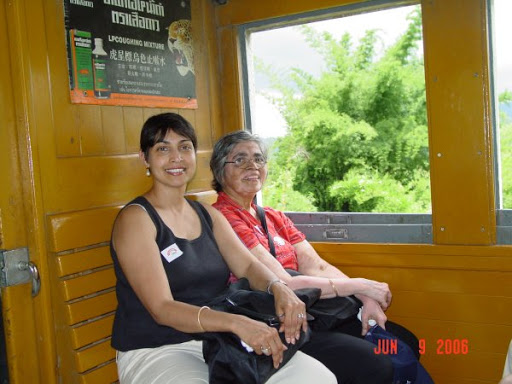
After we walked across the bridge (left) , we got back on our bus to ride one hour north towards the Burmese border. Upon reaching our destination, a traditional Thai lunch was served to us, family-style, in a thatched resort restaurant before we boarded the bus again to the railroad station to climb aboard the Death Train that took us for an hour long ride through the varied landscape over which the original railroad passed.

SEASIDE_Dsc05192

From time to time (left) , we received glimpses of the jade-green Kwai Aie River, the thick plantations of banana, papaya, coconut and pineapple trees, a number of domestic animals like cows and several stray dogs, and the hazy emerald outlines of the surrounding mountains.

SEASIDE_Dsc05185

While the journey (left) was fascinating, it was not a joy-ride by any means, for the memories of what the prisoners suffered in the process of building the railway upon which our single gauge locomotive train rode, kept us silent, clicking pictures to capture on celluloid our memories of a visit to a venue that has become a modern place of pilgrimage.


Bangkok: Thailand’s Chaotic Capital


Our next stop was Bangkok, capital of Thailand, a country that we found in a state of jubilation over the celebrations for the 60th anniversary of the coronation of their beloved King Bhumibol Adulyadej. Indeed the entire nation sported the national color—yellow–on T-shirts that had been specially designed for the occasion with the royal emblem—the Chakri—emblazoned on the pocket. Monarchs from every part of the planet had descended upon Bangkok to participate in the royal pageantry that included a candle-lighting ceremony by the future heir to the throne, a procession of royal barges on the Chao Praya River that meanders through the city and a succession of formal dinners and tours for the visiting dignitaries. The downside of all this pomp and splendor was that many of our tours around the city were cancelled as roads were closed for security reasons. However, we did get to see Bangkok in a wildly festive mood with illuminations decorating every monument and massive cutout figures of the King punctuating every street corner resplendent with yellow banners and flowers. We were also very fortunate to catch a glimpse of the rehearsal ceremony on the river with the royal barges skimming over it as we crossed the very modern Rama IX Bridge that spans the two halves of the city. 

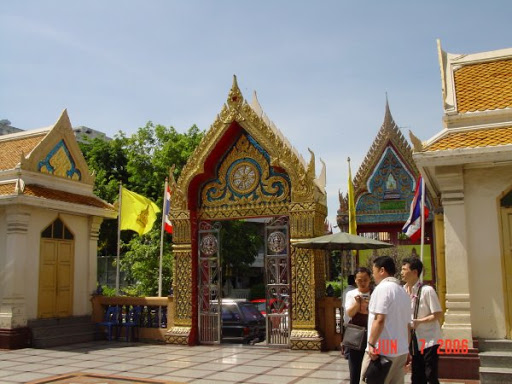
But royal festivity aside, Bangkok offers a great deal to the visitor eager to become acquainted with its centuries-old history and culture. We saw innumerable Wats or Buddhist temple complexes that house a chedi or stupa—a conical structure that is solid or hollow if it contains a sacred relic of the Buddha—a wihan or assembly hall for the faithful to join in community prayer, a bot or audience hall where the most revered statues are kept, and a series of cloisters or border walls that keep the sacred space removed from the secular world outside.

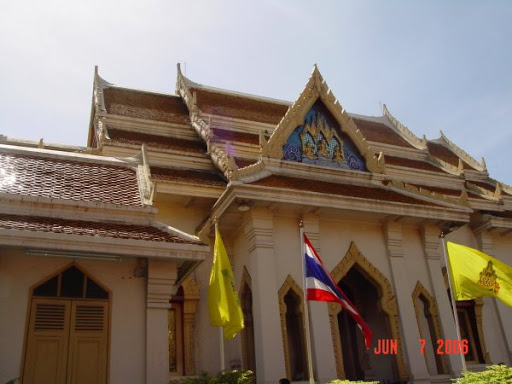
Two of Bangkok’s most famous wats are Wat Traimit where we saw the world’s most massive Buddha cast in pure solid gold (left) in the thirteenth century, then disguised under a thick camouflage of plaster to protect it from the Burmese invasion and discovered for its true value only in 1957 when chunks of plaster began to wear away and fall off to reveal the extraordinary statue concealed within.

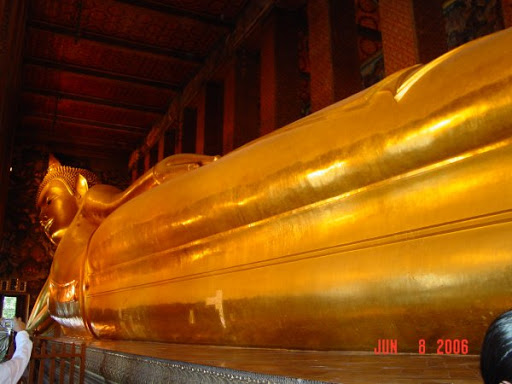
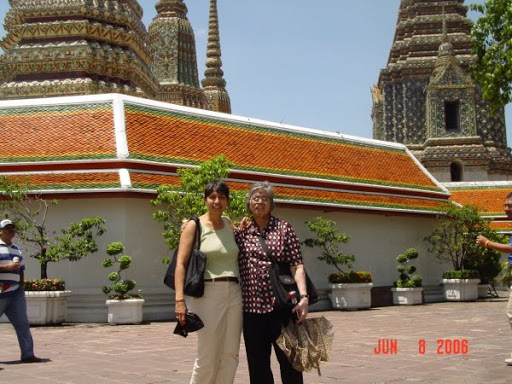
At Wat Pho, we saw a colossal Reclining Buddha, so immense that it actually took my breath away even though I was prepared for its stupendous dimensions.


Every Wat is an amazing achievement of architectural and artistic beauty with glass, ceramic, gilded and sculpted decoration that is truly breathtaking. What is most heartening, however, is the fact that these fantastic structures are not just historical wonders but vibrant places of contemporary worship in which devout Buddhists daily express their faith in God through the application of real gold leaf to the idols and deities within, in order to “gain merit”. We saw countless Thais make offerings to the monks who received them with gratitude and humility, buy lotus buds and flowers as presents to the wat as they moved in slow procession around its precincts and bend low in the presence of their priests who patted them on their heads while offering their blessings. In every wat, we watched in silence as the faithful prostrated themselves before the statues of the Buddha. Clearly, the clergy and the elderly are held in very special esteem in this society and it was quite moving to see the manner in which these people have continued to adhere to an ancient religion while making every attempt to move with the times.

Indeed, visits to gem factories where Thailand’s famous sapphires and rubies are cut and set into jewelry, gave us a glimpse into the commercial side of Bangkok, a side that also manifests itself in the sleazy activities of hookers, the proliferation of “massage parlors” outside which girls hung out while luring customers in and in the mad shopping frenzy in places like Mahboonkrong (MBK) Mall and Indra Market where the bargains abounded. It was quite astonishing to see the age-old tuktuk or auto rickshaw coexist in crazy harmony with the very modern SkyTrain (in both of which we “commuted”) that skims the city on tracks built high above Bangkok’s proverbially chaotic traffic. Though the streets are spotlessly clean and traffic moves in a disciplined manner sans blaring horns (unlike India), there were many stray dogs lurking around.

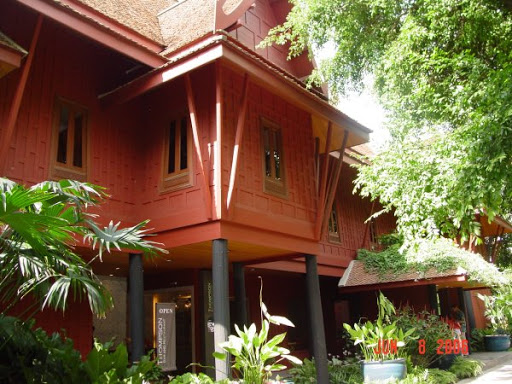
As if to offer some respite from its seedy side, one of Bangkok’s most fascinating attractions in Jim Thompson’s House (left). This serene complex of six traditional Thai teak houses positioned around a gravel courtyard and lovingly maintained tropical gardens should be a must on every tourist itinerary. I was glad to visit in the late evening while the sun was setting gently and casting lengthening shadows upon the nooks and crannies of this delightful abode built on the riverbanks. The house was once the residence of American-born James Thompson, a Princeton-educated architect, who was stationed in Thailand during World War II. He fell in love with the country and its people and decided to make Thailand his home. On seeing the ills that had afflicted Thailand’s silk weaving industry, Thompson decided to revive it and, within a few years, had created a gigantic business enterprise that made him his fortune while reviving one of the country’s most ancient crafts. Thompson spent his money on the acquisition of Asian antiquities in the form of precious old Buddhas, blue and white porcelain, hand carved teak furniture, jataka paintings that depict the story of the Buddha’s life, etc. As we moved from room to room decorated tastefully in a style that combined Eastern elements (such as low floor seating covered by silk cushions) with Western ones (such as the use of crystal chandeliers and table lamps for ambient lighting), I was struck by his exquisite taste and style and felt saddened to learn that he disappeared one day at the age of 61 while taking a hike in the Cameroon Highlands of Malaysia while on vacation. Wonderful silk gift and souvenir items are available in the store that is part of the complex. Though terribly overpriced (in my opinion), they were quite unique and very tastefully designed.

Our hotel, Ambassador Towers, was located in the bustling heart of Sukhumvit, an area that has mushroomed in recent years and that caters exclusively to the Western tourist. A plethora of restaurants exists in this well laid out grid of narrow streets, tourist bric-a-brac is cheaply available and services catering to the needs of foreign travelers, such as photography outfits and Internet cafes, abound. The negative side of such convenience is open flesh trading and as someone involved in Women’s Studies, I was disheartened to see scores of painfully young Thai women on the arms of old, often disabled, white men, only in Bangkok to partake of its easily available sexual pleasures. On talking to a few educated Thai female tourist guides about this social evil, I discovered that most of Bangkok’s prostitutes are the daughters of prostitutes themselves. Indeed, most are single mothers with little children who will also find their way, ultimately, as sex workers in the world’s most notorious brothel.


Though it was discomforting to find ourselves surrounded by  Bangkok’s infamous carnal trade, I was grateful for the fact that the innumerable local restaurants allowed us to sample the best of Thailand’s famed cuisine in very modest eateries that offered home-cooked meals for almost no money at all. We feasted on Tom Yum Goong (Hot and Sour Prawn Soup), Tom Kai Gha (Chicken Coconut Milk Soup), Pad Thai (Thai-Style Noodles), and a variety of curries all served on steamed rice. Dessert is always fresh fruit and we spent a delightful morning at a roadside fruit stall tasting a number of rather unusual fruits such as rambutans, lichis, mangosteens, longons, durians, dragon fruit and guavas which abounded in market stalls and on our hotel buffet menus together with the more familiar papayas, pineapples and watermelons.

The Diamond Jubilee celebrations prevented us from visiting the Royal Palace and Wat Phra Keo which houses the most revered statue in all of Thailand, the Emerald Buddha. We could not visit the National Museum, the Old Farang Quarter where Bangkok’s famous Oriental Hotel is located or Dusit Park which contains Vimanmek Palace. All of these restrictions lead me to believe that though I did not care much for the city, on the whole, perhaps I am destined at some future time in my life, to visit this city again! For the most part, however, I was happy to leave Bangkok behind and take the day-long excursion to Kanchanaburi, a small town on the Thailand-Burma border.

Bon Voyage!